Bishkek, the capital of Kyrgyzstan, is hosting the annual summit of the Shanghai Cooperation Organisation (SCO) this week, drawing leaders from 21 countries. The gathering comes at a time when wars and shifting global alliances are straining the international order, prompting both established and rising powers to seek new partnerships.
The two-day meeting, which opened on Monday, focuses on political, economic, and security cooperation. Key topics include the long-discussed SCO development bank, connectivity projects, energy and trade routes disrupted by conflicts, and the challenges facing the Global South.
The SCO's ten member states—China, India, Pakistan, Russia, Belarus, Iran, Kazakhstan, Kyrgyzstan, Tajikistan, and Uzbekistan—represent more than 40% of the world's population. The bloc, which marks its 25th anniversary this year, has increasingly positioned itself as an alternative to Western-led institutions. At least 15 other states, including Turkey, Egypt, Saudi Arabia, Qatar, Vietnam, Azerbaijan, and Armenia, are participating as dialogue partners.
A summit with a message
The summit's theme, “25 years of the SCO: together for sustainable peace, development and prosperity,” signals the bloc's ambition to shape the future of Eurasian cooperation. Leaders are expected to discuss how to build influence and possibly form new alliances in a rapidly changing world.
Among the attendees are Chinese President Xi Jinping, Indian Prime Minister Narendra Modi, Turkish President Recep Tayyip Erdoğan, Russian President Vladimir Putin, and Iranian President Masoud Pezeshkian. UN Secretary-General António Guterres is also present, underscoring the summit's global relevance.
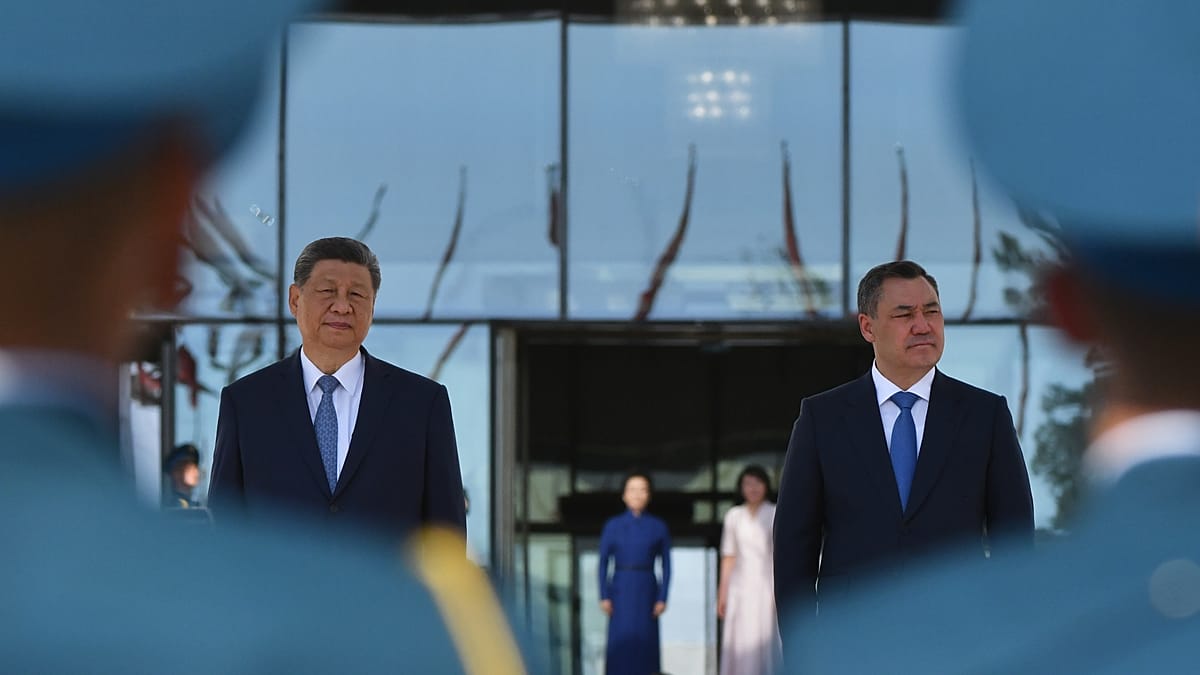
Bilateral meetings have been a central feature of the first day. Kyrgyz President Sadyr Japarov welcomed Xi and signed a treaty on “eternal good-neighbourliness, friendship and cooperation,” which the Kyrgyz presidency described as a comprehensive strategic partnership. Xi called the bilateral ties a “golden period” of development.
Japarov also held talks with Guterres, Modi, Mongolian President Ukhnaagiin Khurelsukh, Lao President Thongloun Sisoulith, Togolese President Faure Gnassingbé, Vietnamese Vice President Võ Thị Ánh Xuân, and Pezeshkian.
Connectivity and economic corridors
Economic connectivity is a major theme, with new transport and energy corridors in focus. The China-Kyrgyzstan-Uzbekistan railway, which promises to shorten routes between Asia, the Middle East, and southern Europe, is a flagship project. Uzbekistan's President Shavkat Mirziyoyev is promoting the Trans-Afghan Corridor, which would link Central Asia to Afghan ports on the Indian Ocean.
These infrastructure efforts come as the European Union and the United States are also increasing their engagement in Central Asia, creating a competitive landscape for influence. The SCO's push for a development fund and an investment fund could provide financing for such projects, though details remain to be worked out.
Regional peace efforts
The summit also provides a platform for conflict resolution. Azerbaijani President Ilham Aliyev and Armenian Prime Minister Nikol Pashinyan held a new round of peace talks in Bishkek on Monday, discussing next steps in their historic normalization process. The two leaders also explored trade and energy cooperation, including projects along the Middle Corridor.
Kazakh President Kassym-Jomart Tokayev met with Aliyev to discuss joint regional investments. Meanwhile, Putin is scheduled to meet Erdoğan to discuss the war in Ukraine and Black Sea security, and to hold talks with Pezeshkian, as Moscow continues to support Tehran amid its confrontation with the United States and Israel.
The SCO's evolution from a regional security forum to a broad-based political and economic bloc reflects the shifting dynamics of a multipolar world. As wars and sanctions reshape global supply chains, the organization is positioning itself as a key player in the new Eurasian order.