The war in Iran is now delivering a direct blow to Europe's real economy. The latest purchasing managers' index (PMI) data from S&P Global shows eurozone business activity contracting at its fastest pace since October 2023, with France experiencing its steepest downturn since the Covid lockdowns of November 2020.
The S&P Global Flash Eurozone Composite PMI Output Index dropped to 47.5 in May from 48.8 in April — a 31-month low and the second consecutive month below the 50.0 threshold that separates expansion from contraction. The services sector, which accounts for the bulk of eurozone output, bore the brunt: the flash services PMI fell to 46.4 from 47.6, its worst reading since February 2021 and well below the consensus forecast of 47.7.
France in freefall
The most alarming numbers came from Paris. France's composite PMI plunged to 43.5 in May from 47.6 in April, far below the 47.7 expected by economists. The services activity index, which dominates the French economy, fell to 42.9 from 46.5 — the lowest reading in 66 months. Manufacturing output, which had offered a fleeting boost in April, reversed sharply, with the output sub-index shedding more than six points to slip back into contraction.
Joe Hayes, principal economist at S&P Global Market Intelligence, described the figures as “a dire set of numbers.” He added: “The inflationary impact of the oil-price shock continues to proliferate, with price indices in both manufacturing and services moving higher once again.” Companies surveyed directly cited the cost of the war as the cause. “Alarmingly, we saw private sector new orders plummet in May, giving us a clear indication that this shock has materially lifted recession risks for the eurozone's second-largest economy,” Hayes said.
French firms turned pessimistic about the year ahead for the first time since November 2024, and the degree of negativity was the greatest since the initial outbreak of the Covid-19 pandemic in April 2020.
Germany stalls, jobs cut
Germany — the bloc's industrial engine — was not spared. The composite PMI ticked up marginally to 48.6 from 48.4, a two-month high but still firmly in contraction territory. The manufacturing PMI fell to a four-month low of 49.9, with factory output growth nearly stalling and new orders dropping for the first time since December 2025. German employment fell at the fastest rate in over a year and a half, led by deep cuts to manufacturing payrolls. Input cost inflation accelerated to a three-and-a-half-year high.
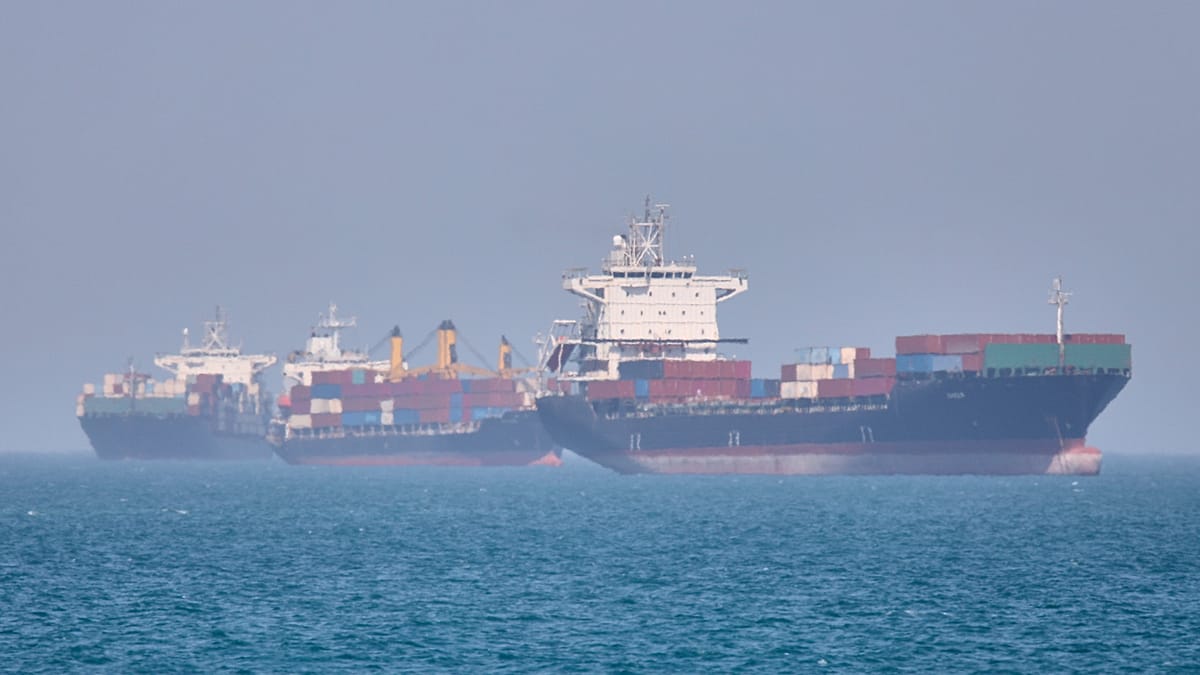
“The disruption from the effective closure of the Strait of Hormuz continues to filter through to prices, with input cost inflation showing a further acceleration due to the knock-on effects of higher energy prices and supply shortages,” said Phil Smith, Economics Associate Director at S&P Global Market Intelligence.
An inflation shock the ECB cannot ignore
The May PMI release was not just a growth story. Input cost inflation across the eurozone accelerated for the seventh consecutive month, hitting a three-and-a-half-year high. Prices charged for goods and services rose at the fastest pace in 38 months. In France, output price inflation reached a three-year peak. In Germany, the manufacturing input price index has surged toward levels last seen during the 2022 energy crisis.
The European Central Bank now faces what Chris Williamson, chief business economist at S&P Global Market Intelligence, described as “a deepening dilemma for policymakers.” Money markets are pricing in more than an 80% probability of a 25-basis-point rate hike at the next ECB meeting, with two further increases anticipated by year-end — even as the growth data deteriorates sharply.
Two months ago, Europe was still expanding. Today, its economic activity is flashing the loudest recession signals in years. The closure of the Strait of Hormuz is no longer just a geopolitical headline — it is showing up directly in the eurozone real economy, and the ECB is running out of time to decide which side of the dilemma to defend.
For travellers, the ripple effects are already visible: short-haul summer travel surges across Europe as fuel costs bite, while broader security concerns have prompted NATO jets to scramble near the Belarus border after a drone warning shut Vilnius Airport.