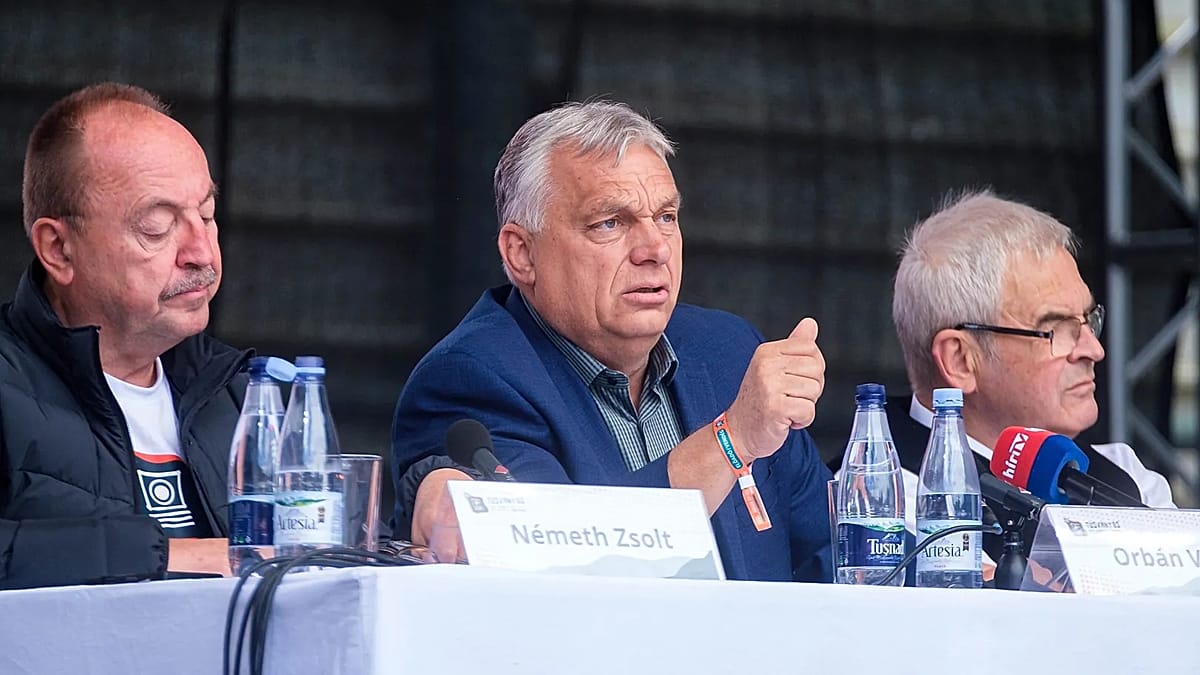
Hungary's ruling party for over a decade, Fidesz, is confronting an existential reckoning after its crushing defeat in April's parliamentary elections. Péter Magyar's Tisza party ended Viktor Orbán's 16-year grip on power, and the once-dominant conservative force now faces an uncertain future—one that could see it rebranded, restructured, or even dissolved altogether.
According to a source with close knowledge of the party's internal deliberations, Fidesz is weighing several difficult paths. These include a full organisational overhaul, a new political movement under a different name, or the outright liquidation of the party that has defined Hungarian politics since 2010. The source told European Pulse that the decision has been postponed for a few months, with no immediate emergency, but that "the question remains open, and one option is the ending."
Orbán's personal calculus
Viktor Orbán resigned his parliamentary seat shortly after the defeat, ending 36 years in the National Assembly. Yet the party re-elected him as president in May, tasking him with charting a new course. In August, an internal questionnaire leaked to the Hungarian press asked members to diagnose the defeat and propose remedies—ranging from a complete renewal to founding a fresh conservative party with new personnel.
Party spokesperson Bertalan Havasi, a longtime Orbán ally, dismissed the idea of self-liquidation as unrealistic. "I personally find it unimaginable that Fidesz should not exist, and should not exist as Fidesz," he said. "I would consider it the greatest madness to rebrand and discard the Fidesz name and its accumulated expertise simply because we lost an election."
Political analyst Szabolcs Dull noted that the mere fact Fidesz is discussing its own dissolution is significant. "The fact that Fidesz is raising the possibility of its own dissolution matters, because it shows this is among the leadership's scenarios—and Orbán himself has spoken in movement-like terms," he said.
In July, Orbán published a "resistance declaration," urging supporters to fight what he called the dismantling of rule of law and democracy under Magyar's government. He also reshuffled the Fidesz parliamentary group, bringing in several former political influencers.
Departures expose erosion
The party has been bleeding senior figures. Former transport minister János Lázár, a close Orbán ally, conducted a summer review of constituency offices, then resigned his parliamentary mandate and withdrew from public life. Former foreign minister Péter Szijjártó left politics to join Chinese carmaker BYD, while ex-communications chief Antal Rogán also stepped back. Gergely Gulyás, former parliamentary group leader, resigned in July, citing a constitutional amendment that would bar him from standing in 2030.
Dull observed that each departure can be explained individually, but collectively they work against Fidesz's interests. However, the party source said there was a degree of relief among members at some exits—Szijjártó's reputation had been damaged by his close ties to Russia, and Lázár faced criticism for remarks widely considered racist towards the Roma community. Both men had amassed significant wealth while in government.
Havasi argued the departures could accelerate renewal. "If everyone has been missing the pace and agility of renewal, then once the previous generation of politicians leaves, new ones will naturally take their place," he said.
Over the summer, former rural development minister Tibor Navracsics and former space exploration commissioner Orsolya Ferenc launched a platform within Fidesz called "Civic Democrats," calling for greater dialogue with voters. The initiative was widely seen as a possible precursor to a split aimed at forming a more moderate conservative force, though both denied any such ambition.
Orbán or no Orbán
Within Fidesz, Orbán's future is a subject of ongoing debate. The party has denied speculation that he might pursue an international role at the United Nations or FIFA. While Orbán has spent a lengthy holiday in the United States, Serbia, and Croatia, he faces scrutiny over the election campaign and the enrichment of his inner circle during his years in power.
His son-in-law, István Tiborc, has become a major player in Hungary's property and tourism sectors; his father, Győző Orbán, secured state contracts for his mining company and invested in a luxury estate near Budapest; and his childhood friend Lőrinc Mészáros became Hungary's richest man on the back of substantial government contracts. These revelations have further eroded public trust.
As Fidesz looks into the abyss, the party's next steps remain unclear. Whether it reinvents itself under Orbán's shadow or dissolves entirely, the outcome will reshape Hungary's political landscape for years to come.