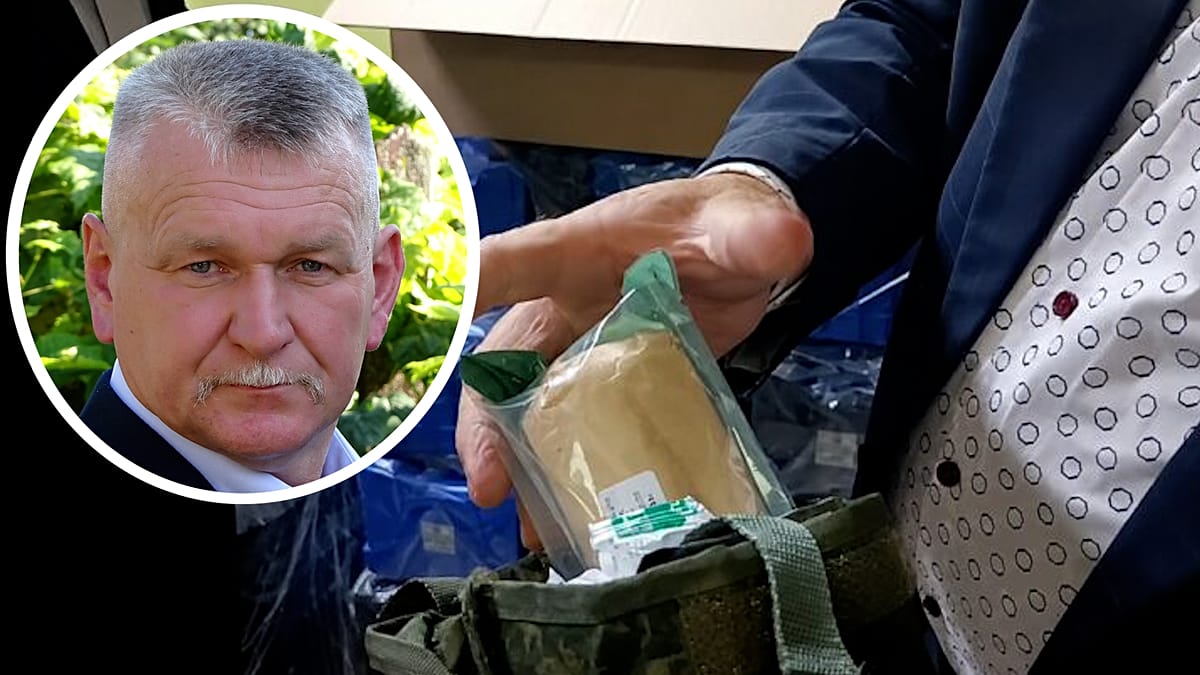
A video released by Krzysztof Tołwiński, a former deputy treasury minister in Poland's Law and Justice (PiS) government, has ignited a political firestorm. In the footage, recorded on Belarusian territory, Tołwiński is seen delivering 20 battlefield first-aid kits to Russian soldiers fighting in Ukraine, a move widely denounced as aiding an aggressor state.
Tołwiński, who also served as a member of the Polish parliament during its sixth term under Prime Minister Jarosław Kaczyński, stated in the video that he purchased the kits with his own funds. He claimed the supplies were intended as humanitarian aid for Russian troops, whom he described as fighting for a new order and against Nazism. The kits were handed over to Oleg Gajdukiewicz, leader of the Liberal Democratic Party of Belarus (LDPB), who is under sanctions from both the European Union and the United States.
A Pattern of Pro-Kremlin Stances
This incident is not an isolated one. Tołwiński has for years voiced opinions aligning with Kremlin narratives, frequently appearing in Belarusian and Russian state media to criticize Poland's support for Ukraine. In 2023, he founded a political grouping called Front, ostensibly an agrarian party but widely criticized for its pro-Russian orientation and ties to Belarusian political circles.
In May 2026, Tołwiński organized a gathering at the Soviet soldiers' cemetery in Warsaw for Victory Day, a holiday central to Russia's historical policy. The event was attended by representatives of the Russian Embassy in Poland and Polish Kremlin sympathizers. Earlier, in 2026, the District Court in Białystok found him guilty of insulting Ukrainians and inciting hatred on national grounds. Tołwiński dismissed the verdict as a badge of honor, claiming it strengthened his public standing.
The video has drawn sharp criticism across Poland's political spectrum. Commentators and internet users alike have pointed out that providing medical kits directly to Russian soldiers—equipment intended for battlefield use—goes beyond humanitarian aid and effectively supports an army waging war against Ukraine. This contradicts Poland's official policy of backing Kyiv against the Russian invasion, a stance that has seen Warsaw become a key logistical hub for Western military assistance.
While international law permits humanitarian aid to civilians and wounded soldiers, the distinction is crucial. Individual first-aid kits for combat use are considered military equipment, not humanitarian supplies. Tołwiński's actions, experts argue, cross a legal and ethical line.
The controversy comes amid broader European efforts to counter Russian influence. In a related development, Poland recently sentenced a former Russian opposition activist and his wife for espionage, underscoring the ongoing security challenges posed by Moscow's activities in the region.
Tołwiński's video has also reignited debates about the resilience of pro-Kremlin sentiment within Polish society. Despite widespread public support for Ukraine, a fringe minority continues to echo Russian propaganda, often invoking themes of Slavic solidarity or criticizing NATO's eastward expansion. The former deputy minister's actions serve as a stark reminder of these undercurrents.
As the war in Ukraine grinds on, with President Zelenskyy recently announcing a government reshuffle, the incident highlights the fragility of European unity in the face of sustained Russian disinformation and subversion. For Poland, a nation that has taken in millions of Ukrainian refugees and provided billions in military aid, Tołwiński's behavior is seen as a betrayal of national interests and a gift to Moscow's propaganda machine.