The first trial over the 2022 Nord Stream pipeline sabotage opens on Wednesday in Hamburg, where a former Ukrainian special forces officer faces charges of carrying out a war crime and attacking civilian infrastructure. Sergiy Kuznietsov, who was arrested in Italy last year and extradited to Germany, is accused of leading a team of divers and explosives experts who planted bombs on the undersea gas pipelines.
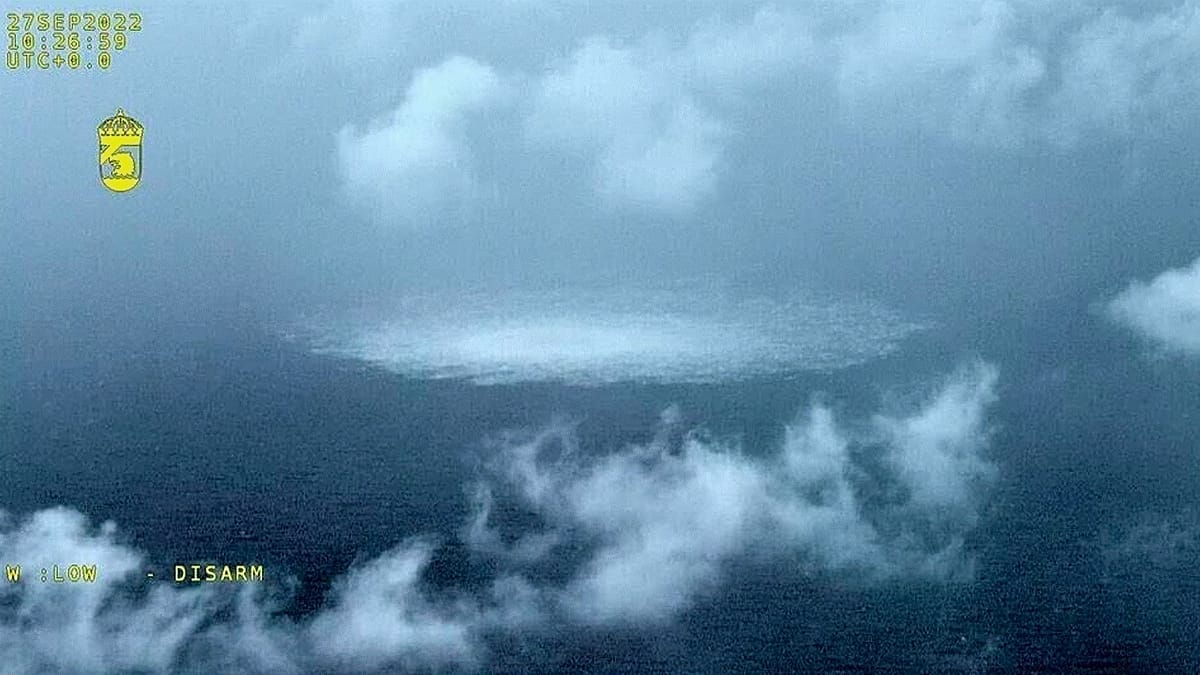
The explosions, which occurred in September 2022, seven months after Russia's full-scale invasion of Ukraine, damaged three of the four Nord Stream pipelines that were designed to carry Russian gas to Europe. While some Western observers initially suspected Moscow of sabotaging its own export route, German investigators identified a Ukrainian cell as the alleged perpetrators.
According to the indictment, Kuznietsov entered Germany in early September 2022 using a forged Ukrainian passport. Together with his team, he boarded a rented yacht in the Baltic Sea port of Rostock. The vessel was loaded with military-grade explosives and sailed to a location near the Danish island of Bornholm, where divers planted timed charges on the pipelines. The devices detonated several days later.
Kuznietsov's lawyers have unsuccessfully challenged the German court's jurisdiction. They have suggested they may argue that the pipelines were legitimate military targets in Ukraine's fight against Russia's invasion. The defendant is expected to refuse to testify, as former members of Ukraine's special forces are barred from discussing their military work publicly, according to German news magazine Stern.
Outside the Hanseatic Higher Regional Court, a small group of pro-Ukrainian demonstrators gathered, holding placards that read "Russia is a terrorist" and "What are war crimes? A blown-up pipeline? Or the bombing of buildings and the killing of people?"
Political and legal complexities
The trial unfolds against a backdrop of strained relations between Berlin and Kyiv. Germany has become Ukraine's leading military backer since the invasion, yet the Nord Stream sabotage remains a sensitive subject. The pipelines were owned by a consortium led by Russian energy giant Gazprom, and at the time of the blasts, neither Nord Stream 1 nor Nord Stream 2 was operational. Moscow had suspended gas deliveries to western Europe through Nord Stream 1 after EU sanctions were imposed, and Nord Stream 2 had never entered service.
Kremlin spokesman Dmitry Peskov told AFP he expects the trial to reveal "those who carried it out, along with those who ordered it." He added, "I don't think anybody has any doubt about who it really is." A senior Ukrainian official, speaking anonymously, said Kyiv has "no expectations from the trial."
Ukraine has consistently denied orchestrating the sabotage but has expressed satisfaction with its outcome, noting that disabling the pipelines weakened Moscow's ability to fund its war. This stance has complicated the legal proceedings, as some European courts have shown sympathy for Ukraine's position. In a separate case, a Polish judge refused to extradite another suspect, Volodymyr Z., ruling that the sabotage was justified as part of Ukraine's defence.
Volodymyr Z., who is accused of acting as a diver in the operation, was arrested in Croatia in August. A Croatian court has approved his extradition to Germany, but he is appealing. Media reports suggest he had been advising the makers of a Hollywood film inspired by the sabotage, with Oscar-winning actor Adrien Brody reportedly set to portray the leader of the sabotage unit.
The trial in Hamburg is expected to last several months and will be closely watched across Europe, as it touches on questions of sovereignty, wartime conduct, and the limits of international law. For Germany, it is a delicate balancing act between supporting Ukraine and upholding its own judicial processes. As the proceedings begin, the broader implications for European security and the rule of law remain uncertain.