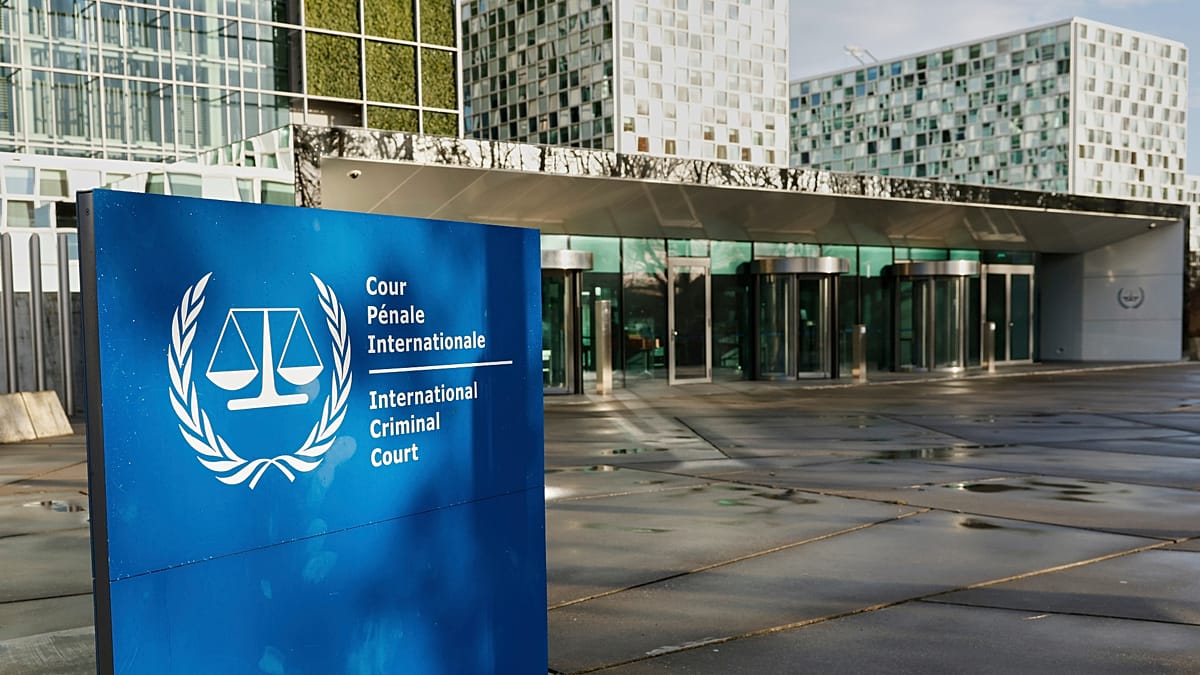
Fifty-eight members of the European Parliament have called on the European Commission to shield the International Criminal Court (ICC) from US sanctions that threaten to disrupt its operations. In a letter sent on Tuesday and seen by Euronews, the MEPs urged Commission President Ursula von der Leyen to defend the Hague-based court against what they described as “an attack by a foreign power on an entity on EU territory,” warning of “devastating” consequences.
The sanctions, announced by the Trump administration last Friday, follow repeated criticism of the ICC over its arrest warrant for Israeli Prime Minister Benjamin Netanyahu and its investigation into the conduct of US troops in Afghanistan. After an initial six-month grace period, the measures could severely hamper the court's operations by barring US banks and companies from doing business with it, although exemptions are envisaged for some telecommunications, software, and payment services.
Given the dominance of US firms in global finance and technology, the restrictions could leave the ICC struggling to pay its bills and conduct financial transactions. European banks, insurance companies, and other intermediary firms with business interests in the US could also be affected, potentially facing secondary penalties if they continue working with the ICC.
Call for the Blocking Statute
The MEPs called for the use of “all instruments at our disposal” to shield the ICC from the sanctions. In particular, they urged the Commission to activate the EU's Blocking Statute, a mechanism designed to protect European companies and individuals from the extraterritorial effects of foreign sanctions. The statute can prevent foreign court rulings based on specified laws from being enforced in the EU and allows European companies to seek compensation for losses caused by their extraterritorial application.
The Commission can add foreign laws to those covered by the statute, subject to scrutiny by the European Parliament and EU member states. The letter was drafted by European People’s Party (EPP) MEP Dirk Gotink and Socialists and Democrats (S&D) MEP Aurore Lalucq, and signed by lawmakers from the EPP, S&D, Renew Europe, and the Greens/EFA groups.
The signatories warned that the sanctions threatened Europe's ability to protect its own citizens and institutions. They stressed that the ICC is a cornerstone of international justice, and that allowing a third country to undermine it would set a dangerous precedent.
In a statement last Saturday, EU foreign policy chief Kaja Kallas described the threat of sanctions against the ICC as “not acceptable,” reaffirming the bloc's commitment to international law. However, the EU has yet to take concrete action. The Commission has not publicly responded to the MEPs' letter, but the issue is likely to be discussed in the coming weeks.
The move comes amid broader transatlantic tensions over the ICC. The EU has previously expressed support for the court, but has been reluctant to confront Washington directly. The Blocking Statute, which was originally designed to counter US sanctions on Cuba, Iran, and Libya, has rarely been used, but could now be invoked to protect European interests.
If activated, the statute would require European companies to ignore the US sanctions and would allow them to recover damages from US entities that cause losses. However, the effectiveness of the statute is uncertain, as many European firms have significant business interests in the US and may be reluctant to defy Washington.
The MEPs' letter is a significant political signal, but it remains to be seen whether the Commission will act on it. The EU's response to the sanctions will be closely watched by international legal experts and human rights groups, who fear that the ICC's ability to hold war criminals accountable could be severely weakened.