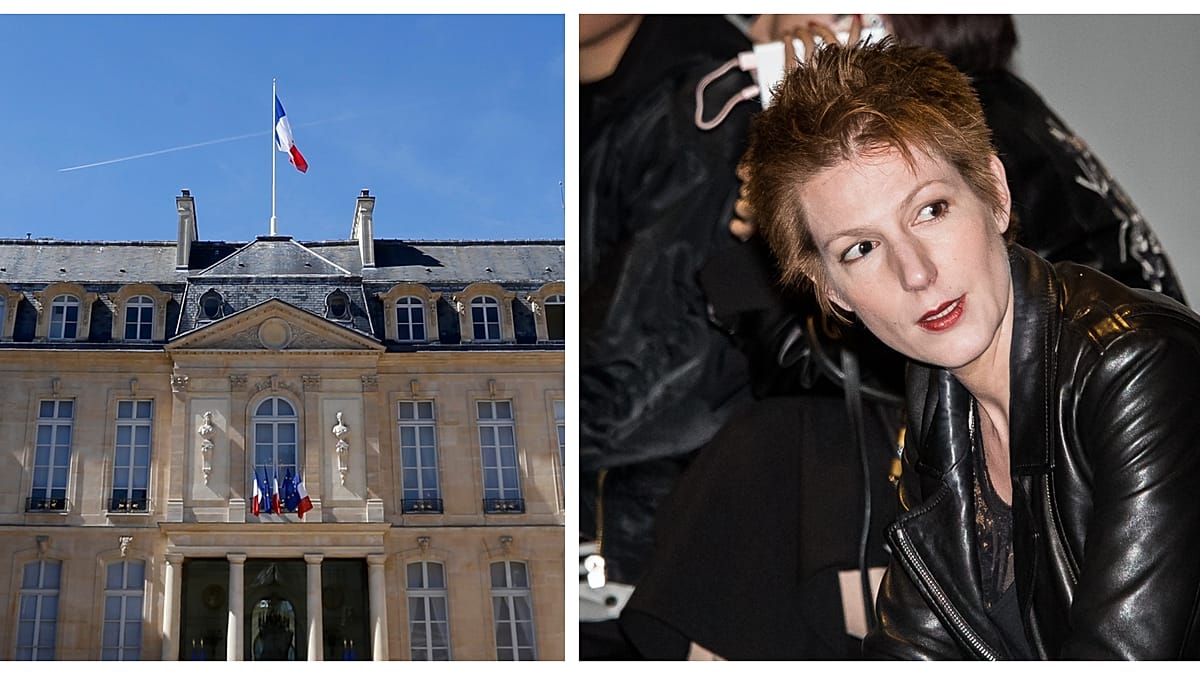
Natacha Polony, a well-known French journalist and essayist, has announced her intention to run for the French presidency in 2027, adding her name to a rapidly expanding list of hopefuls. Speaking on France Inter radio on Wednesday, the 51-year-old former editor-in-chief of Marianne magazine said she wanted to "shake up the political landscape," arguing that the country's current trajectory leaves her no choice but to step out of the commentary box.
Polony's announcement comes amid a period of political turbulence in France, with widespread student protests over school conditions and a contentious budget debate. She described the nation as mired in "chaos," citing a debt crisis, "tragic" unrest in secondary schools, and a "total lack of prospects" for ordinary citizens. Her rhetoric echoes the frustrations of many who feel left behind by the political establishment.
A sovereignist vision
In a video posted on social media shortly after her radio appearance, Polony outlined a platform centered on economic, energy, and food sovereignty. She called for a reindustrialization policy to "revive economic activity" and "bring money into the state's coffers." Her message is direct: "A nation that no longer produces what it needs is no longer truly free to fund our schools and hospitals, preserve our social model, create skilled jobs and prepare for artificial intelligence."
Polony insists that France must "produce at home, on our own terms," a stance that resonates with her "sovereigntist" label—though she rejects that term, calling it the system's "favourite anathema." Her movement, "Nous sommes la France," launched in late August, claims 60,000 members who want to "fight against France's decline."
Her critique extends to President Emmanuel Macron's European policy. In a heated televised debate with Foreign Minister Jean-Noël Barrot in late September, Polony accused him of treating France as a "small country." She argues that Paris "fantasises" about European unity and seeks "at all costs" to be "Europe's star pupil," even at the expense of France's "vital" interests. She points to the cancellation of the Franco-German fighter jet project and what she sees as France's willingness to sacrifice European preference in defense procurement, while Germany continues to buy American weapons systems.
A crowded field
Polony is not alone in seeking the Élysée. Nearly 30 public figures have either declared their candidacy or are being tipped to run. The main contenders include Marine Le Pen of the National Rally, Jean-Luc Mélenchon of La France Insoumise, and former prime ministers Édouard Philippe and Gabriel Attal. On the centre-left, Raphaël Glucksmann, who won the first round of the social-democratic primary, hopes to position himself as an alternative to Mélenchon's radical left.
Others, such as former Socialist president François Hollande, Dominique de Villepin, and Bruno Le Maire, have yet to reveal their intentions. The list remains provisional: to officially stand in the first round, scheduled for 18 April 2027, candidates must secure at least 500 sponsorships from elected officials.
Polony's entry into the race reflects a broader trend of outsiders challenging the traditional political class. Her emphasis on sovereignty and reindustrialization taps into a vein of public discontent that has been growing across Europe, as seen in recent protests in France over school conditions and budget cuts. Whether her message will resonate beyond her current supporters remains to be seen, but her candidacy adds another layer of unpredictability to an already volatile political landscape.