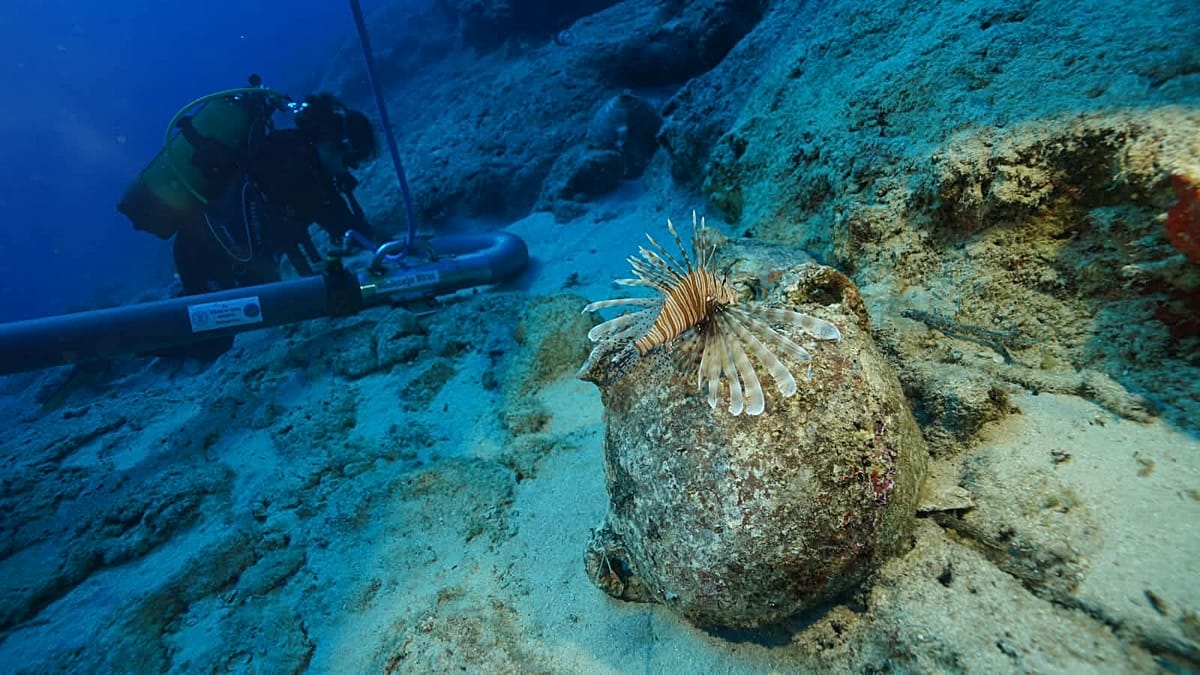
Off the coast of Antalya, near the sunken city of Kekova, marine archaeologists have brought to light what is believed to be the world's oldest shipwreck. The vessel, dating to the Early Bronze Age, has yielded a cargo of amphorae estimated to be between 4,400 and 4,700 years old, offering a rare window into the maritime networks that connected Anatolia with the wider eastern Mediterranean.
Turkey's Minister of Culture and Tourism, Mehmet Nuri Ersoy, announced the discovery on social media, framing it as a milestone for the country's underwater heritage. "In our 'Blue Homeland', we are bringing to light traces of the world's oldest shipwreck," he wrote, underscoring the significance of the find for understanding early seafaring.
A cargo that redraws trade routes
The amphorae, likely used to transport olive oil or wine, have undergone clay analysis that points to workshops in the Jordan Valley. Similar vessels have been found near the pyramids of Giza, Saqqara, and Abusir in Egypt, as well as in Troy and Crete. This distribution suggests the ship was part of an extensive exchange network, possibly sailing from a Levantine port toward the Aegean.
Researchers believe the vessel may have been heading to Troy or Crete when it sank. The find challenges previous assumptions about the scale of maritime commerce in the third millennium BCE, indicating that long-distance trade was more sophisticated than once thought.
Associate Professor Hakan Öniz of Akdeniz University, who leads the scientific excavations, has been credited by Minister Ersoy for his work. The project operates under permits from the Ministry of Culture and Tourism, with the Antalya Museum Directorate overseeing the dig, which began in 2026.
Life aboard: a churning amphora and goats
Among the recovered amphorae, one stands out for its two holes and nine distinct marks. Initial analysis suggests it may have been used as a churning jar for making cheese or butter. This raises the possibility that sailors carried goats on board, milking them during long voyages to produce fresh dairy—a glimpse into the daily realities of Bronze Age seafaring.
The discovery adds a human dimension to the study of ancient trade, complementing the commercial narrative with insights into diet and shipboard life. It also highlights the importance of preserving underwater cultural heritage, a priority Ersoy reiterated in his statement.
The wreck off Kekova is not an isolated find. In recent years, the region has become a focal point for underwater archaeology, with earlier reports of ancient vessels in Turkish waters. The new discovery, however, pushes the timeline back significantly, offering a benchmark for future research.
As excavations continue, the team hopes to recover more artifacts and perhaps identify the ship's exact origin. The amphorae's clay composition, already linked to the Jordan Valley, may eventually be matched to specific production sites, refining our understanding of Bronze Age economies.
For now, the wreck stands as a testament to the ingenuity of early mariners and the interconnectedness of ancient Mediterranean societies. It also reinforces Turkey's role as a guardian of this shared heritage, with the potential to reshape narratives about the region's past.
The find comes at a time when Antalya is hosting COP31, drawing global attention to the region. While the conference focuses on climate, the shipwreck offers a reminder of the deep historical ties between human activity and the sea.