The pursuit of a longer life has spawned a lucrative industry of peptides, red-light masks and supplement regimes, but the evidence from the world's so-called blue zones points somewhere far more mundane: daily walking, simple food, a glass of wine shared with friends and a dense web of social ties. Europe has two officially recognised blue zones — Ikaria in Greece and Sardinia in Italy — yet the habits associated with them are hardly confined to those islands.
That is the premise behind a new ranking from the villa holiday company CV Villas, which scored almost 100 European destinations against lifestyle principles drawn from Dan Buettner's Power 9 blue-zone research. Each place received a longevity score out of 100, built from measures including walkability (based on elevation range), pace of life (average annual working hours), the number of vegan-friendly restaurants and wineries per capita, and community (cafés and churches per capita).
Malta punches above its weight
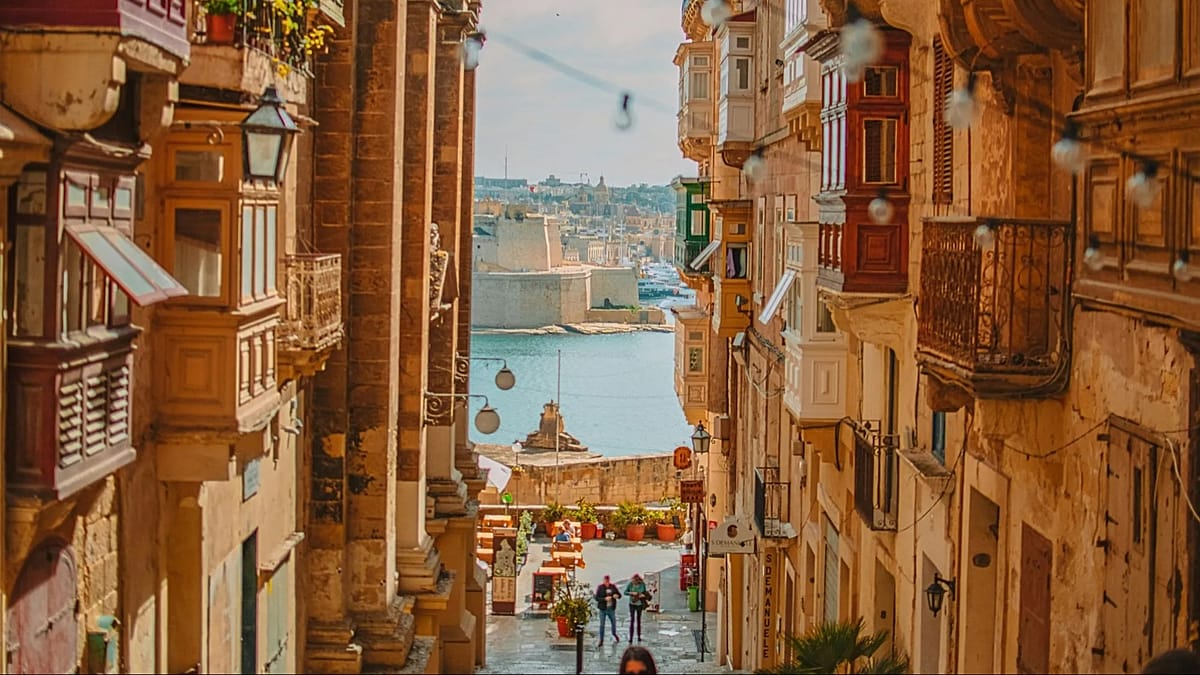
The Maltese capital, Valletta, took first place, praised for its compact, walkable streets and its sociable dining culture. Four of the top 20 entries are Maltese, with Mdina in fifth, St. Julian's in 15th and Gozo in 16th — a striking result for an archipelago of just over half a million people.
Paxos, the small Ionian island off Greece's western coast, came second. The ranking highlighted its unhurried, close-knit community life and its unspoilt landscape, arguing that visitors are drawn into the local rhythm rather than merely observing it. St. Tropez in France took third, while fourth place went to a less predictable name: Eger in Hungary.
The historic northern Hungarian town earned its position through walkability and a moderate, sociable drinking culture centred on the Bull's Blood red wine blend, shared over long dinners — the kind of restrained, communal consumption that researchers associate with longevity rather than its opposite.
Rounding out the top ten were Mdina in Malta, Ibiza in Spain, Taormina in Italy, Lefkada in Greece, Budva in Montenegro and Dingle in Ireland. The remainder of the list ranged widely across the continent: Nesebar in Bulgaria, Bad Ischl in Austria, Piran in Slovenia, Ålesund in Norway, Ksamil in Albania, Levoča in Slovakia, Bordeaux in France and Novi Sad in Serbia.
What the ranking is really measuring
The methodology is deliberately broad, and the results should be read as a prompt rather than a prescription. Walkability, for instance, was inferred from elevation range — a proxy that favours compact coastal towns over sprawling capitals. Working hours stand in for pace of life, and the density of cafés and churches for social infrastructure. It is an imperfect but revealing portrait of the kind of places where the everyday environment nudges residents towards movement, moderation and company.
"From their walkability to their good food, sense of community and general downshift from the pace of life so many of us are used to, these destinations offer everything that a good, restful holiday should be," said Hannah Marshall, marketing manager at CV Villas.
Marshall added that while Europe has only two officially designated blue zones, the company's destination expertise suggests many other places on the continent sustain a comparable way of life.
The findings sit alongside a broader shift in European travel habits. Operators are reporting growing appetite for slower itineraries and nature-first wellness, a trend captured in Hilton's 2027 travel forecast, and in the deliberate refusal to over-schedule that has been labelled the anti-optimised holiday. Both point in the same direction as this ranking: less doing, more being.
For travellers tempted to test the thesis, the practical takeaway is unglamorous. Choose a place small enough to cross on foot. Eat what grows nearby. Spend the evening at a table with other people rather than alone with a screen. The Maltese and Greek entries may have scored highest, but the underlying logic travels well — from the Adriatic to the Norwegian fjords.