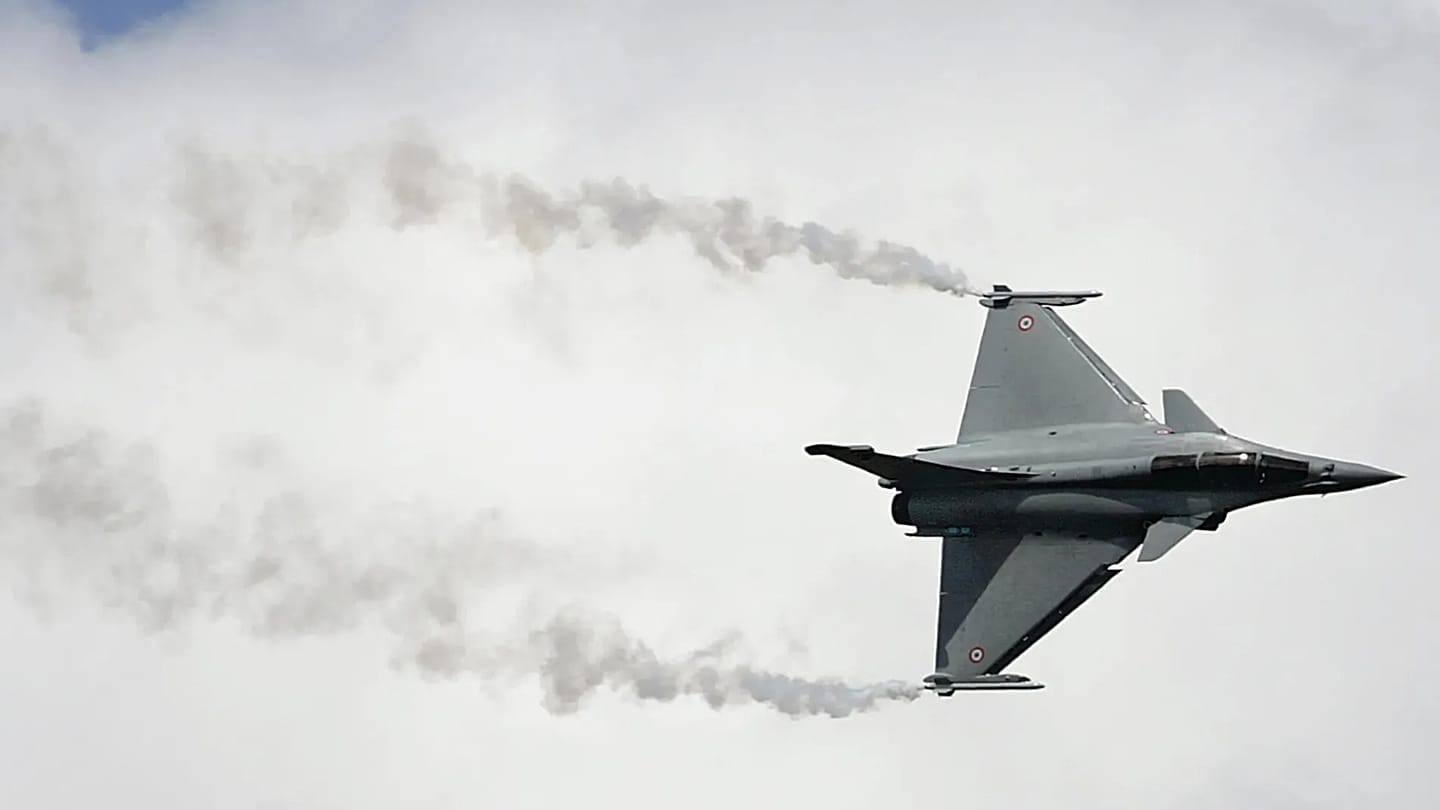
Europe's most ambitious joint defence project, the Future Combat Air System (FCAS), has been officially abandoned after French and German industrial partners failed to bridge years of disagreements. The project, which was meant to produce a next-generation fighter jet by 2040, collapsed despite repeated attempts by political leaders in Paris and Berlin to mediate.
The FCAS programme, led by France's Dassault Aviation and Germany's Airbus Defence and Space, was conceived as a flagship of European strategic autonomy. It aimed to replace the Rafale and Eurofighter fleets with a single platform, integrating drones and advanced sensors. However, from the outset, the two companies clashed over work-sharing arrangements, intellectual property rights, and the division of technological responsibilities.
French officials had insisted that Dassault, as the prime contractor, should retain control over the aircraft's core design and software. German executives, meanwhile, pushed for a more balanced partnership, arguing that Airbus's experience with the Eurofighter and its broader industrial base warranted a larger role. These tensions never eased, despite multiple high-level summits involving President Emmanuel Macron and Chancellor Olaf Scholz.
Industrial Rivalry Undermines Political Will
The failure of FCAS is not an isolated incident. It reflects a broader pattern of Franco-German industrial rivalry that has hampered several joint defence initiatives. The two countries have historically struggled to align their defence industrial strategies, with France favouring a more centralised, state-led model and Germany leaning toward a consortium-based approach involving multiple stakeholders.
In the case of FCAS, the disputes became so entrenched that by 2024, the project had effectively stalled. A planned demonstrator aircraft, which was supposed to fly by 2027, never progressed beyond the design phase. The final blow came when Dassault and Airbus failed to agree on the terms for the next development phase, known as 1B, which would have defined the jet's final configuration.
Political leaders in both countries expressed disappointment but stopped short of assigning blame. A French defence ministry spokesperson said the project had been "a victim of its own complexity," while a German official noted that "industrial realities cannot always be overridden by political ambition."
What Happens Next for European Air Power?
The collapse of FCAS leaves a significant gap in Europe's future air combat capabilities. Both France and Germany now face the prospect of developing separate fighter programmes or seeking alternatives outside the EU. France may accelerate plans for a Rafale successor, while Germany could look to the UK-led Tempest project, which is part of the Global Combat Air Programme (GCAP) alongside Italy and Japan.
In a related development, an Airbus-led consortium has already proposed a new fighter jet concept, signalling that the industrial appetite for a European solution remains strong. However, without Franco-German alignment, such efforts risk fragmentation. The UK, Switzerland, and Norway, as non-EU members, are also watching closely, as they have historically relied on European fighter platforms.
The FCAS failure also raises questions about the EU's ability to coordinate large-scale defence projects. The European Commission has promoted the European Defence Fund as a tool to foster collaboration, but the FCAS experience suggests that national industrial interests still trump collective goals. As one analyst put it, "Europe can build a single market for goods and services, but building a single market for defence remains a distant dream."
For now, the Franco-German partnership, long seen as the engine of European integration, has suffered a notable setback. Whether the two countries can salvage their defence relationship will depend on their willingness to compromise on future projects. The stakes are high: without a credible joint fighter programme, Europe risks falling further behind the United States and China in military aviation technology.