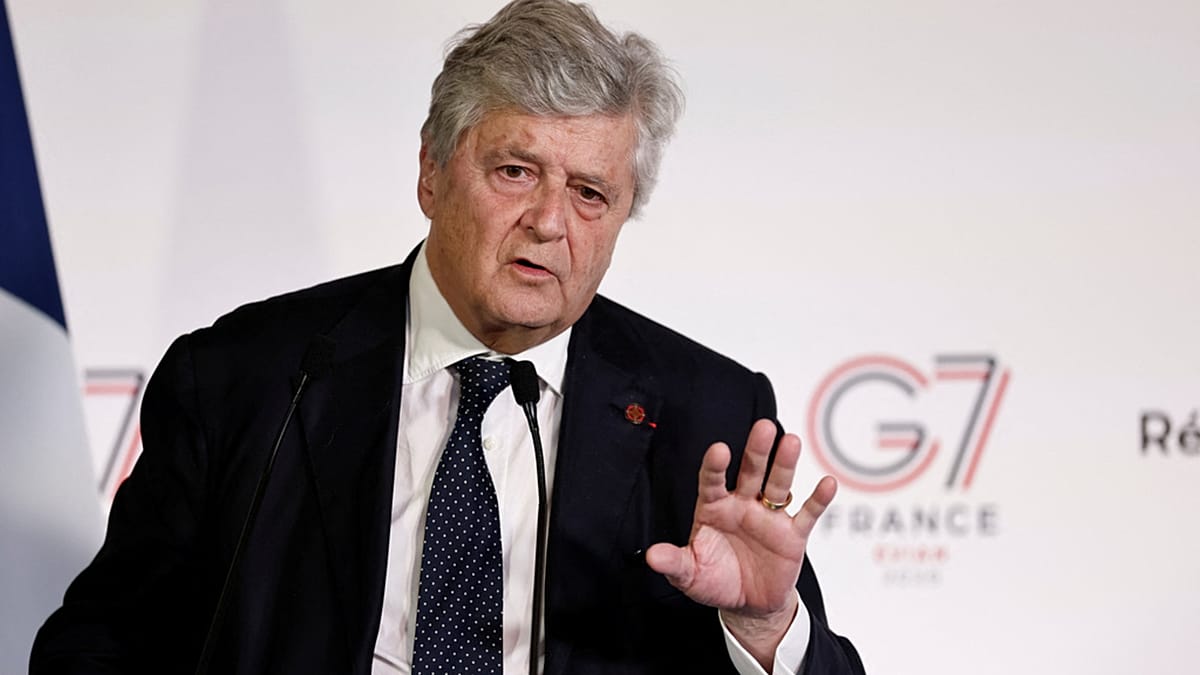
France’s Minister for Foreign Trade, Nicolas Forissier, has issued a stark warning to Beijing: China will gain nothing by undermining European industry. Speaking to Euronews’ 12 Minutes With programme, Forissier argued that the European Union must abandon its previous naivety and adopt a tougher stance on trade imbalances, not only with China but with all nations that weaponise commercial dependencies.
“The Chinese have to understand that they won't win anything if they destroy the European industry and then the European market, which is an essential market for them,” Forissier said. His remarks come as the European Commission prepares for a highly anticipated “orientation debate” next Friday, where President Ursula von der Leyen’s team will discuss a range of measures to shield the bloc from a surge of cheap Chinese imports.
EU Considers New Trade Defense Tools
Among the options under consideration are plans to require EU companies to source components from at least three different suppliers, reducing reliance on any single foreign manufacturer. Forissier endorsed this approach, stating, “Yes, we have to.” The bloc may also impose extra tariffs on strategic sectors such as chemicals, or use anti-dumping and anti-subsidy duties to correct import prices that fall below those on the Chinese market.
The EU’s goods trade deficit with China reached €359.3 billion in 2025, an increase of nearly 20% from the previous year. This widening gap has intensified calls for action, particularly from France, which has long advocated for targeted measures to counter aggressive trade practices, including state subsidies, industrial overcapacity, and restrictions on critical raw materials.
China has already warned of retaliation if the EU introduces new curbs. Forissier stressed the importance of “frank” dialogue with Beijing, noting France’s “special relationship” with China that requires “negotiations” and “respect.” He added, “We try to respect the Chinese. The Chinese have to respect us and this is the message European institutions have to send.”
The debate among EU leaders is expected to continue when the 27 member states gather in Brussels in mid-June. The outcome could reshape the bloc’s trade policy for years to come, as Europe seeks to balance economic openness with strategic autonomy. Forissier’s comments reflect a broader shift in European thinking, moving away from a purely free-trade ideology toward a more assertive defense of domestic industries.
This stance aligns with recent EU efforts to diversify supply chains, as highlighted by the EU Industry Chief urging companies to diversify amid ongoing tensions. Similarly, the EU-Mexico updated trade deal signals a broader strategy to reduce dependence on both the US and China.
Forissier’s message is clear: Europe will no longer tolerate practices that threaten its industrial base. Whether China heeds the warning remains to be seen, but the EU is preparing to act regardless.