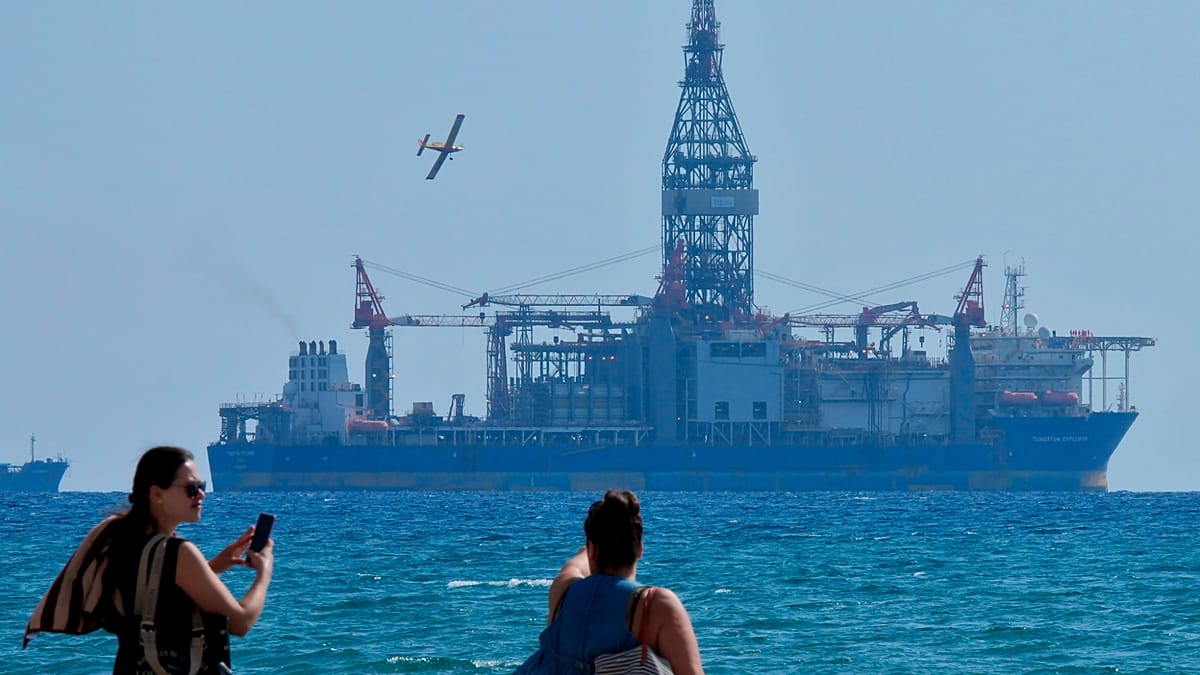
QatarEnergy has signed a memorandum of understanding with ExxonMobil and Egypt’s Ministry of Petroleum and Mineral Resources to explore the development and export of natural gas discovered off the coast of Cyprus. The agreement, signed by Egyptian petroleum minister Karim Badawi, places the Qatari state-owned energy company at the centre of a broader push to link Cypriot offshore gas fields with Egyptian liquefaction infrastructure and European buyers.
Cyprus lacks its own liquefaction facilities, meaning any gas extracted from its offshore fields must first be piped underwater to Egypt, where it is processed and liquefied before being shipped to European markets. This latest deal builds on a 15-year agreement signed in April by partners in Cyprus’s Aphrodite field to sell all recoverable natural gas from the reservoir to the Egyptian Natural Gas Holding Company, with an option to extend for another five years.
Egypt’s Gateway Role
Egypt is steadily becoming the primary outlet for Cypriot gas. The memorandum of understanding signed this week formalises a route that has been under discussion for years. President Nikos Christodoulides of Cyprus said the approvals mark a turning point, moving the country from exploration to the exploitation of its natural gas resources. “This is a significant step for Cyprus, transforming our offshore discoveries into commercial reality,” he stated.
QatarEnergy and ExxonMobil are already partners in Block 10, where the Glaucus discovery—made in 2019 and estimated to hold around 3.7 trillion cubic feet of gas—is one of Cyprus’s most significant offshore finds. A second discovery in the same block, Pegasus, was identified in 2025, and in March the consortium formally declared both fields commercially viable, with combined reserves of around 7 trillion cubic feet.
QatarEnergy chief executive Saad Sherida Al Kaabi said the agreement was “an important step in advancing regional energy cooperation across the Eastern Mediterranean.” The deal also reinforces QatarEnergy’s expanding footprint in the region, complementing its $10bn Texas LNG project that shipped its first cargo to global markets earlier this year.
European Energy Diversification
The route could matter for Europe, which has been seeking more diverse gas supplies since Russia’s invasion of Ukraine disrupted long-standing energy flows. Cypriot gas alone is unlikely to transform Europe’s energy balance, but it could add another supply option from the Eastern Mediterranean. The European Union has been actively supporting such projects as part of its broader strategy to reduce dependence on Russian energy, though the bloc has also faced criticism over its migration deals with Cairo, as highlighted in the EU’s billions pledged to Egypt for migration control.
The plan remains at an early stage. No final investment decision has been made, and details such as infrastructure links and commercial terms have yet to be agreed. However, the memorandum of understanding signals a clear intent to move forward, with QatarEnergy, ExxonMobil, and the Egyptian government all committed to exploring the feasibility of the project.
For Cyprus, the deal ends more than a decade of uncertainty over how to monetise its offshore gas discoveries. The island nation has long sought to turn its natural resources into commercial exports, and this agreement provides a concrete pathway. For Egypt, it cements its role as the Eastern Mediterranean’s dominant energy hub, leveraging its existing liquefaction plants and strategic location to serve both domestic and international markets.
The broader geopolitical context also matters. The Eastern Mediterranean has become a focal point for energy competition and cooperation, with countries like Israel, Greece, and Turkey also vying for influence. Egypt’s central role in this deal could help stabilise regional dynamics, though tensions remain, particularly over issues like the accusations of Egypt accepting stolen Ukrainian grain.