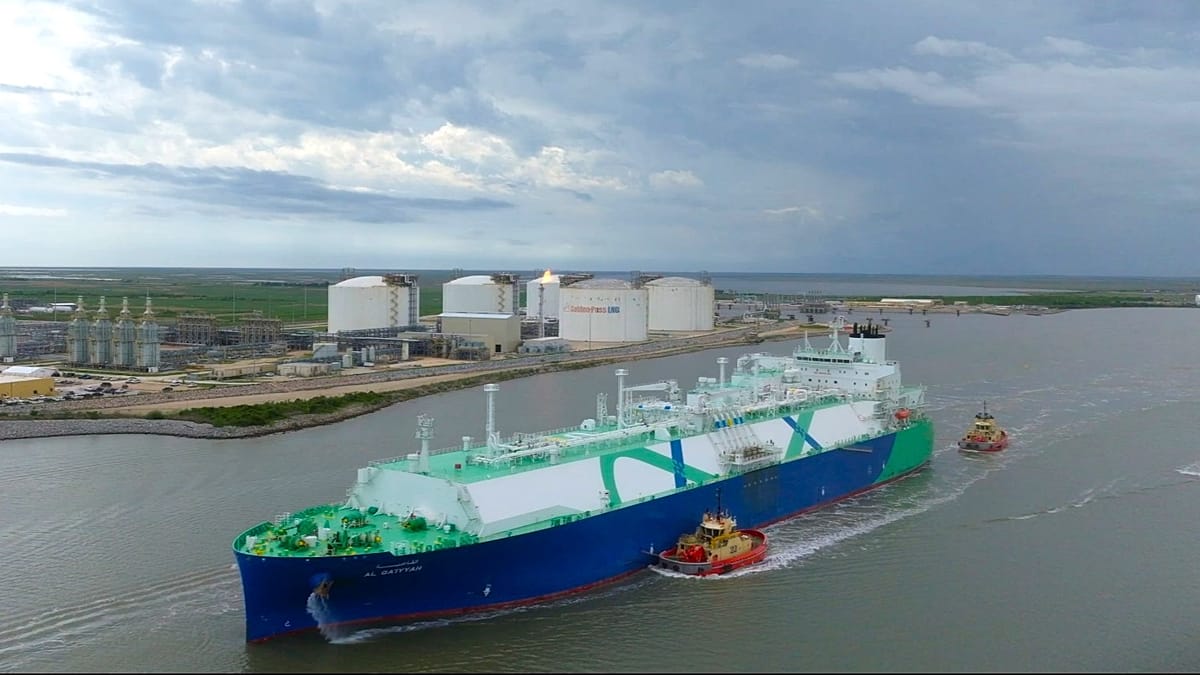
QatarEnergy has shipped its first liquefied natural gas (LNG) cargo from the Golden Pass export terminal in Sabine Pass, Texas, marking a significant step in the state-owned company's strategy to expand beyond its domestic production base. The cargo, carried aboard the LNG carrier Al-Qaiyyah (capacity 174,000 cubic metres), was loaded at a facility that represents one of the largest single foreign investments by Qatar in the United States.
The Golden Pass project, valued at more than $10 billion (€8.5 billion), is a joint venture in which QatarEnergy holds a 70% stake and ExxonMobil the remaining 30%. Once all three liquefaction trains are operational, the terminal is expected to produce around 18 million tonnes per annum (mtpa). Train 1 achieved first LNG production in late March 2026, with Trains 2 and 3 scheduled to come online over the course of 2026 and 2027.
Strategic Expansion Beyond Qatar
Saad Sherida Al-Kaabi, Qatar's Minister of State for Energy Affairs and CEO of QatarEnergy, described the milestone as “a new chapter in QatarEnergy's global efforts to meet rising LNG demand and ensure reliable supplies to international markets.” The company is simultaneously pursuing the North Field expansion project, which aims to raise Qatar's domestic production capacity to 142 mtpa by 2030.
The United States is currently the world's largest LNG exporter, and the Golden Pass facility gives QatarEnergy direct access to export capacity on the US Gulf Coast. From there, cargoes can reach both European and Asian markets, offering flexibility in a market where demand remains robust. European buyers, in particular, have been seeking to diversify supply sources since the sharp reduction in Russian pipeline gas deliveries following the invasion of Ukraine.
QatarEnergy Trading, the company's marketing arm, is expected to take around 70% of the output from the terminal. The remaining volumes will be marketed by ExxonMobil. The project adds to the growing list of US LNG export facilities that have come online in recent years, further cementing America's role as a swing supplier in global gas markets.
For European energy security, the timing is notable. While the continent has made progress in reducing its reliance on Russian gas, it still faces challenges in securing long-term supply contracts. The Golden Pass project, with its phased ramp-up, could help meet some of that demand, particularly if European buyers sign term deals with QatarEnergy. The company has already secured long-term offtake agreements with several European utilities, though specific volumes from Golden Pass have not been disclosed.
The project also comes as global LNG demand remains strong, particularly in Europe and Asia, keeping pressure on new supply. Analysts note that while the US has ample gas reserves, the pace of new LNG export capacity additions has been constrained by regulatory hurdles and construction delays. Golden Pass, which was originally sanctioned in 2019, has faced its own set of challenges, including cost overruns and schedule adjustments.
Beyond energy markets, the investment underscores the deepening economic ties between Qatar and the United States. For European observers, the development highlights the growing importance of US LNG as a strategic asset for the continent's energy diversification. As European Union leaders continue to discuss energy security and the transition to cleaner fuels, projects like Golden Pass offer a tangible source of supply that can complement renewables and domestic production.
In a broader context, the expansion of QatarEnergy's global portfolio reflects a trend among major LNG producers to secure downstream capacity in key demand regions. This strategy not only provides market access but also hedges against geopolitical risks that could affect shipping routes, such as the ongoing tensions in the Strait of Hormuz. For European policymakers, ensuring that such supply chains remain open and diversified will be a priority in the years ahead.