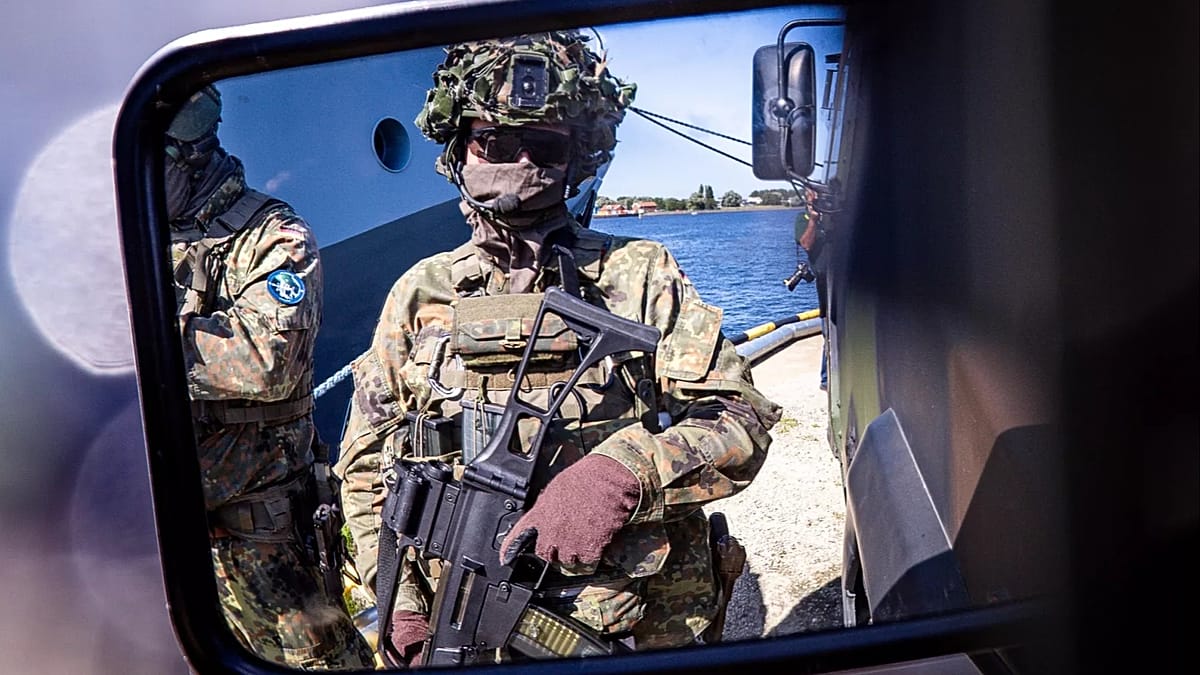
Berlin has confirmed that Germany and the Netherlands will deploy a joint tactical headquarters in the Baltic region later this year, reinforcing NATO's eastern flank and bolstering deterrence against Russia. The announcement, made by the German defence ministry on Thursday, marks a significant step in the alliance's efforts to adapt to heightened security threats along Europe's eastern border.
The command centre, known as the 1st German-Netherlands Corps (1GNC), will assume a command role specifically in Estonia and Latvia in the coming months. The unit, which can control up to 50,000 troops if needed, is tasked with planning and executing military exercises, preparing for potential conflict, and leading forces in the event of war. Its deployment is intended to provide NATO with greater operational capacity and faster response times in a region that has become a focal point of tensions with Moscow.
Strengthening NATO's Eastern Flank
Currently, NATO forces in the Baltics fall under a single headquarters in the Polish city of Szczecin. The addition of a second corps headquarters in the region is designed to distribute command responsibilities and improve readiness. The German defence ministry stated that the move demonstrates Germany and the Netherlands' willingness to assume responsibility for deterrence and defence on NATO's eastern flank.
1GNC, which was established in 1995, rotates command between Germany and the Netherlands. Germany currently holds command until early 2028. Beyond the two lead nations, 14 other NATO member states contribute staff to the headquarters, reflecting the alliance's collective approach to regional security.
The deployment comes amid a broader NATO effort to enhance security in the Baltic Sea. In mid-January last year, the alliance launched the Baltic Sentry programme to improve surveillance and protection of critical undersea infrastructure following a series of suspected sabotage incidents. More recently, European Commission President Ursula von der Leyen warned that a spate of drone incursions into EU airspace over the past weeks are not isolated incidents, as Baltic leaders and EU officials caution that hybrid threats along Europe's eastern border are intensifying.
Germany's decision to establish a new command centre in the Baltics also reflects its evolving role within NATO. As Europe's largest economy, Berlin has increasingly taken on a leading role in the alliance's deterrence posture, particularly after Russia's full-scale invasion of Ukraine. The move aligns with broader shifts in German defence policy, including increased military spending and a focus on modernising the Bundeswehr.
The Netherlands, a key NATO ally with a strong naval and land force tradition, has been a close partner in these efforts. The two countries have a long history of military cooperation, and the 1GNC has previously deployed for NATO missions in the Balkans and Afghanistan.
The announcement has been welcomed by Baltic officials, who have long called for a more robust NATO presence in their region. Estonia and Latvia, both of which share borders with Russia, have been particularly vocal about the need for enhanced deterrence. The new headquarters is expected to improve coordination among allied forces stationed in the Baltics, including the multinational battlegroups led by the United Kingdom and Canada.
While the deployment is primarily a military measure, it also carries political significance. By establishing a second corps headquarters in the region, Germany and the Netherlands are signalling their long-term commitment to European security. The move is likely to be seen as a counterbalance to Russia's military build-up in the Kaliningrad exclave and Belarus, as well as a reassurance to NATO's eastern members.
The 1GNC's role will extend beyond deterrence. The unit will also be responsible for planning and running exercises, which are crucial for maintaining interoperability among allied forces. In a crisis, the headquarters would serve as a command node for coordinating multinational operations, ensuring that NATO can respond swiftly and effectively to any threat.
As Europe faces a complex security environment, the deployment of the German-Dutch command centre underscores the alliance's adaptability. With hybrid threats, sabotage, and drone incursions on the rise, NATO is seeking to bolster its presence without escalating tensions. The new headquarters in the Baltics represents a measured but firm step in that direction.