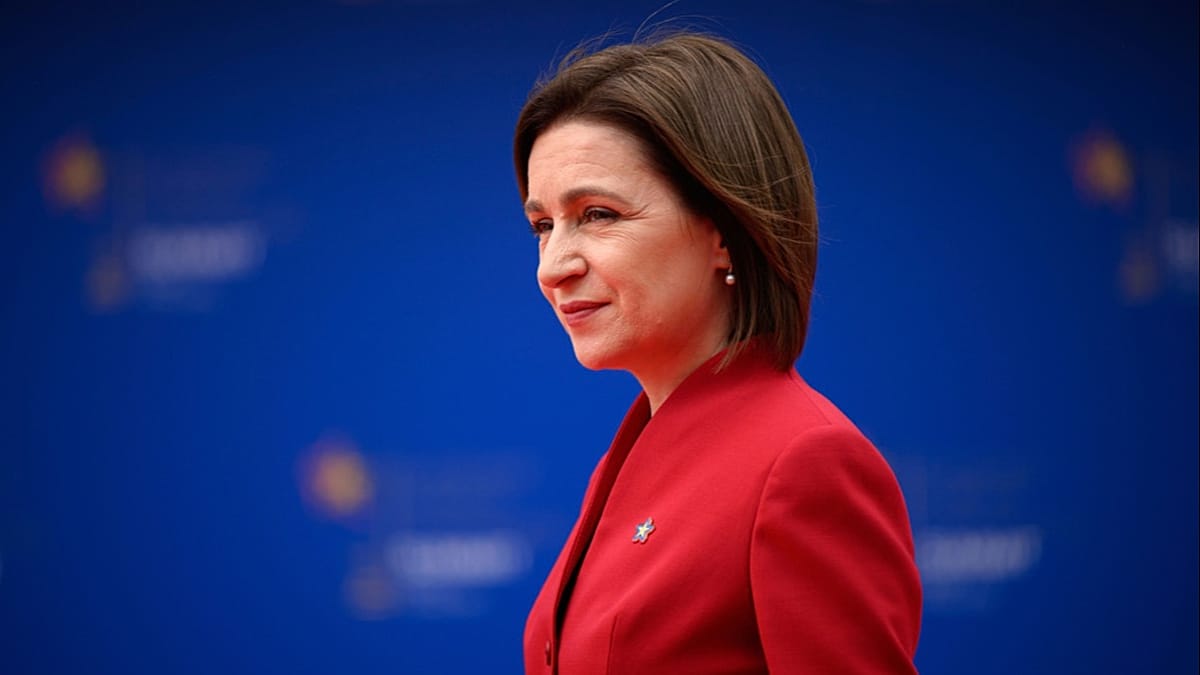
Moldova's pro-European President Maia Sandu has put forward Vasile Tofan, a Harvard-educated businessman, as the country's next prime minister. The nomination, announced on Saturday, follows the resignation of Alexandru Munteanu earlier this month amid tensions with the ruling majority.
In a video posted to social media, Sandu outlined Tofan's primary responsibilities: steering Moldova closer to European Union membership, strengthening state institutions, and reviving an economy that has struggled for years. "Integration into the European Union is our strategic goal," she said, adding that the nominee must also "strengthen the resilience of state institutions and society."
Tofan now has two weeks to secure parliamentary approval. He will need to present his government programme and cabinet nominations to the legislature, where Sandu's Action and Solidarity Party (PAS) holds a majority after winning the September elections. Igor Grosu, the PAS leader, confirmed on Friday that he had selected Tofan as his candidate, citing shared objectives on "EU accession in the years to come, institutional reform and economic growth."
A Businessman with European Credentials
Tofan, who turns 44 on Sunday, holds a degree in public management from the Netherlands and is a graduate of Harvard Business School. He serves as a managing partner at Horizon Capital, a private equity firm with significant investments in Ukraine and Moldova. He has also chaired the board of Moldova's Purcari winery, a flagship of the country's wine industry.
His nomination comes at a critical juncture for Moldova. The European Union formally launched the first round of accession negotiations with both Ukraine and Moldova last month, following their designation as official candidate countries in June 2022. The EU has also unlocked a sixth accession cluster for the two countries, signaling continued momentum in the enlargement process.
Munteanu, Tofan's predecessor, resigned on 3 July after less than eight months in office. A former World Bank employee like Sandu, he had been tasked with boosting the economy and advancing EU integration but cited irreconcilable differences with PAS. "I can no longer carry out my mandate according to my principles and my convictions," he stated at the time.
The political turbulence in Chișinău underscores the challenges of balancing domestic reform with the demands of EU accession. Tofan's business background and international experience may help him navigate these complexities, but he will need to maintain the support of PAS and address deep-seated economic issues, including years of decline and the impact of the war in neighboring Ukraine.
Moldova's path to EU membership remains a central theme in the country's politics. Sandu, a staunch advocate of European integration, has made it a cornerstone of her presidency. The success of Tofan's government will depend on its ability to implement institutional reforms, attract investment, and sustain public confidence in the European project.