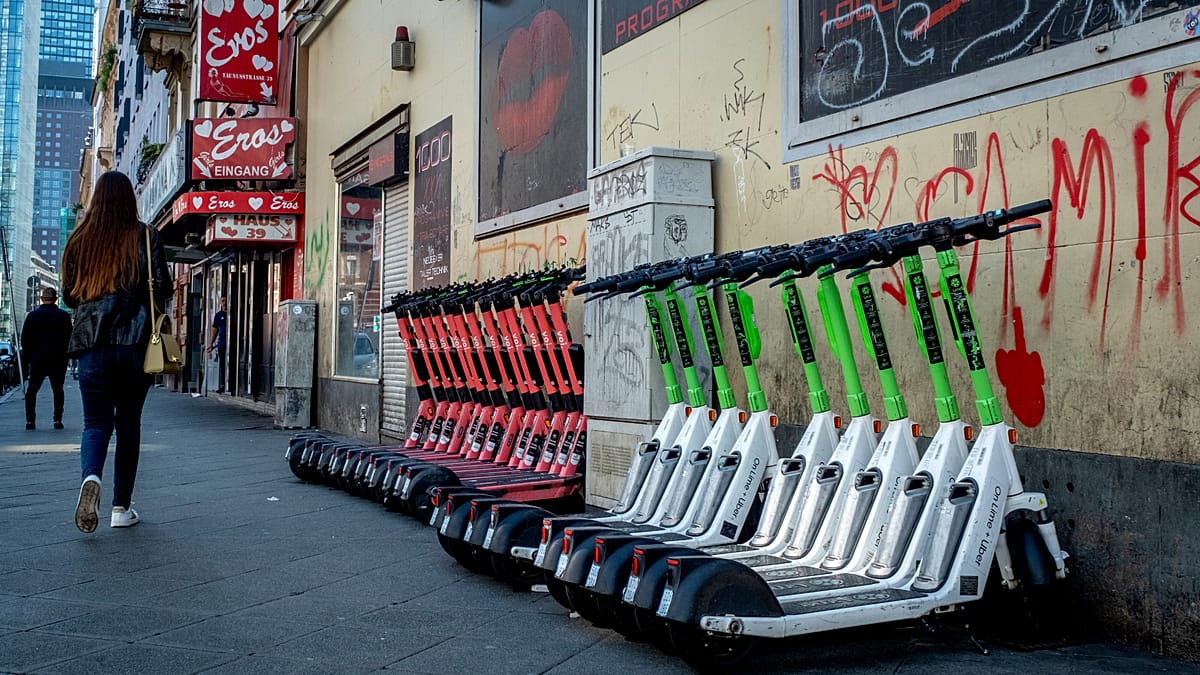
Berlin is moving to overhaul liability rules for rental e-scooters, a change that would force operators like Lime and Bolt to pay compensation for accidents involving their vehicles — even when the rider cannot be identified. The German Federal Ministry for Justice and Consumer Protection has drafted a bill that would impose strict liability on fleet owners, closing a legal gap that has left many victims without recourse.
Under current German law, anyone injured by an e-scooter must prove the rider was at fault — a standard that is often impossible to meet when the rider flees or cannot be traced. The new rules would flip that burden: operators would be liable as owners regardless of fault, while riders would be presumed at fault unless they can prove otherwise. The bill also covers accidents caused by scooters left blocking pavements, a common nuisance in cities like Berlin, Munich, and Hamburg.
Why the change now?
The number of insured e-scooters in Germany has surged more than fivefold, from 180,000 in 2020 to 990,000 in 2023, according to the German Insurance Association (GDV). Third-party damage claims rose from 1,150 to 5,000 over the same period. Rental scooters represented roughly one-fifth of insured e-scooters in 2023 but accounted for about 40% of claims, highlighting a disproportionate risk from shared fleets.
“The economic benefits of these services are largely enjoyed by fleet operators as vehicle holders,” the ministry said in its justification for the bill. “It therefore appears logical that whoever benefits from an activity should also bear the risk it creates.” The government argues that the current rules no longer reflect the rapid growth of e-scooters on German streets.
The proposed law would apply to e-scooters and some self-balancing vehicles but explicitly excludes e-bikes. It is part of a broader European trend: cities from Paris to Copenhagen have already banned or restricted shared e-scooters over safety and public-space concerns. Authorities have also warned that lithium-ion batteries in e-scooters can cause serious fires when damaged or improperly charged.
For now, the bill must pass through the Bundestag. If enacted, it would mark one of the strictest liability regimes for rental micromobility in Europe, potentially setting a precedent for other EU member states grappling with similar issues. The move comes as Germany also debates other regulatory changes, including revoking temporary protection for military-age Ukrainian men and approving Tomahawk missile sales from the US.
Rental companies have not yet publicly responded to the draft. But the shift could increase operating costs in Germany, one of their largest European markets. The GDV data suggests that the current system has left insurers and victims bearing costs that the ministry now wants to assign to fleet operators.
For pedestrians and cyclists in German cities, the change could mean safer streets — and a clearer path to compensation when things go wrong.