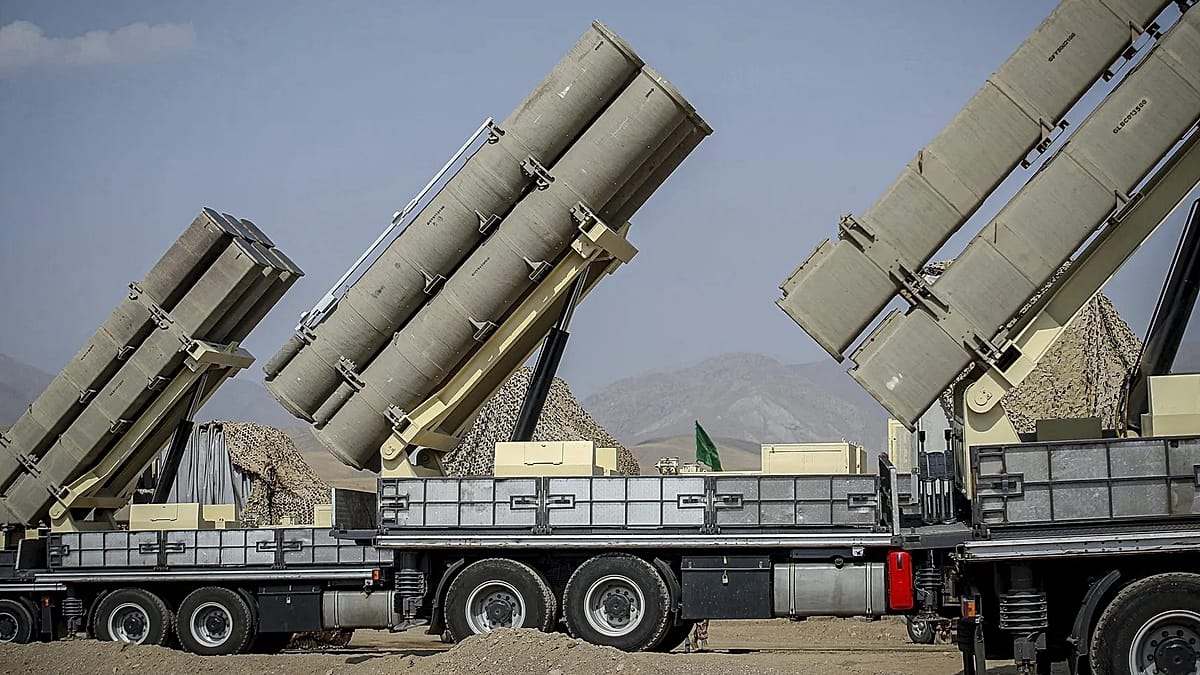
The Gulf states are scrambling to contain a rapidly deteriorating security situation after a fresh round of military exchanges between the United States and Iran. Over the past 24 hours, Tehran launched strikes on Kuwait and Bahrain and targeted a Qatari tanker, Al Rekayyat, alongside a Saudi vessel. The escalation culminated in US President Donald Trump declaring at the NATO summit in Ankara that the US-Iran ceasefire is effectively "over."
Gulf States Walk a Diplomatic Tightrope
In response, Gulf capitals issued coordinated statements condemning Iran's actions while carefully leaving the door open for continued diplomacy. The unified approach reflects a shared conviction among the six Gulf Cooperation Council (GCC) members—Saudi Arabia, the UAE, Qatar, Oman, Kuwait, and Bahrain—that a return to full-scale war is unacceptable.
Qatar, which has played a pivotal mediating role in US-Iran negotiations, summoned Iran's deputy ambassador to Doha to deliver a formal protest. The foreign ministry described the attack on the Qatari tanker as "a grave violation of the safety of international navigation, a direct threat to global energy supply security, and a clear and flagrant breach of international law." Doha demanded that Tehran "immediately cease any practices that compromise the security of the region" and reserved the right to take appropriate measures under international law.
Anwar Gargash, diplomatic advisor to the UAE president, warned that Iran is not capable of "turning the page on war." He added: "The Gulf Arab states cannot remain a target for Iran's wavering between the logic of escalation and the path of rationality, stability and peace."
Oman, which has long sought to mediate a joint control mechanism for the Strait of Hormuz, condemned the Iranian strikes on both Bahrain and Kuwait and the attacks on Saudi and Qatari vessels. Muscat called on all parties to return to diplomacy rather than escalate the crisis further.
Kuwait denounced the "heinous" Iranian aggressions against its territory and Bahrain, while GCC Secretary General Jassem Mohamed Albudaiwi declared that "the attacks confirm Iran's continued approach aimed at undermining international and regional efforts to establish security and peace and resolve the crisis."
Strait of Hormuz at the Centre of the Crisis
The latest flare-up comes just days before a scheduled round of US-Iran negotiations under the framework deal aimed at ending the war. Trump indicated he would allow talks to continue but described dealing with Tehran as "a waste of time."
Iranian affairs observer Hamidreza Azizi noted that by targeting a Saudi and a Qatari tanker in the Strait of Hormuz, Tehran is sending a clear signal: neither the signing of a memorandum of understanding with the US nor its desire to improve relations with Gulf Arab states should be interpreted as a green light for regional countries to move freely through the waterway while disregarding Iran's claim to control it.
The Strait of Hormuz, a chokepoint for about 20% of the world's oil supply, remains a flashpoint. Iran's actions suggest it is determined to assert its dominance over the strategic waterway, even at the risk of further military confrontation.
For European observers, the crisis underscores the fragility of Middle Eastern security and its direct impact on global energy markets. The EU has long supported diplomatic efforts to de-escalate tensions, but with the ceasefire in tatters and negotiations hanging by a thread, the continent faces renewed uncertainty over energy supplies and regional stability.
As the Gulf states brace for what may come next, their collective plea for restraint and dialogue remains the only viable path forward—one that Europe, with its own stakes in the region, can only hope will prevail.