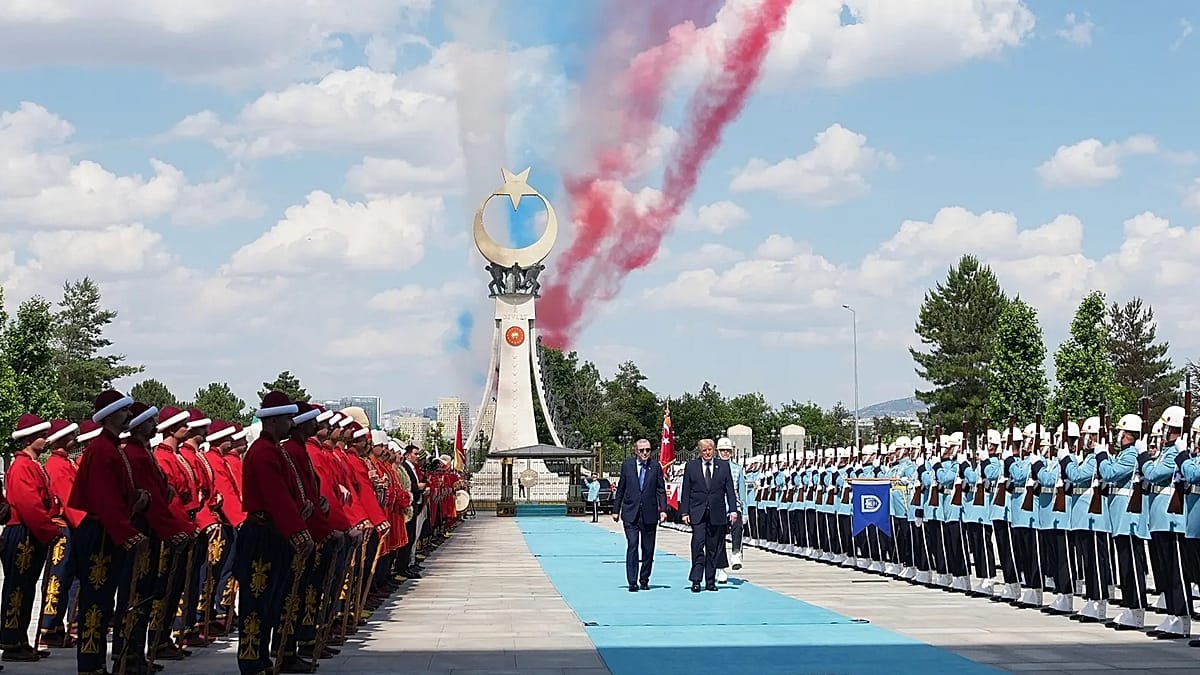
ANKARA — The second day of the NATO summit in the Turkish capital is proving to be a diplomatic minefield, as US President Donald Trump has once again revived his contentious push for Greenland, the semi-autonomous Arctic territory of Denmark. Arriving in Ankara on Tuesday, Trump told reporters that the United States should “control” Greenland, reprising a claim he first made earlier this year and drawing an immediate rebuke from Copenhagen.
Speaking at the summit on Wednesday morning, Danish Prime Minister Mette Frederiksen was unequivocal: “Greenland is of course not for sale. We are a sovereign state and we need everyone to respect our territorial integrity.” She added that Denmark is prepared to defend all NATO territory, including its own, and noted that Greenlanders have repeatedly made clear they do not wish to become part of the United States. Polls among the island’s population consistently show overwhelming opposition to any US annexation.
Trump’s remarks come despite a historic surge in defence spending by European and Canadian allies, a fact that has done little to temper his criticism of NATO members. He accused Denmark of underinvesting in Greenland’s defence, claiming that Copenhagen “doesn’t spend money to really help Greenland” and implying the island is vulnerable to Russian or Chinese vessels operating in the region.
Diplomatic Sidestepping
NATO Secretary General Mark Rutte sought to downplay the dispute, telling reporters that “when it comes to Greenland and Denmark, we have a good process in place.” Last January, when Trump’s threats to annex the territory peaked, Rutte kept the matter off the formal NATO agenda, resolving it through shuttle diplomacy. That approach appears to be repeating itself in Ankara: the Greenland issue is highly unlikely to appear on the agenda of the North Atlantic Council (NAC), the alliance’s principal decision-making body, when leaders convene at 11:15 local time. Trump and Frederiksen will sit at the same table.
“The approach will be not to mention the issue, and get through the end of the summit,” a source with knowledge of the situation told Euronews. The same source expressed frustration at the alliance’s inability to placate Trump, warning that “two more years of this with Trump will be so damaging to NATO and security. Trump only wants to pile on pressure, and he’s just getting even more outspoken.”
For a deeper look at the origins of this dispute, see our earlier report: Frederiksen Rejects Trump's Greenland Ambitions: 'Not for Sale'.
Iran Strikes Overshadow Summit
Compounding the tensions, US forces launched overnight airstrikes against Iran over the ongoing closure of the Strait of Hormuz. US Central Command stated on X that the strikes were intended to “impose heavy costs for targeting and attacking commercial shipping.” Iran immediately warned it would “take whatever measures it deems necessary,” raising fears that the summit’s second day will be consumed by the Iran crisis rather than NATO priorities such as Ukraine and European defence.
Trump also used the summit to criticise allies over what he claimed was their abandonment of the US during the Iran conflict, singling out countries like Italy and Spain for denying access to military bases. European states insist they were under no obligation to participate in the US-led operations, but Trump, speaking alongside Turkish President Recep Tayyip Erdoğan, told journalists he was “very disappointed” by the response of NATO allies.
The confluence of the Greenland dispute and the Iran strikes is testing the alliance’s cohesion at a critical moment. For more on the broader context of this summit, see NATO Summit in Ankara: Trump Revives Greenland Bid, EU Seeks Greater Autonomy and NATO Summit in Ankara: Allies Face Trump's Demands for Higher Defence Spending.
As the summit continues, European leaders are walking a tightrope: they must manage Trump’s unpredictable demands while maintaining a united front on core security issues. The Greenland saga, though sidelined from formal talks, underscores the fragility of transatlantic relations in an era of shifting geopolitical priorities.