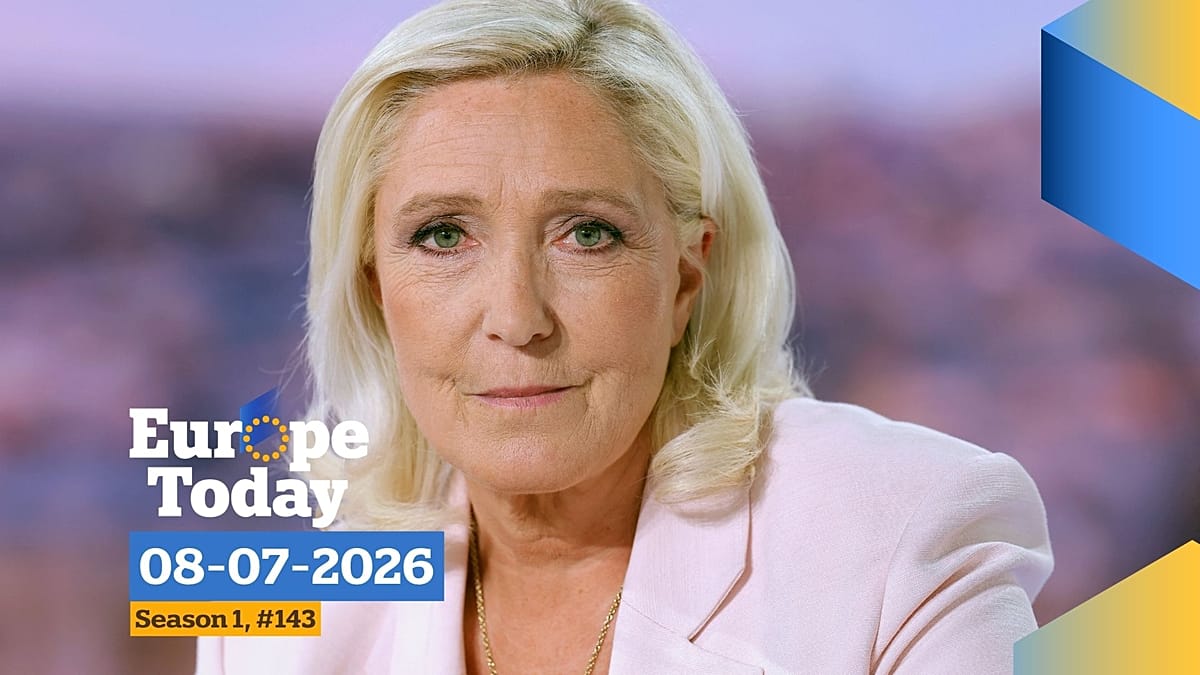
Marine Le Pen has formally announced her intention to run for the French presidency in 2027, representing the far-right Rassemblement National (National Rally). The declaration came after a Paris appeals court ruled on Tuesday that she is eligible to stand, despite a prior embezzlement conviction that had cast doubt on her political future. The court upheld the conviction but did not impose an immediate ban on holding office, leaving the path open for Le Pen to challenge for the Élysée Palace.
In a statement from her party headquarters, Le Pen framed her candidacy as a fight against what she called the "establishment's efforts to silence the people." She is expected to face incumbent President Emmanuel Macron, who has not yet confirmed his own plans for a third term under the Cinquième République. The decision has intensified debate across France and the broader European Union about the resilience of democratic institutions and the rise of populist movements.
Meanwhile, in Ankara, NATO leaders are convening for the second day of a high-stakes summit dominated by US President Donald Trump's renewed demand that Denmark cede Greenland to the United States. Trump revived the issue during a bilateral meeting with Danish Prime Minister Mette Frederiksen, calling the Arctic island "a strategic necessity" for American security. European allies, including Germany and France, have pushed back, emphasizing respect for territorial sovereignty and the need for unity within the alliance.
The Greenland dispute has overshadowed other agenda items, including defence spending commitments and the war in Ukraine. Canadian Foreign Affairs Minister Anita Anand, speaking to reporters on the sidelines, stressed that NATO members must focus on collective security rather than bilateral territorial disputes. "We are here to strengthen the alliance, not to reopen colonial-era grievances," she said.
In a separate development, the European Parliament is facing growing calls to investigate FIFA president Gianni Infantino. Several MEPs have raised concerns over a controversial red-card reversal involving US player Timothy Balogun during the FIFA World Cup, which they allege was influenced by political pressure from the Trump administration. The incident has sparked accusations of undue interference in the sport's governing body. For more on this, see our report on European Parliament Demands Probe into Infantino Over Trump-Influenced Balogun Red Card Reversal.
EU Market Flooded with Counterfeit Condoms
An investigation by European Pulse has uncovered a widespread problem of fake condoms entering the European Union market. Jakub Janas reports that counterfeit products, often manufactured in non-EU countries and lacking quality controls, have been found in several member states, including Poland, Germany, and Spain. The European Commission has launched a coordinated action with national customs authorities to intercept shipments, but experts warn that the scale of the problem may be far larger than official figures suggest.
The health risks are significant: substandard condoms can break or fail to prevent pregnancy and sexually transmitted infections. Consumer protection groups are urging the EU to tighten import regulations and increase random testing at borders. The issue highlights broader vulnerabilities in the bloc's supply chain for essential goods.
On the cultural front, the FIFA World Cup continues to captivate audiences across Europe. With the round of 16 now complete, Mared Gwyn reports on the tournament's standout performances. Adnan Leal took to the streets of Brussels to ask fans who they believe has been the best player so far. Responses ranged from Kylian Mbappé to emerging talents from smaller nations, reflecting the tournament's unpredictability.
For viewers, Europe Today airs live from Strasbourg and Ankara, with in-depth analysis and interviews. Tune in to catch the full discussions on the Le Pen ruling, the NATO summit, and the World Cup controversies.