Good morning from Brussels. Angela Skujins here with a mid-week dispatch from the NATO summit in Ankara, where a transatlantic turf war is brewing that shows no signs of abating.
Before we dive into the summit drama, a quick update from Paris: far-right leader Marine Le Pen has vowed to run in France’s 2027 presidential election despite a fraud conviction. An appeals court upheld the ruling on Tuesday, but Le Pen insists she will fight it. “I want to pursue all available avenues of appeal so that I can defend my innocence in this case,” she told French television. French MEP Fabrice Leggeri (Patriots) from Le Pen’s National Rally party told Euronews that there is “no mistrust” among French people because “they know what it (the case) is about”. Read more on Le Pen’s 2027 bid.
Greenland and the NATO Summit
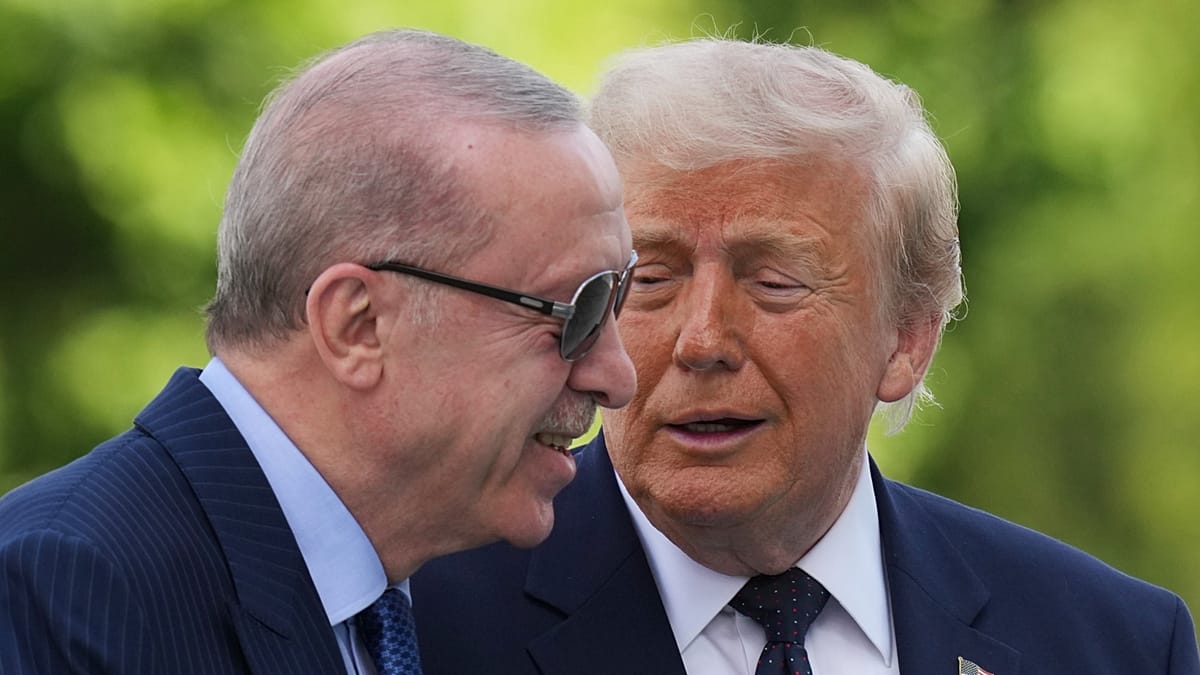
The NATO summit in Ankara is only 24 hours old, but US President Donald Trump has already made waves by reviving his desire to claim Greenland from Denmark. “Greenland doesn’t help Denmark,” Trump told reporters on Monday. “Denmark doesn’t spend money to really help Greenland, but it’s an important part for the United States, and it’s surrounded by China’s ships and Russian ships.” Danish Prime Minister Mette Frederiksen swiftly replied: “Of course Greenland is not for sale. We have made that clear from the start. The Greenlanders do not want to be part of the USA.” Trump is due to meet Frederiksen at the North Atlantic Council meeting this morning, right after a “family photo” at 11:00 a.m. More on Trump’s Greenland push.
Trump also chastised allies over what he claims was their abandonment of the US in Iran, when some, such as Italy and Spain, denied access to military bases. All eyes will be on how today’s second day of NATO unfolds after the US launched fresh strikes on Iran.
Amid the NATO tumult, Europeans are determined to put on a brave face. European Commission President Ursula von der Leyen and NATO Secretary-General Mark Rutte agreed that NATO needs to be Europeanised to take on more responsibility and reduce its reliance on the US security umbrella. “We need a much stronger Europe within a stronger NATO,” Rutte said. “To stay transatlantic, we have to become more European.”
Ukraine’s Push for Membership
Ukrainian President Volodymyr Zelenskyy renewed his push to join the alliance at the summit’s Defence Industry Forum in Ankara. He insisted his country has proved itself a reliable partner and that membership would be “entirely natural”. Zelenskyy said Ukraine is no longer a security recipient but a provider, with its military becoming a “source of extraordinary defensive capability” for Europe due to rapid technological adaptation. But he wants something specific in return: “Those who defend life need more Patriots,” he said, referring to the US-made air defence system, while urging Europe to develop its own mass-produced alternatives.
EU-Turkey Dinner and Sanctions
Tonight, von der Leyen will dine with Turkish President Recep Tayyip Erdoğan, with defence high on the agenda. But all eyes will be on where the EU boss sits—and which point of tension she wants to thrash out. Read more on the tense dinner.
Meanwhile, the 27 EU ambassadors have a packed agenda, including a new attempt to finalise the 21st package of sanctions against Russia. The clock is ticking ahead of the 15 July deadline, with unresolved friction points including the oil price cap, fisheries, entry bans on Russian soldiers, and Patriarch Kirill. The Irish presidency has circulated a revised text to bridge differences.
Serbia’s EU Accession Stalls
Enlargement is also on the agenda. A major clash is brewing over the Commission’s desire to kickstart negotiations on Cluster 3 of Serbia’s accession process. One diplomat told me yesterday that opposition has not shifted. Another had a sombre forecast: the “Commission is set up to fail” by putting this on Wednesday’s docket without unanimous support. Serbian President Aleksandar Vučić shares the scepticism, saying at a conference of EU candidate countries on Tuesday that he is not optimistic about joining the bloc soon. Despite this, European Commissioner for Enlargement Marta Kos remains defiant: “Serbia is an important partner in the region with a clear EU accession perspective.” She added that the Commission continues encouraging Serbia to seize the current opportunity.