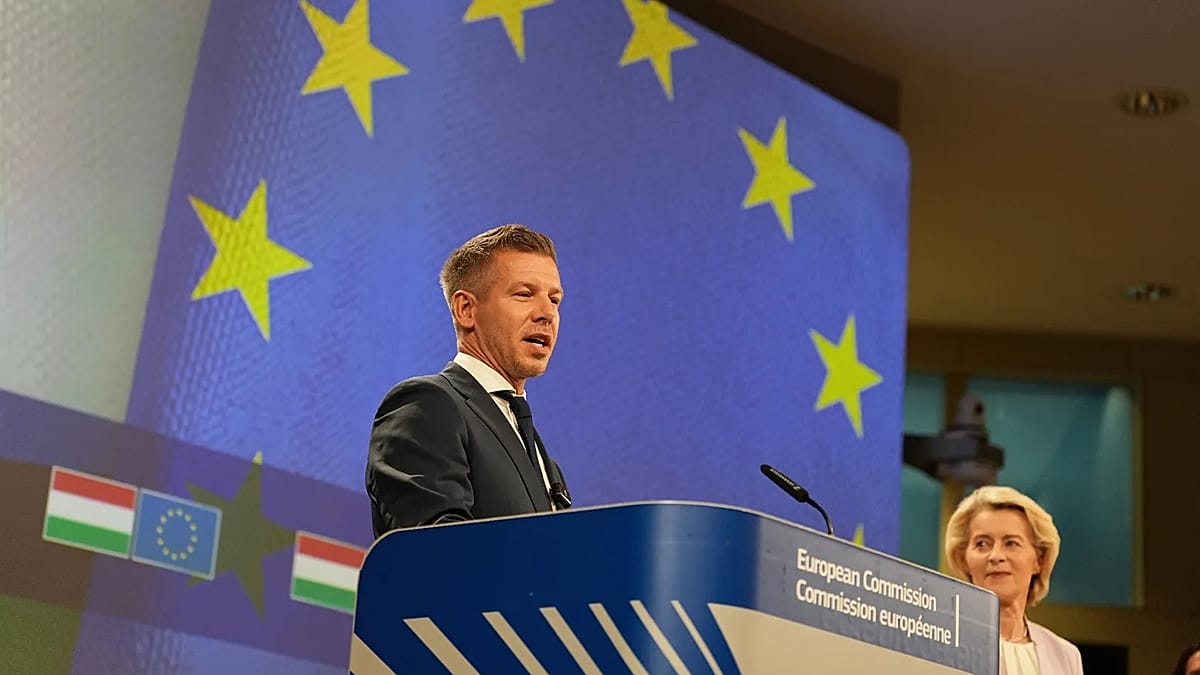
Hungary's government has announced that it has satisfied every condition required to unlock the full €10 billion in EU recovery funds, a significant step in the country's efforts to move beyond the Orbán era. Transport and Investment Minister Dávid Vitézy made the announcement on social media, stating that the deadline for meeting the milestones expired on Monday.
Prime Minister Péter Magyar, who secured a landslide victory in April's elections, had made the release of these funds a central campaign promise. His government has been working to repair relations with Brussels after years of tensions over rule-of-law and corruption concerns under the previous administration.
In May, Magyar and European Commission President Ursula von der Leyen agreed to release €16.4 billion in EU funding that had been frozen. Of that total, €10 billion comes from the Recovery and Resilience Facility, which is due to expire later this year. The remaining €6.4 billion is allocated from the Cohesion Funds, which do not carry the same immediate deadline.
"The prime minister instructed us not to leave a single euro cent behind and to bring all the resources home," Vitézy said. "I can report: we have succeeded."
27 super milestones and over 100 individual requirements
To qualify for the funds, Hungary had to deliver on 27 so-called "super milestones" and more than 100 individual milestones. Over the summer, the Hungarian Parliament amended more than 100 laws, most of which focused on the judicial system and anti-corruption measures. The government also revised its National Recovery Plan to ensure it could draw on the funds in time, incorporating measures to modernise the energy grid, railways, and rental housing stock.
"By using EU funds, Hungary can return to the path of development after years of lagging behind, and catch up with countries in the region," Vitézy added.
The announcement comes as the EU's Recovery and Resilience Facility reaches its final disbursement phase. The joint borrowing instrument was created by the European Commission to help kick-start economies after the coronavirus pandemic. In a statement marking the legal deadline, von der Leyen said: "NextGenerationEU helped protect our citizens and economies at a time of great uncertainty. It accelerated the clean and digital transitions, cutting Europe's reliance on imported energy. The reforms and the resilience will benefit Europe for generations to come."
Hungary's progress stands in contrast to other member states that have struggled to meet the conditions. Romania, for instance, forfeited €770 million amid political deadlock, highlighting the challenges some countries face in navigating the complex requirements.
The successful unlocking of funds is a major victory for the Magyar government, which has promised to use the money to boost economic development and infrastructure. The funds are expected to support projects ranging from energy modernisation to railway upgrades, helping Hungary catch up with regional peers.
However, the process has not been without controversy. Critics have questioned whether the legislative changes go far enough to address systemic corruption, and some have expressed concerns about the pace of implementation. The government insists that the reforms are genuine and that the funds will be used transparently.
As Hungary moves forward, the focus will be on ensuring that the money is spent effectively and that the country continues to meet EU standards. The release of these funds marks a new chapter in Hungary's relationship with the EU, one that both sides will be watching closely.