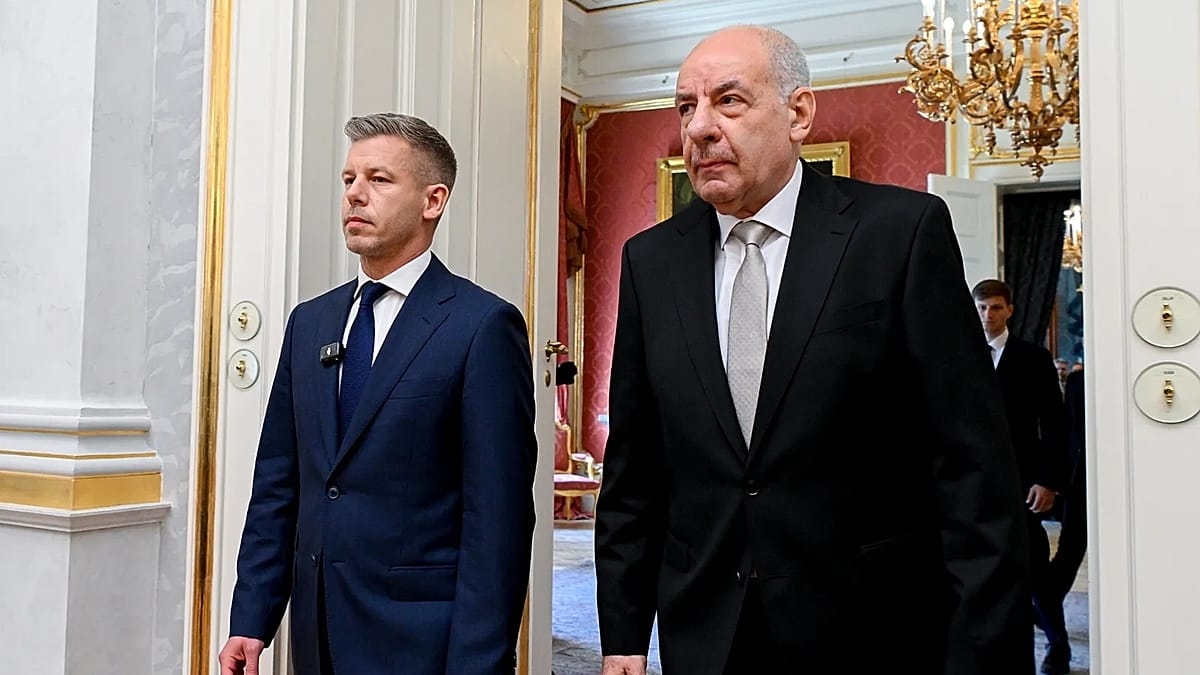
Hungary's parliament voted on Monday to amend the constitution, paving the way for the removal of President Tamás Sulyok. The move is the first major political test for Prime Minister Péter Magyar's Tisza Party, which won a landslide victory in April's election on a promise to overhaul the political system inherited from Viktor Orbán.
Magyar has branded Sulyok a puppet of Orbán, accusing him of failing to defend constitutional principles during the previous government's tenure. Central to Magyar's argument is that Sulyok did not protect opposition activists and politicians allegedly targeted by secret service activity during the election campaign. "He should have defended constitutionality when one of its most important foundations was at risk," Magyar said. "The rule is that the secret service protects the Hungarian state and can never become the private army of the ruling party."
The Legal Mechanics of Removal
The constitutional amendment gives Sulyok five days to sign it into law. If he does, he will lose his office. If he refuses, parliament will initiate impeachment proceedings, arguing that he has failed to fulfill his constitutional duties, and will ask the Constitutional Court to revoke his mandate. Legal expert Tamás Lattmann warns this is a risky strategy: "The Constitutional Court may determine that Tamás Sulyok did indeed violate the constitution by refusing to sign the amendment, but that the breach is not serious enough to justify his removal. In that case, the court could leave Sulyok in office, despite finding that he acted unconstitutionally. Since the court still has a Fidesz-appointed majority, that is a realistic possibility."
Lattmann also questioned plans to temporarily replace the president with the speaker of parliament, noting that under Hungarian law this is only permitted when the president is unable to carry out his duties. He argued that refusing to sign legislation does not automatically mean the president is unable to perform the functions of the office, potentially raising further constitutional questions.
The Tisza Party argues that removing the president was a key election pledge backed by a majority of voters. A May poll by the 21 Research Centre found that 67% of Hungarian voters want Sulyok removed. "Tamás Sulyok has become a symbol of the Orbán regime, so he is a completely legitimate target for the prime minister," Lattmann said.
Sulyok's Defiance and Orbán's Reaction
Sulyok has refused to resign, describing Magyar's move as a threat to democracy. "The question is whether this force will sweep away internationally recognised and accepted principles of the rule of law, as well as genuine representative democracy," Sulyok said in a statement on Sunday. He argues there are no constitutional grounds for his removal and that the amendment targets a single individual, undermining the rule of law.
Fidesz, the party that appointed Sulyok, has called the attempt a step toward "tyranny" and organized a protest. Viktor Orbán, who nominated Sulyok, urged Hungarians to resist a "forced" ousting. "If the president is forcibly removed from office, Hungary has the right to resist. And we will," Orbán said. However, Orbán's influence has waned since his party's electoral defeat.
The standoff has drawn attention in Brussels. The European Commission is monitoring developments, and EU Justice Commissioner Michael McGrath told Euronews that such personnel changes could be legitimate after a "seismic change in the political landscape." Nearly 50 MEPs have called on the Commission to address the issue urgently. Sulyok has requested an opinion from the Venice Commission, the Council of Europe's constitutional advisory body.
This power struggle is unfolding against a backdrop of broader institutional reforms. Hungary recently joined the European Prosecutor's Office, opening the door to investigations into Orbán-era corruption. The outcome of the presidential removal process could set a precedent for how far a new government can go in dismantling the legacy of its predecessor.