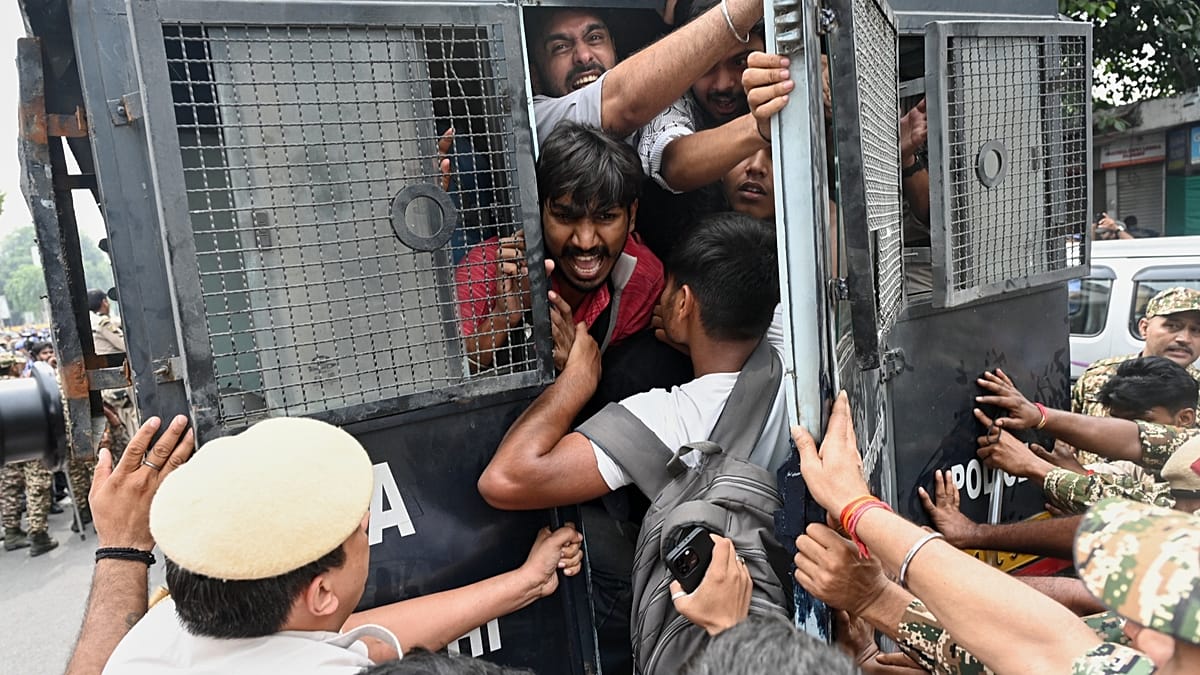
Opposition leaders and journalists have accused Indian police of heavy-handed tactics during weekend demonstrations, as authorities locked down New Delhi on Monday ahead of a fresh rally against the country's election chief. Thousands of personnel were deployed across the centre of the capital for a third consecutive day, with heavy metal barricades erected and key metro stations closed before a march called by opposition leader Rahul Gandhi.
The protests were triggered by allegations of manipulation in a nationwide voter roll revision that critics say could benefit Prime Minister Narendra Modi's ruling Bharatiya Janata Party (BJP). The Election Commission of India, which oversees voting in the world's most populous nation, has denied any wrongdoing. But attention has increasingly shifted to the police response after a chaotic weekend in which thousands of protesters, including members of the youth-led Cockroach Janta Party (CJP) movement, were detained, according to local media. Most of those detained, including three top CJP leaders, have since been released.
Allegations of excessive force
Opposition figures have accused authorities of trying to suppress dissent through mass detentions. Parliamentarian John Brittas of the Communist Party of India (Marxist) alleged he was "manhandled, dragged, assaulted" by police during Sunday's demonstrations. "This is not merely an assault on an MP. It is an assault on democratic freedoms and the rule of law," Brittas said. Police did not respond to questions on detentions or their actions during a news conference on Sunday.
Several journalists covering the protest said they were detained despite prominently displaying their press cards. Reporters Without Borders (RSF) said at least 16 journalists were detained during the weekend protests, calling the actions "unacceptable". The organisation has long raised concerns about press freedom in India, and these latest incidents will likely intensify scrutiny of the government's approach to dissent.
The capital was bracing for a fresh showdown on Monday, with Gandhi, leader of the Congress party, urging supporters to join a march to the Supreme Court. "There is nothing to fear," he said on social media on Sunday. "These cowards can do absolutely nothing to us." Hundreds of yellow metal barricades were set up on roads leading to central Delhi, while six major metro stations remained shut.
The leaders of the CJP, which has millions of social media followers, have pledged to continue their protests until Chief Election Commissioner Gyanesh Kumar steps down. The protests have become one of the most significant political challenges of Modi's third term, drawing together opposition parties, student groups and activists angered by the voter roll revision. The revision resulted in more than 133 million names being removed from electoral lists, according to media reports. Critics say the measure has disproportionately affected minorities, particularly Muslims.
The situation in India echoes concerns seen elsewhere about police conduct during protests. In Europe, recent clashes in Brussels over austerity plans and in Paris over student demonstrations have raised similar questions about the balance between public order and the right to protest. While the contexts differ, the underlying tension between state authority and civil liberties is a shared challenge for democracies worldwide.
As Delhi remains on edge, the coming days will test how the Indian authorities handle dissent. The allegations of police abuse, if substantiated, could further erode public trust in the electoral process and the rule of law. For now, the world watches as India's democratic institutions face one of their most serious tests in recent years.



