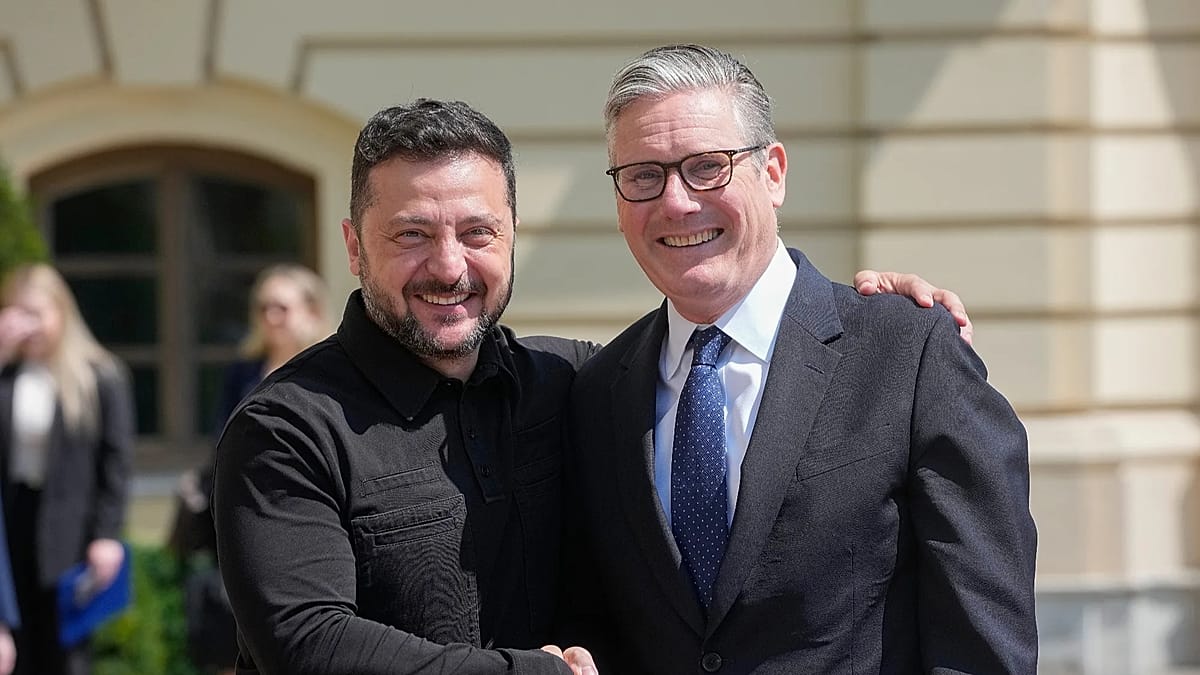
Keir Starmer, who served as British prime minister until June, announced on Tuesday that he will step down as a Member of Parliament, signalling a shift towards international engagement. In a statement posted on social media, the Labour politician said it was the "right time" to leave his central London constituency of Holborn and St Pancras and "hand the baton over to a successor."
Starmer, first elected to the seat in May 2015, rose to lead the Labour Party in 2020 and guided it to a decisive general election victory in 2024. His tenure in Downing Street was marked by an effort to rebuild ties with the European Union, a departure from the confrontational stance of his predecessor. He often framed closer cooperation with Brussels as essential to addressing the cost-of-living crisis and expanding opportunities for younger Britons.
In his resignation statement, Starmer said he would now devote his attention to "international affairs including defence, security, trade and technology in a fast changing world." He also pledged his "full support" to the current prime minister, Andy Burnham, who succeeded him after a turbulent period for the Labour government.
A pivot to global stage
Starmer's move comes after months of mounting pressure from within his own party. Disastrous local election results in May and growing discontent among MPs led to his resignation as Labour leader in June, paving the way for Burnham's return to Westminster and eventually to Number 10. Since leaving office, Starmer has remained active in public life, but his latest announcement formalises a transition away from domestic politics.
The former prime minister, a qualified barrister, had made international relations a cornerstone of his agenda. He championed a "reset" with Europe, arguing that the UK's post-Brexit future depended on pragmatic cooperation rather than isolation. Critics, however, accused him of neglecting domestic matters, dubbing him "never here Keir" for his frequent travels abroad.
His new focus on defence and security aligns with broader European concerns about stability on the continent. As NATO allies debate future strategy and the war in Ukraine continues, Starmer's experience could position him as a vocal advocate for transatlantic unity. Some observers note that his departure from Parliament may allow him to take on a more prominent role in international forums, possibly similar to that of a special envoy or senior statesman.
The resignation will trigger a by-election in Holborn and St Pancras, a constituency that has been a Labour stronghold for decades. The seat includes parts of central London such as King's Cross and Camden, and is expected to remain safely Labour. However, the timing adds another layer of political uncertainty for Burnham's government, which is already navigating a challenging economic landscape.
Starmer's exit also raises questions about the future direction of the Labour Party. While Burnham has sought to distance himself from some of Starmer's policies, he has maintained continuity on key issues like housing and green investment. The former PM's departure could free him to speak more openly on international matters without the constraints of party discipline.
In his statement, Starmer expressed gratitude to his constituents and party colleagues, saying he was proud of what had been achieved during his time in office. He did not specify which organisations or roles he might take on, but hinted at a continued commitment to public service.
For Europe, Starmer's shift may be seen as a positive development. His advocacy for closer UK-EU relations was a rare voice of moderation during a period of heightened nationalism. As he steps away from domestic politics, his influence could extend to shaping debates on security and technology policy across the continent.
The by-election date has not yet been announced, but it is expected to take place within the coming months. Political analysts will be watching closely to see whether Starmer's departure marks the end of an era or the beginning of a new chapter in his career.