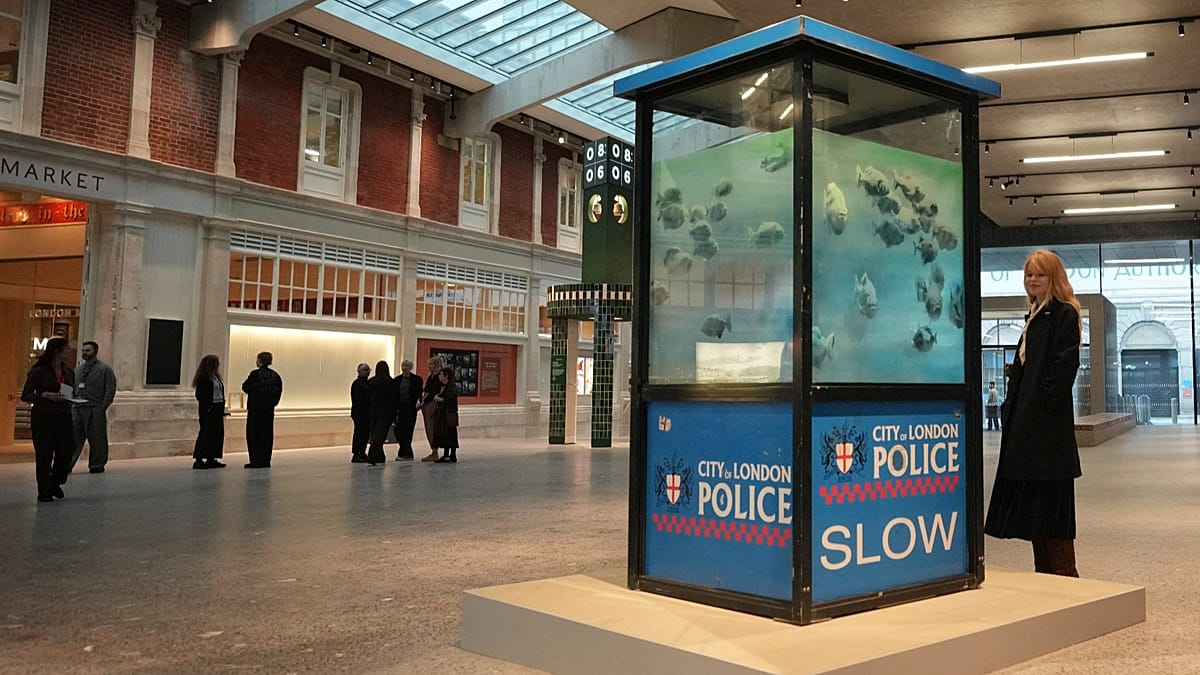
After a decade of intricate renovation work costing more than €532 million, the London Museum throws open its doors this weekend in the former Victorian General Market at Smithfield. The institution, which styles itself as the world's largest city museum, replaces the old Museum of London, which closed in 2022 after decades in a less accessible location.
Sharon Ament, the museum's director, has long described her ambition to present the British capital in all its “colourful and complicated glory.” That vision is now on public display, inviting visitors to judge whether the new building lives up to the promise.
The choice of Smithfield was deliberate. The sprawling market halls, with their sweeping dome, decorative ironwork, and vaulted brick cellars, offered a dramatic setting that Ament found irresistible. “Museum leaders don't really think about moving a museum. It's not for the faint hearted,” she admitted. “But the compelling attraction of Smithfield Market... I could see its potential as a forum museum and to be a really great museum.”
A museum for the city, not just about it
The new museum is designed to be porous. It has multiple entrances, and visitors can wander through even if they are just passing through on their way to work. “It has lots of entrances so unlike many museums, there are few barriers to getting in and out,” Ament said. “And even if people just flow through the museum on their way to work, that is good enough for me.”
The collection draws on roughly seven million objects gathered from across London's boroughs, spanning thousands of years of history. Highlights range from Roman mosaics to the swimming trunks worn by Olympic diver Tom Daley at the 2012 Games, and even a bagel filled with barbecued pork and a sewer-clogging chunk of fat. The eclectic mix is intended to reflect the city's diversity and its sometimes gritty reality.
The former meat market's architecture has shaped the museum's approach. The large trading floor and extensive underground spaces allow for immersive storytelling. “We found that a market makes a brilliant museum,” Ament explained. “It's made for public to come in and out, it's got deep basements, and then it's set in this historic area. So it's enabled us to tell the story of that area as well.”
Beyond the static displays, the museum plans to use immersive projections and spatial sound to bring Roman London to life in its vaulted cellars. But Ament's ambitions extend further. She envisions the museum as a lively social space, hosting cultural events, storytelling sessions, and late-night openings with DJs on Fridays and Saturdays.
“We've learnt that people need places to gather,” she said. “We've learned that history is not something to be frightened of. And, you know, sometimes it's tough and sometimes it's glorious. Let's talk about that balance.”
The reopening comes at a time when London's cultural scene is thriving, with attractions like Gingerbread City drawing families and the city topping European Christmas getaway searches. The museum's central location at Smithfield, near Farringdon station, makes it easily accessible by public transport, a significant improvement over its predecessor.
As visitors stream in, the museum will also highlight stories of social change, such as the suffrage movement, with a sash worn by Flora Drummond in 1908 on display. The museum aims to be a place where the complexities of London's past—its triumphs and its struggles—are examined openly.
With its blend of historic architecture and modern technology, the London Museum hopes to become not just a repository of the past, but a living part of the city's present and future.