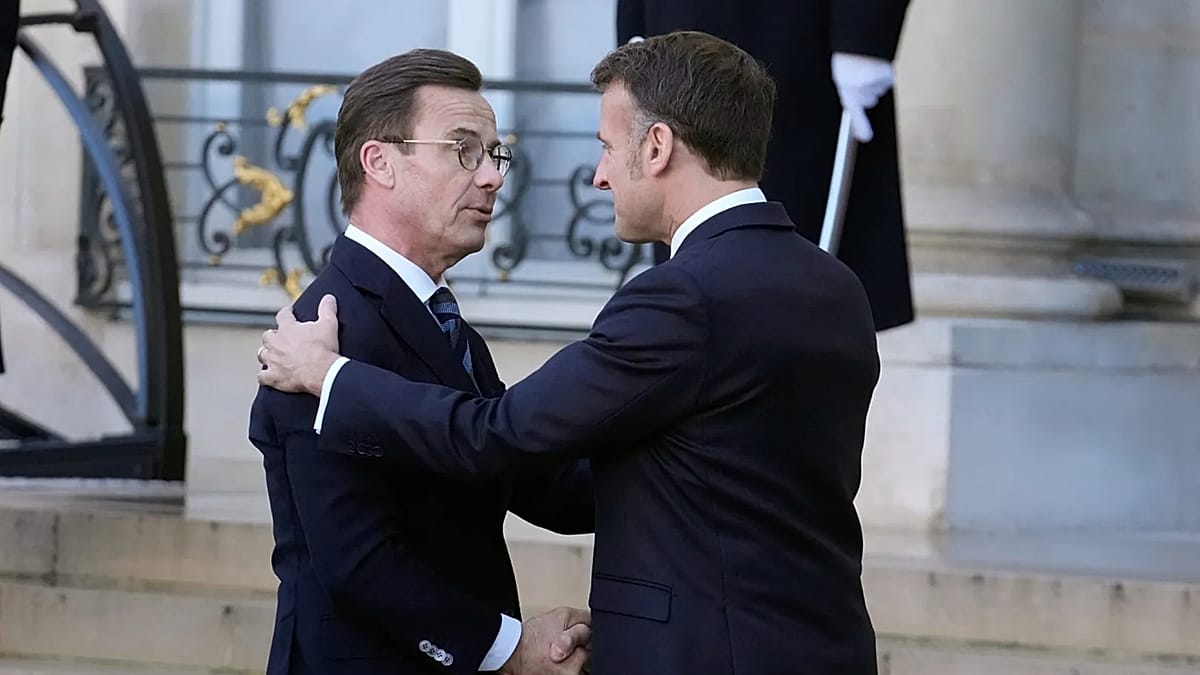
French President Emmanuel Macron is set to land in Stockholm on Monday to seal a multi-billion-euro contract for four French-built frigates, alongside a broader agreement to deepen defence ties between France and Sweden. The visit marks a significant step in the two nations' strategic partnership, which has gained momentum since Sweden joined NATO in 2024.
The €4.3 billion deal, negotiated with Swedish Prime Minister Ulf Kristersson, covers the construction of four frigates by the French industrial group Naval Group. The first vessel is scheduled for delivery in 2030. Sweden's decision to acquire the warships was announced in May as part of a wider rearmament drive triggered by Russia's full-scale invasion of Ukraine.
Strengthening European and NATO defence
Beyond the frigate contract, French Defence Minister Catherine Vautrin and her Swedish counterpart Pål Jonson will sign a framework agreement aimed at enhancing cooperation in operational, capability, and industrial areas. According to the Élysée Palace, the meeting signals a new phase in Franco-Swedish collaboration, with closer security and defence ties intended to bolster both European defence and the North Atlantic Alliance.
Speaking in May, Kristersson described the frigate purchase as "one of the largest Swedish defence investments since the Gripen fighter jet was introduced in the 1980s." The Gripen, produced by Saab, has been a cornerstone of Swedish air power for decades, and the frigate deal represents a comparable leap in naval capability.
The frigates are designed to "detect and neutralise all types of threats," according to Naval Group's website, including "surface, airborne, underwater, asymmetric or cyber" dangers. This versatility is particularly relevant for Sweden, which faces a complex security environment in the Baltic Sea region, where tensions with Russia have prompted new defensive measures.
The visit also builds on commitments made at NATO's summit in Ankara in July, where France pledged to contribute troops to a Swedish-led NATO mission in Finland. In a joint statement, the three countries said that "France will contribute with ground forces deployments to rotations of Forward Land Forces Finland, including a battle unit." This deployment underscores the deepening integration of Nordic and French forces within the alliance.
For Sweden, the frigate deal is part of a broader effort to modernise its military after decades of post-Cold War downsizing. The war in Ukraine has reshaped European security thinking, prompting countries like Sweden to increase defence spending and invest in new capabilities. The acquisition of French frigates also signals a shift towards greater European defence industrial cooperation, a priority for both Paris and Brussels.
Macron's visit comes at a time when European defence cooperation is under scrutiny, with ongoing discussions about burden-sharing within NATO and the need for the EU to take more responsibility for its own security. The Franco-Swedish agreement is seen as a practical example of how bilateral deals can strengthen the continent's collective defence posture.
The frigate contract also has significant industrial implications. Naval Group, which is majority-owned by the French state, will benefit from a major export order that secures jobs and expertise in France's naval shipbuilding sector. For Sweden, the deal provides advanced warships that will enhance its ability to patrol the Baltic Sea and contribute to NATO operations.
As Macron and Kristersson meet in Stockholm, the focus will be on translating the signed agreements into tangible outcomes. The frigate deal is expected to be a cornerstone of Franco-Swedish defence relations for years to come, with potential for further collaboration in areas such as cyber defence and joint exercises.
The visit also highlights the broader trend of European nations seeking to strengthen their defence capabilities in response to a more assertive Russia. With EU funding for Ukraine's air defences and ongoing discussions about a common European defence fund, the Franco-Swedish agreement is a concrete step towards a more integrated and resilient European security architecture.