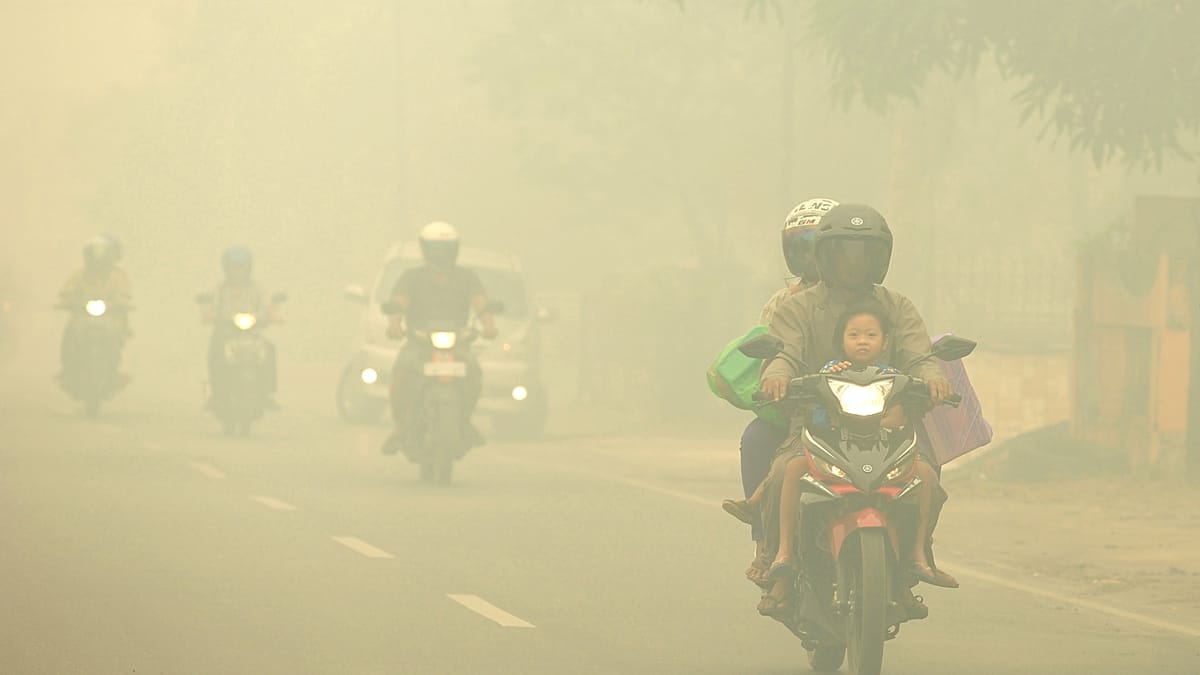
Residents of Palangkaraya, the capital of Central Kalimantan on the island of Borneo, woke up to an eerie orange glow this week as wildfires raging across Indonesian peatlands and forests turned the sky a deep, apocalyptic shade. The phenomenon, captured in dramatic video footage, has become a recurring nightmare for the region, where seasonal burning for agricultural land has spiralled out of control.
Across the Strait of Malacca, Singapore's iconic Marina Bay Sands hotel and the surrounding financial district have all but disappeared behind a thick, greyish haze. Air quality readings in the city-state have deteriorated sharply, with the Pollutant Standards Index (PSI) climbing into unhealthy territory and prompting authorities to advise residents to limit outdoor activity. The smoke, carried by prevailing winds, has also affected parts of Malaysia, where schools in several states have been forced to close.
A regional crisis with European echoes
The fires, which have been burning for months, are largely the result of slash-and-burn techniques used to clear land for palm oil and pulpwood plantations. Indonesia's dry season, exacerbated by the El Niño weather pattern, has made the situation worse, allowing fires to spread rapidly across carbon-rich peatlands. The resulting haze is not just a local nuisance; it is a public health emergency. According to the Indonesian Ministry of Health, thousands of people have sought treatment for respiratory infections, and the country's meteorological agency has issued warnings about hazardous air quality in several provinces.
For European readers, the crisis carries a familiar resonance. The EU has long been a major importer of Indonesian palm oil, and Brussels has implemented strict regulations to ensure that imported commodities do not contribute to deforestation. The record summer air traffic across Europe may have dominated headlines, but the continent's environmental footprint extends far beyond its borders. The European Union's deforestation regulation, which came into force last year, requires companies to prove that their products—including palm oil, soy, and timber—were not grown on land cleared after 2020. Yet enforcement remains patchy, and the fires in Indonesia highlight the gap between policy and practice.
The Indonesian government has repeatedly pledged to tackle the fires, deploying water-bombing aircraft and cloud-seeding operations to induce rain. However, critics argue that these measures are reactive and insufficient. The country's peatland restoration agency, established after the devastating fires of 2015, has been underfunded and its efforts undermined by local political interests. Meanwhile, the palm oil industry, which contributes billions of dollars to Indonesia's economy, continues to expand, often at the expense of the environment.
Singapore, which has long been a vocal advocate for regional environmental cooperation, has called on Indonesia to ratify the ASEAN Agreement on Transboundary Haze Pollution. The agreement, signed in 2002, aims to prevent and monitor haze pollution, but Indonesia has yet to ratify it, citing sovereignty concerns. The issue has strained diplomatic relations between the two neighbours, with Singapore's Prime Minister recently receiving a significant pay rise that some commentators have linked to the need for stronger leadership on environmental issues.
The human cost of the fires is often overlooked. In Palangkaraya, residents describe the orange sky as "like something out of a science fiction film," but the reality is far more mundane: the air is thick with particulate matter, and the smell of burning vegetation is pervasive. Schools have been closed, and many people have taken to wearing masks, though supplies are limited. The fires also release vast amounts of carbon dioxide, contributing to global warming and undermining international climate goals.
For Europe, the Indonesian fires are a reminder that environmental crises are not confined to national borders. The EU's Green Deal, which aims to make the continent climate-neutral by 2050, relies on global cooperation to reduce emissions. As the disinformation campaigns that plague European politics show, the fight against climate change is also a fight against misinformation and short-term thinking. The orange skies over Palangkaraya are a stark visual metaphor for the consequences of inaction.
In the coming weeks, the monsoon season is expected to bring some relief, but the underlying causes of the fires remain. Without stronger enforcement of land-use regulations, investment in sustainable agriculture, and regional cooperation, the apocalyptic scenes are likely to recur. For now, the people of Southeast Asia—and the world—watch and wait, hoping that the smoke will clear before the next dry season arrives.