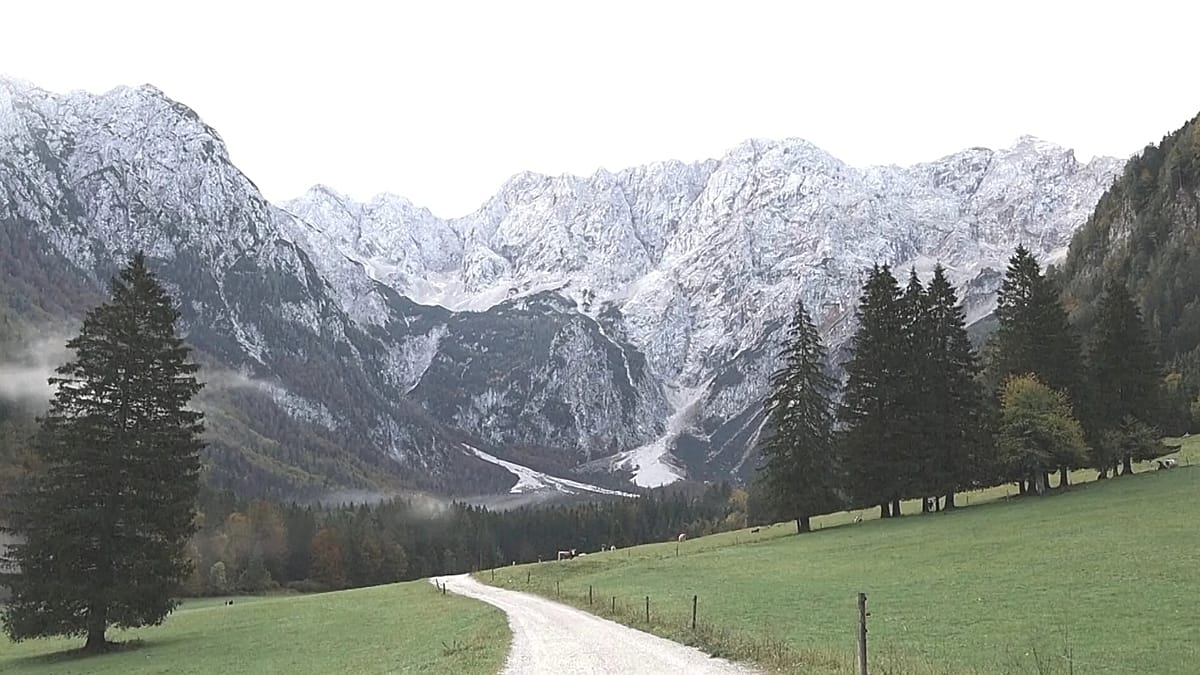
High in Slovenia's Kamnik-Savinja Alps, the last remnant of the country's glacial ice is disappearing. The Skuta Glacier, once a substantial ice field, has shrunk to a thin, debris-covered patch that mountain guide Andrej Slak says is barely recognizable.
"We are standing next to Slovenia's last remaining glacier and just look at what is left of it – nothing but a small patch of ice covered in grit and debris; the change is striking," Slak said during a recent climb to the site. He has been guiding clients in these mountains for 35 years and has witnessed the accelerating decline firsthand.
The loss is not just aesthetic. Glaciers act as natural water reservoirs, releasing meltwater slowly through the summer and sustaining rivers and groundwater. "These glaciers serve as vital water reservoirs for us in the valley throughout the year," Slak explained. "Shepherds used to utilise icy hollows like this to store and preserve meat, but they can no longer do that as such ice pockets are nowhere to be found in the mountains anymore."
Eighty years of monitoring
Scientists at the Anton Melik Geographical Institute in Ljubljana have been tracking Slovenia's glaciers for eight decades. Miha Pavšek, a researcher at the institute, says the data show a dramatic decline. When monitoring began in 1946, Skuta covered about 2.5 to 3 hectares. Today, it is down to 1.5 hectares, and its ice has thinned from tens of meters to just a few. The Triglav Glacier, on Slovenia's highest peak, has fared even worse: it once spanned more than 14 hectares, but now holds less than 0.2 hectares and has effectively vanished.
Pavšek attributes the rapid melt to a combination of factors. "The turning point comes when we have a combination of very little snow, meaning a very low maximum seasonal snow depth, followed by a very warm summer," he said. "And those two factors coincided very well this year."
On Skuta, a painted marker on a rock shows where the glacier reached in 1994. The ice has retreated far beyond that point. "Skuta is following the same path as the Triglav Glacier," Pavšek said. "The ice is now protected. We were in the mountains a week ago, and about 80 to 90 per cent of the ice surface is covered by gravel, which provides additional protection, but it melts from all sides."
The gravel blanket slows melting from above, but inside the glacier's cave, water still drips from the ceiling, carving channels and eroding the ice from within.
Ripple effects on rivers and groundwater
The consequences extend far beyond the mountains. Glacial meltwater feeds major rivers across the region, including the Drava in Croatia and the Mura, which rises in Austria. "According to the latest forecasts, all glaciers below 3,500 metres will disappear by 2050," Pavšek said. "So, these rivers will have much less water. And normally, these rivers feed the groundwater, where we have wells and pumps for drinking water."
For hikers like Tanja Plavec, the loss is a stark reminder of broader climate change. "I am concerned about this from a broader perspective, specifically regarding climate change in general, because glaciers serve as a vital reserve of Earth's water," she said. "As they disappear, that reserve disappears with them. Furthermore, glaciers host a unique ecosystem that also vanishes as the perennial ice disappears."
Europe is the world's fastest-warming continent, with temperatures rising at twice the global average since the 1980s, according to the EU's Copernicus Climate Change Service. The fate of Slovenia's last glacier is a local symptom of a continental trend, one that also threatens Swiss glaciers and other alpine ice fields.
As the ice disappears, so does a piece of Slovenia's natural heritage. The Skuta Glacier may soon be nothing more than a memory, a casualty of a warming world that shows no mercy to even the most resilient landscapes.