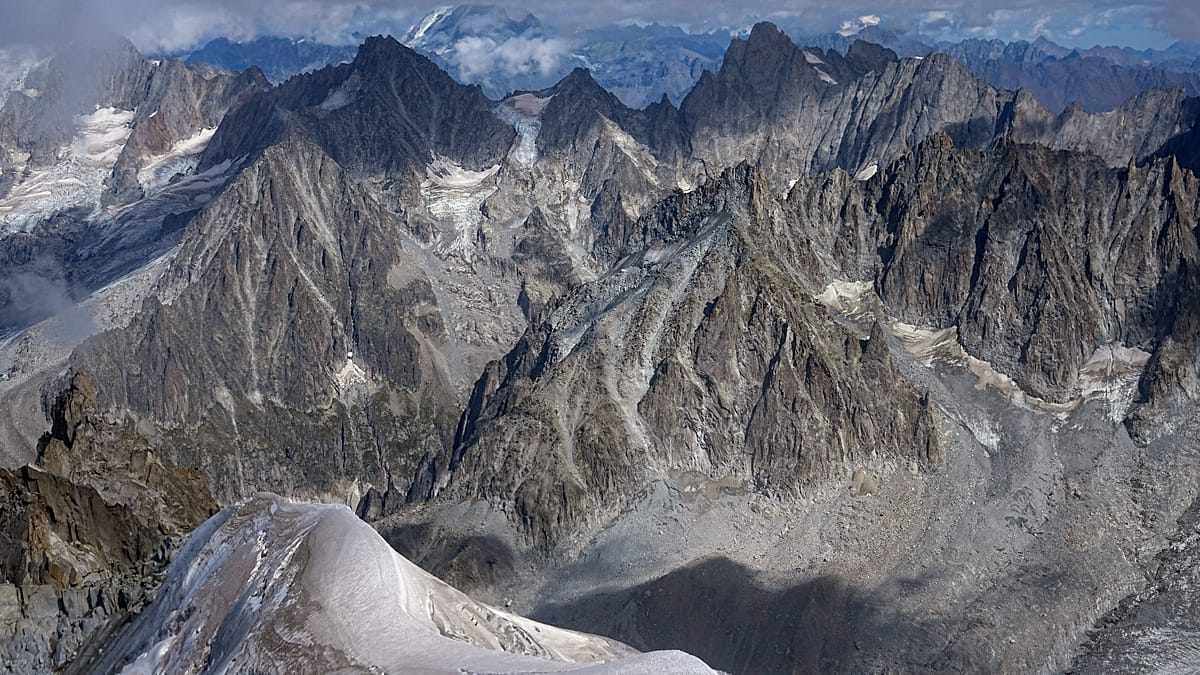
Switzerland's glaciers surrendered 5.5% of their remaining volume over the past year, the second-steepest annual retreat since measurements began, according to the country's glacier monitoring network. Only one other year has produced a comparable loss, underscoring how persistently warm conditions are reshaping the Alps.
The figures, released by the Swiss Glacier Monitoring Network (GLAMOS), place the latest melt season behind only the record set in 2023, when glaciers shrank by roughly 6%. Taken together, the two years represent an unprecedented rate of decline in the modern observational record.
Heatwaves and a snow-poor winter
Two factors combined to strip the ice. Successive summer heatwaves pushed temperatures well above seasonal norms across the Alpine arc, while the preceding winter delivered unusually little snow. Snow cover acts as a protective blanket, reflecting sunlight and slowing the rate at which the underlying ice is exposed and melted. When that layer is thin, glaciers begin losing mass earlier in the season and continue longer into the autumn.
Researchers at the Rhône Glacier in the canton of Valais have documented the effects at close range. The glacier, which feeds one of Europe's major rivers, has been receding for decades, but the pace has accelerated sharply. Teams working on site have recorded rapid thinning and the retreat of the glacier's tongue, with meltwater streams carving through terrain that was ice-bound only a generation ago.
Matthias Huss, who leads GLAMOS, has repeatedly warned that the trajectory is not reversible on human timescales. Even if global emissions were cut sharply, the ice already lost would take centuries to rebuild, and the Alps would look fundamentally different within the lifetimes of today's children.
A continental pattern
Switzerland is not alone. Glaciers in Austria, Italy, France and Norway have all reported significant losses in recent years, with the Alps warming at roughly twice the global average. The retreat carries consequences that extend well beyond the mountains themselves: diminished glacial storage affects hydropower generation, irrigation for agriculture in the Po and Rhône valleys, and drinking water supplies for millions of people downstream.
The economic stakes are considerable. Ski resorts in Switzerland, Austria and France have invested heavily in artificial snowmaking and higher-altitude infrastructure, but those adaptations have limits. Lower-lying resorts face an increasingly uncertain future, and the seasonal tourism economy that depends on them is under pressure.
There are also heightened hazards. As ice and permafrost retreat, steep slopes once held together by frozen ground become less stable, raising the risk of rockfalls, debris flows and glacial lake outbursts. Swiss authorities have expanded monitoring in high-risk valleys, and some communities have been forced to consider relocation.
The latest numbers arrive as European policymakers continue to debate the pace of emissions reductions and the continent's response to a warming climate. The melt in the Alps serves as a visible, measurable indicator of trends that are harder to perceive elsewhere — and a reminder that the consequences of a hotter planet are already being recorded, year by year, in the ice.