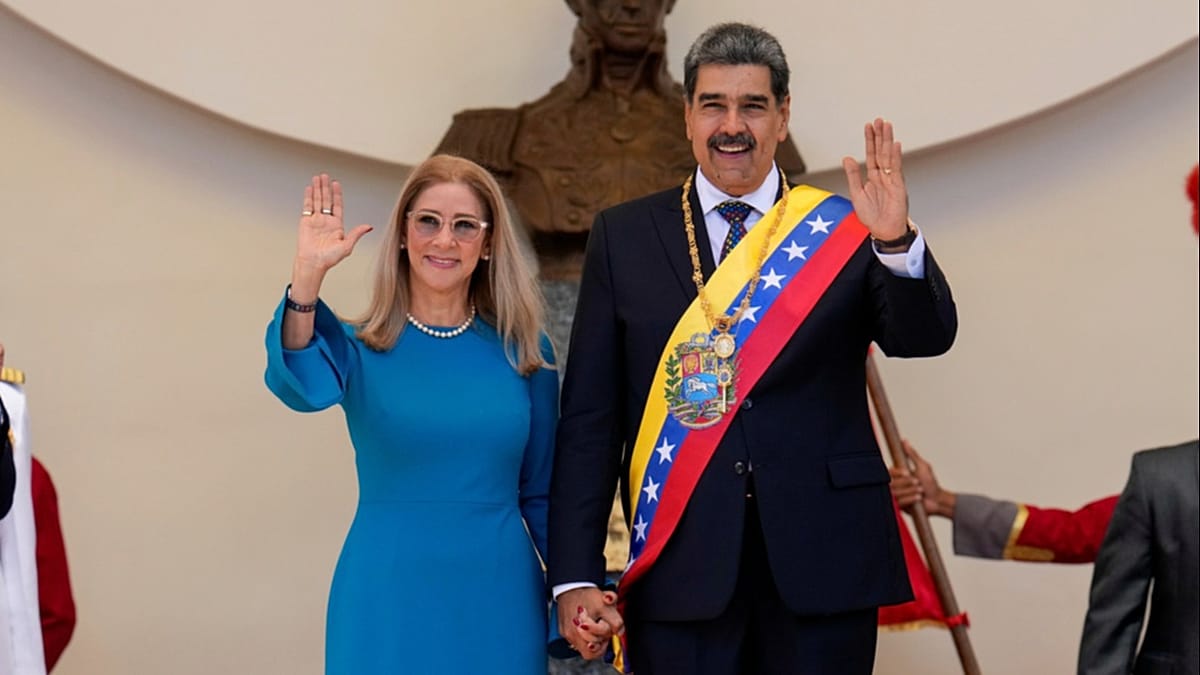
Former Venezuelan President Nicolás Maduro and his wife, Cilia Flores, have formally requested that a US federal judge dismiss the drug trafficking indictment against them, arguing that as a sitting head of state and first lady they are immune from prosecution in American courts. The motion, filed on Wednesday in Manhattan federal court, contends that no US court has ever presided over the criminal trial of a foreign leader recognised by their own country as the current head of state at the time charges were brought.
“That is not an accident of history. It reflects a rule older than the common law: heads of state are exempt from the criminal process of any national court but their own,” Maduro’s attorneys wrote. They insisted that the indictment must be rejected because it cannot be brought against a foreign leader.
Maduro, 63, and Flores, 69, have been held in a Brooklyn jail since US forces seized them from their Caracas home in a pre-dawn raid in early January and transported them to New York. They have both pleaded not guilty to charges that they conspired to send cocaine into the United States, a case first brought six years ago against numerous alleged co-conspirators. If convicted, they face potential life sentences.
In a separate filing, Flores’s lawyers argued that she too enjoys sovereign immunity. “It is an attribute of Venezuela’s sovereignty, and only Venezuela may surrender it,” they wrote. Maduro’s legal team added that even if he were not entitled to head-of-state immunity, the case should be dismissed on the basis of conduct-based sovereign immunity, which protects foreign officials for acts performed in their official capacity.
The former president, who has called himself a “prisoner of war” and described his capture as a “kidnapping,” vehemently denies the allegations. “If this case were to proceed to trial, it would be apparent that he has been falsely accused,” his lawyers stated.
Legal and diplomatic stakes
The motion sets the stage for a significant legal battle over the limits of US jurisdiction over foreign leaders. Judge Alvin K. Hellerstein has scheduled oral arguments on the dismissal motions for 17 November, with the trial currently set to begin on 1 June next year. Federal prosecutors are expected to file their response later this month.
The case has drawn international attention, with protests outside the Manhattan courthouse in support of Maduro and Flores. The administration of US President Donald Trump has defended the raid as a “surgical law enforcement operation,” but critics have questioned its legality under international law.
For European observers, the case raises questions about the treatment of foreign leaders and the principle of sovereign immunity, which is a cornerstone of diplomatic relations. European courts have generally upheld the doctrine, though exceptions exist for crimes such as genocide and torture. The outcome of this case could have implications for how European nations handle similar situations involving leaders accused of serious crimes.
Maduro’s legal strategy echoes arguments made by other leaders facing prosecution abroad, but the unprecedented nature of his capture—an armed raid on a foreign capital—adds a layer of complexity. The case also intersects with broader geopolitical tensions, as Venezuela’s government has been a focal point of US foreign policy for years.
As the legal proceedings unfold, the international community will be watching closely. The decision could set a precedent for how the United States interacts with foreign leaders, and it may influence diplomatic relations across the Atlantic. European governments, which have often taken a more cautious approach to such matters, will likely monitor the case with interest.