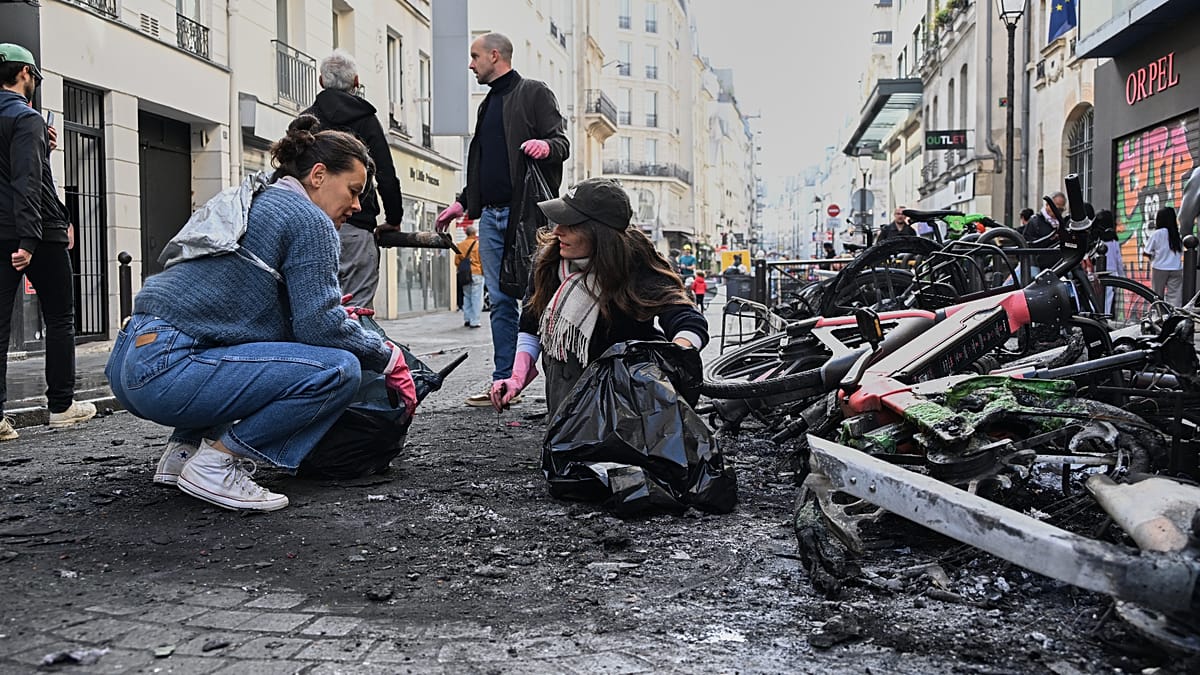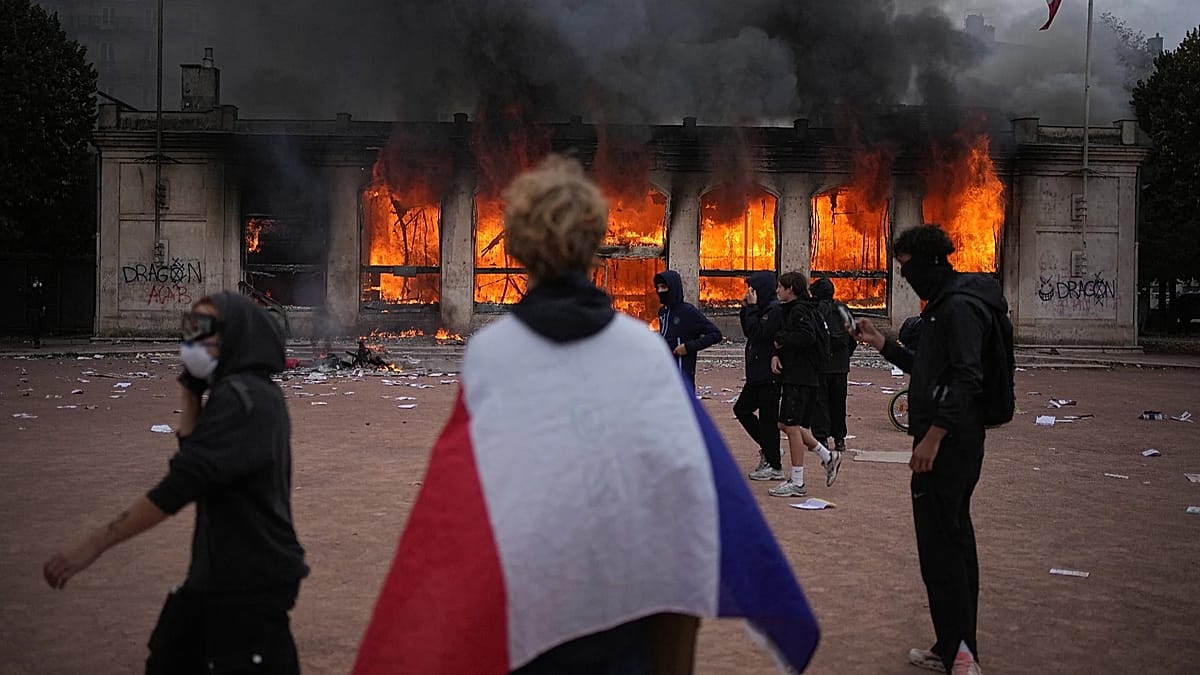
Saturday's cost-of-living protests in France turned into some of the most violent demonstrations the country has seen in years, with arson, looting, and running battles between protesters and police in cities from Paris to Nice. What began as a broad movement against rising prices and student grievances spiraled into chaos, leaving a trail of burned-out vehicles, shattered storefronts, and a gutted town hall in Limoges.
According to the Interior Ministry, more than half a million people took part in rallies nationwide, with 110,000 in the capital alone. The demonstrations, initially peaceful, saw radical elements break away in several urban centers, setting fire to buildings and clashing with security forces. In Lyon, the city's tourist office was torched, while in Limoges, the historic town hall was almost completely destroyed by a fierce blaze.
Interior Minister Laurent Nuñez said on Sunday that over 500 police officers, gendarmes, and firefighters had been injured during the unrest, and that 1,800 people had been arrested. The scale of the violence prompted President Emmanuel Macron to address the nation on social media, stating that there was "no place for violence" in France. His remarks came as images of burning barricades and looted shops circulated widely online.
From peaceful marches to urban warfare
The protests were initially framed as a response to the rising cost of living, with unions and student groups calling for wage increases and better housing support. In Paris, demonstrators gathered at République square, where some set fire to bicycles and cars. Police used tear gas and made dozens of arrests as groups attempted to break through security cordons.
Similar scenes unfolded in Marseille, Bordeaux, Rennes, Strasbourg, Grenoble, Nice, and Toulouse. In each city, small contingents of masked individuals engaged in what authorities described as "urban guerrilla" tactics, targeting symbols of commerce and public infrastructure. Looted stores and damaged public buildings were reported across the country.
The violence has drawn comparisons to the gilets jaunes protests of 2018, though the current movement appears broader, encompassing student grievances and a wider sense of economic insecurity. France now faces the daunting task of counting the cost of Saturday's destruction, both in financial terms and in the erosion of public trust.
Limoges town hall gutted
One of the most shocking images came from Limoges, where the town hall, a 19th-century architectural landmark, was engulfed in flames. Firefighters battled the blaze for hours, but the building's interior was largely destroyed. The destruction of Limoges' town hall has become a symbol of the day's excesses, prompting local officials to speak of a "wounded city."
In Lyon, the tourist office was set alight, and in Paris, several shops were looted, with masked individuals seen carrying away merchandise. The violence was not limited to property; journalists from Euronews were attacked by masked looters during the Paris protests, underscoring the dangers faced by media covering the unrest.
Political fallout and broader European context
The unrest has reignited debates about social cohesion and the government's handling of economic pressures. Opposition leaders have accused Macron of being out of touch, while the government has blamed "professional agitators" for hijacking legitimate grievances. France was already on edge ahead of the protests, with authorities bracing for a volatile weekend.
The violence in France is part of a wider European wave of discontent over living costs. Similar protests have erupted in Brussels and Liège, and in Portugal, housing protests have joined the movement. The common thread is a growing frustration among citizens who feel squeezed by inflation and stagnant wages.
As France begins to assess the damage, questions are being asked about the effectiveness of the government's response. Interior Minister Nuñez has promised a firm line against those who resort to violence, but many analysts argue that addressing the root causes of the anger is essential to prevent further eruptions.
The images from Saturday—burning buildings, looted stores, and lines of riot police—will be hard to forget. They serve as a stark reminder that economic hardship, when left unaddressed, can quickly turn into social conflagration.