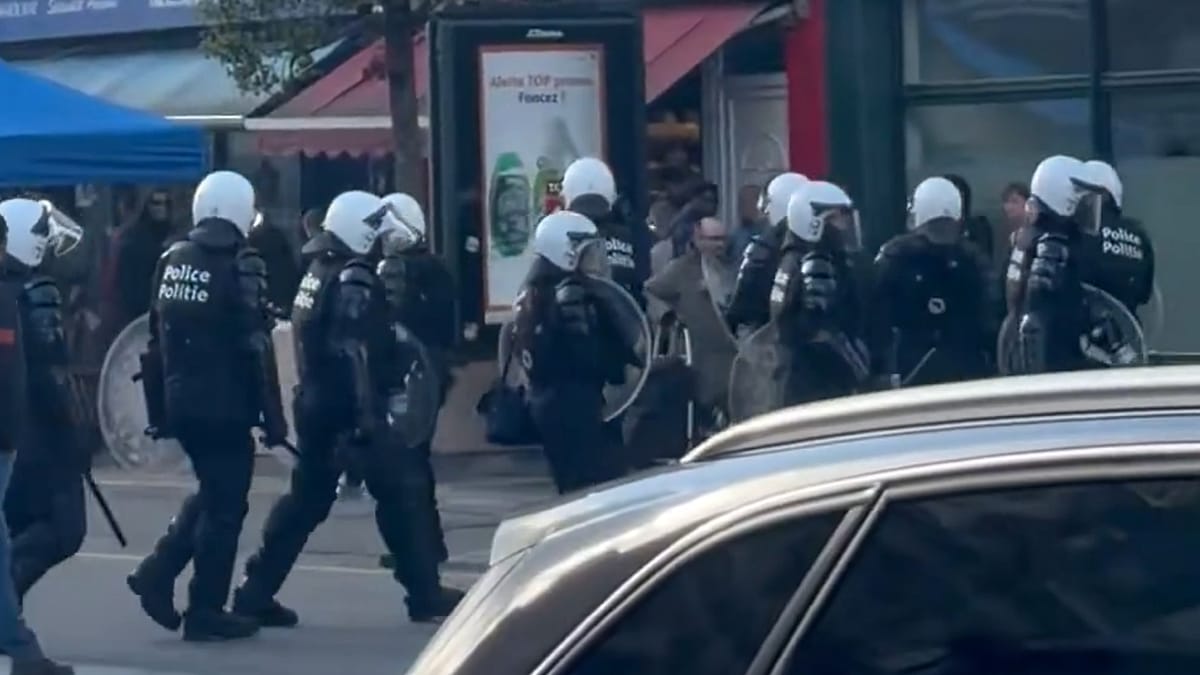
Protests across Belgium and France turned violent over the weekend, with police in Brussels and Liège deploying tear gas and water cannons against demonstrators. The unrest, initially driven by rising living costs and student grievances, has escalated into clashes that authorities describe as a serious challenge to public order.
In Brussels, officers fired tear gas at youths throwing bottles and other projectiles in the Bourse district, according to an AFP journalist. Water cannons were also used against smaller groups in Liège. Belgian Interior Minister Bernard Quintin said the situation was "no longer simply a protest," calling it "pure and simple violence, organised and repeated with the aim of destabilising our society." He vowed that "all necessary measures will be taken to restore order in the face of the rioters."
Student protests and broader discontent
The clashes come after weeks of demonstrations by Belgian high school students against rising education costs. They have been joined by students in France, who are protesting teacher shortages, poor facilities, and overcrowded classrooms. The grievances have merged with broader anger over the cost of living, fueling larger rallies that have sometimes spiraled into chaos.
In Paris, a Euronews crew was assaulted by looters near the Place de la République on Saturday. Reporter Estelle Nilsson-Julien described how masked individuals, some of them teenagers, attacked her cameraman while they were filming a supermarket being looted. "They pushed him against the wall and started hitting and punching him," she said. "They also hit me. He was wearing goggles and a mask, so he was not harmed."
The violence in France has been particularly intense, with clashes in Paris as student protests swelled to hundreds of thousands. In Marseille, protesters stormed the town hall, adding to the sense of a widening crisis. The French government faces mounting pressure to address both educational and economic concerns.
Belgium's response has been firm, but the underlying issues remain unresolved. The country's high debt levels, as highlighted by recent analyses of Europe's shifting debt dynamics, may limit fiscal room for maneuver. Meanwhile, similar protests have erupted elsewhere in Europe, from Tirana's student-led 'Flamingo Revolution' to Porto's housing protest camp, suggesting a continent-wide wave of discontent.
As governments grapple with inflation and social inequality, the challenge is to respond to legitimate grievances without resorting to heavy-handed tactics that could further inflame tensions. The coming weeks will test the resilience of democratic institutions across Europe.