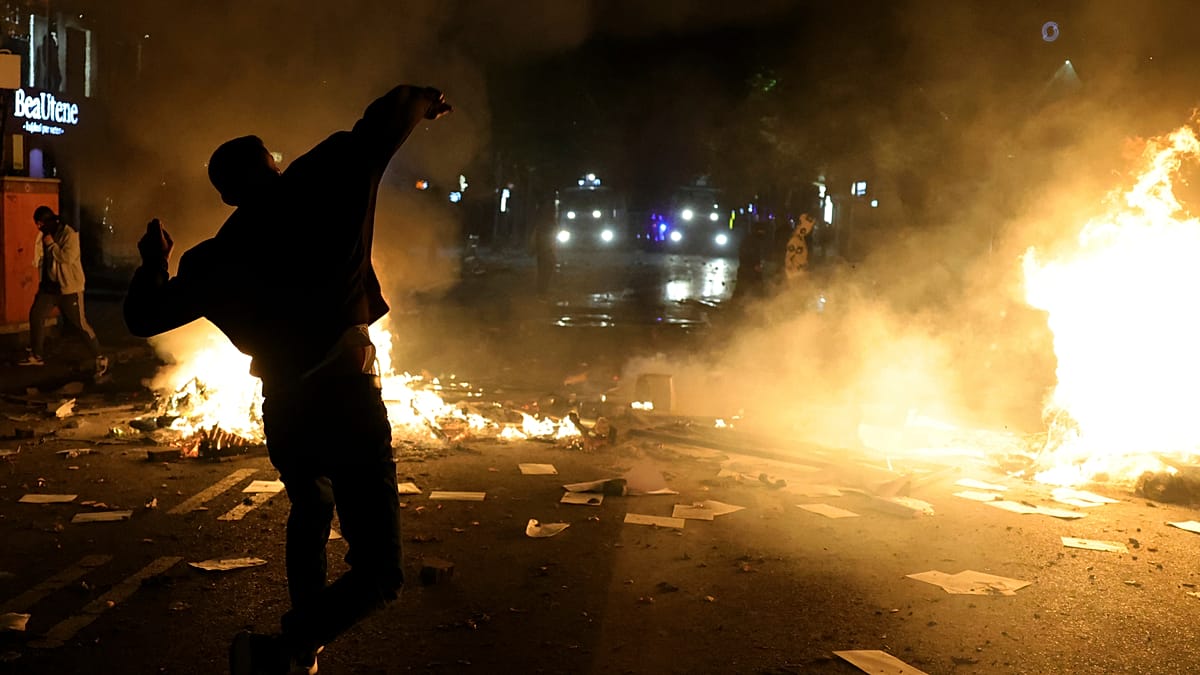
Albania's capital descended into confrontation on the night of Tuesday, 13 October, as student demonstrators and riot police clashed in central Tirana. The violence marked a sharp escalation of the so-called Flamingo Revolution, a protest movement that has been building for weeks and continued into the early hours of Wednesday.
Details of what triggered the latest flashpoint remain contested, but the sequence is familiar to observers of youth-led unrest across the continent: a peaceful student gathering, a police cordon, and then a rapid breakdown of order. Tear gas and projectiles were reported, and several people are said to have been injured. Albanian authorities have not yet issued a full account of the night's events.
A movement with a name and a following
The Flamingo Revolution takes its name from the pink plastic birds that protesters have adopted as a symbol — a deliberately absurdist touch that has helped the movement travel on social media. What began as a campus-based complaint about conditions in higher education has broadened into a wider indictment of governance, opportunity and the cost of living in one of Europe's smallest and poorest economies.
Albania, a Nato member since 2009 and an EU candidate country since 2014, has long been caught between its ambitions for Brussels and the frustrations of a young population that often sees its future elsewhere. The demonstrations in Tirana echo similar eruptions elsewhere in Europe, from the mass student protests in Paris to housing demonstrations that have spread from Lisbon to Porto. In each case, the trigger is local, but the underlying grievances — rents, wages, public services and a sense that institutions are not listening — are shared.
Why Tirana matters beyond Albania
The Western Balkans remain a strategic priority for the European Union, which has spent years trying to keep the region's reform momentum alive. Instability in Tirana is therefore not merely a domestic affair. A prolonged protest movement could complicate Albania's accession path, unsettle investors and give ammunition to critics who argue that enlargement has stalled.
It also sits within a broader pattern of European protest that has become harder to ignore. French students have taken to the streets repeatedly over school conditions and budget cuts, with figures such as Greta Thunberg joining demonstrations. Analysts have debated whether such movements represent a teen revolt or a prelude to a wider crisis — a question now being asked in Tirana as well.
"The flamingo is not a joke," one student organiser told local media earlier in the week. "It is a way of saying that we are visible, and that we are not going away."
Albanian police have defended their handling of the protests, saying officers acted to prevent damage to public property and to protect government buildings. Student groups counter that the response was disproportionate and that peaceful assembly is being criminalised. Independent verification of either account is difficult, as several journalists reported being moved on or obstructed during the night.
What happens next
The immediate question is whether the Flamingo Revolution can sustain momentum after a night of violence. Historically, clashes can either galvanise a movement or fracture it, depending on how the public reads the images. Albania's government, led by Prime Minister Edi Rama, has so far offered little beyond a call for calm — a stance that may prove insufficient if protests continue.
For the wider continent, Tirana is a reminder that the pressures driving young Europeans into the streets are not confined to the large member states. From the Balkans to the Baltic, the same questions about housing, wages and democratic responsiveness are being asked with increasing volume. How Albania's authorities respond in the coming days will be watched closely in Brussels, in neighbouring capitals, and by a generation that has already shown it knows how to organise.