Negotiations are underway in Brussels over the European Union's next long-term budget, the Multiannual Financial Framework (MFF) for 2028-2034. The European Commission's proposal, tabled a year ago, aims to redirect spending toward competitiveness and crisis response, building on the recommendations of the Draghi and Letta reports. While the new structure is broadly welcomed, it also brings significant cuts that could reshape how the bloc funds social, agricultural, and regional policies.
A battle over distribution
The proposed framework consolidates major spending programs into a single "first pillar," grouping the European Social Fund Plus (ESF+), the European Regional Development Fund (ERDF), and agricultural subsidies. This means funds are no longer automatically earmarked for individual programs, leaving member states to decide allocations through their National and Regional Partnership Plans (NRPPs). The Commission has suggested a 14% quota for social projects, but many fear this is insufficient.
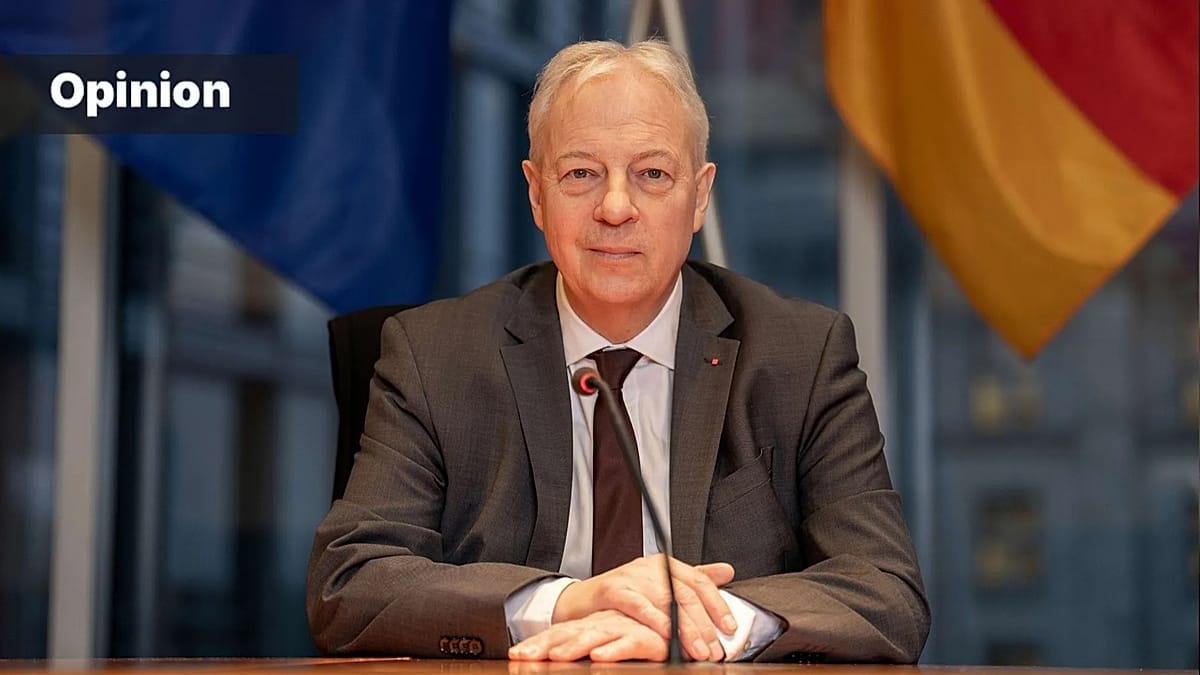
In Germany, numerous social initiatives rely entirely on EU funding. The federal budget cannot easily compensate if these streams dry up, and once dismantled, such structures are hard to rebuild. Markus Töns, the SPD parliamentary group's spokesperson on European affairs, argues for a minimum 20% quota for social projects. "If this cannot be agreed at European level," he says, "our goal is at least to enshrine it for the German NRPP in a federal-state ordinance." Germany has already decided to maintain its tried-and-tested federal allocation structures rather than adopt the EU's preference for centralized national allocation.
The Competitiveness Fund: closing the global gap
The most innovative element is the second pillar, featuring a new Competitiveness Fund designed to boost innovation and investment in the single market. The EU, and Germany in particular, remain key industrial hubs, but in future industries such as artificial intelligence, Europe lags behind global competitors. Targeted funding could help close that gap. "If we want to strengthen our European resilience and drive forward the transformation of the economy," Töns writes, "we must now be bold and take a major step forward."
This pillar also houses flagship programs like Horizon and Erasmus, which already allow non-member states to participate. These joint research and education initiatives are a European strength, building networks and encouraging cross-border collaboration. Placing them in the Competitiveness Fund could give them greater weight and foster stronger links with the private sector.
Foreign policy and sanctions
The third pillar focuses on the EU's role in the world, with increased attention to common foreign and security policy and development cooperation. Töns suggests that the new MFF could use sanctions mechanisms when countries deviate from the rule of law, and calls for a clearer distinction from extremist and terrorist organizations when allocating development aid.
Budget cuts and the 'frugal' alliance
Despite the ambitious vision, the budget is under pressure. Germany has joined the so-called "frugal" group—alongside Austria, the Netherlands, Sweden, Denmark, and Finland—in demanding cuts of around €200 billion. The Irish Council presidency has proposed €141 billion in reductions. Töns warns that such cuts would restrict Germany's options: "The single market and European cooperation are our greatest assets. Every euro paid to Brussels returns many times over."
Chancellor Merz has threatened a European budget freeze if member states cannot agree on radical cuts. Unlike a national budget that fails to pass, the MFF does not enter provisional budget management. If no new framework is agreed by 2028, funding simply expires.
Agricultural subsidies under scrutiny
If cuts are unavoidable, Töns insists they should be applied horizontally, across all areas, rather than protecting agricultural subsidies under the Common Agricultural Policy (CAP). "Twenty-first century funding programmes must adapt to the realities of the time," he argues. "The CAP cannot be exempt." He advocates for targeted, sustainable, climate-friendly farming that ensures Europe's food security, rather than blanket payments.
The debate over the MFF comes as EU institutions face a packed agenda, including efforts to reach a budget deal by Christmas. Meanwhile, broader European issues such as rising rent inflation in Romania and Croatia highlight the need for cohesion funding. The outcome of these negotiations will shape the EU's ability to respond to challenges from geopolitical tensions to economic transformation.
As Töns concludes, "This is about Europe's future—a Europe in peace and prosperity, offering diverse opportunities and bringing its citizens ever closer together." The MFF is not a bureaucratic exercise but a statement of priorities for the next seven years.