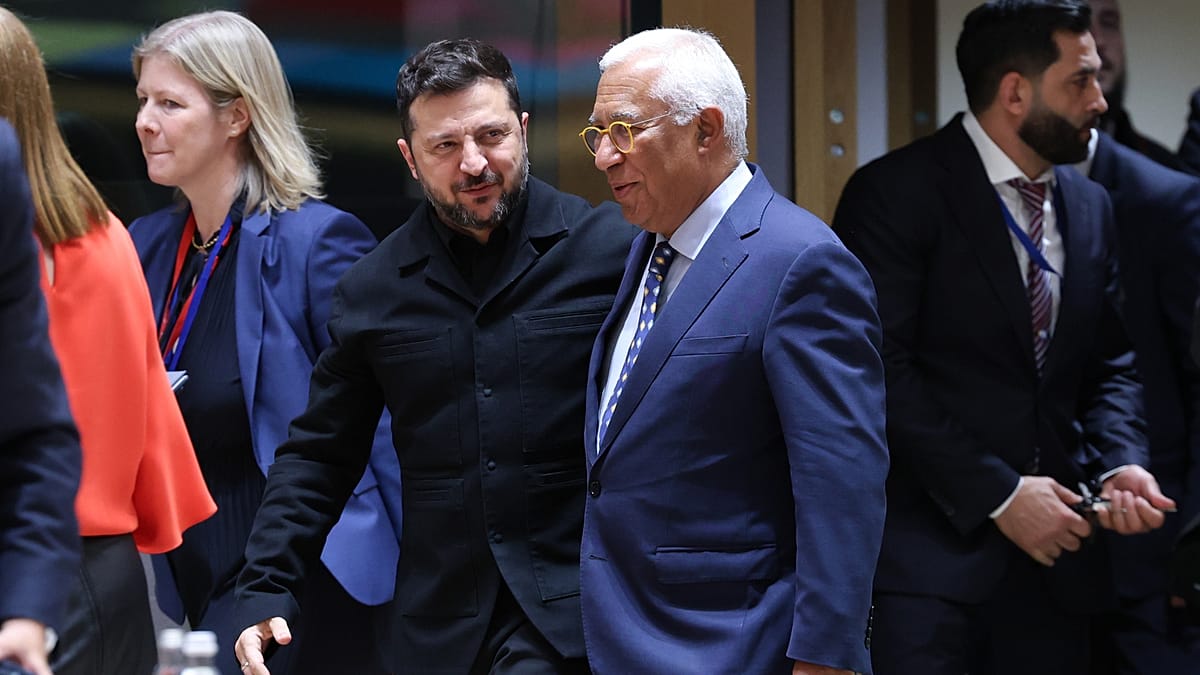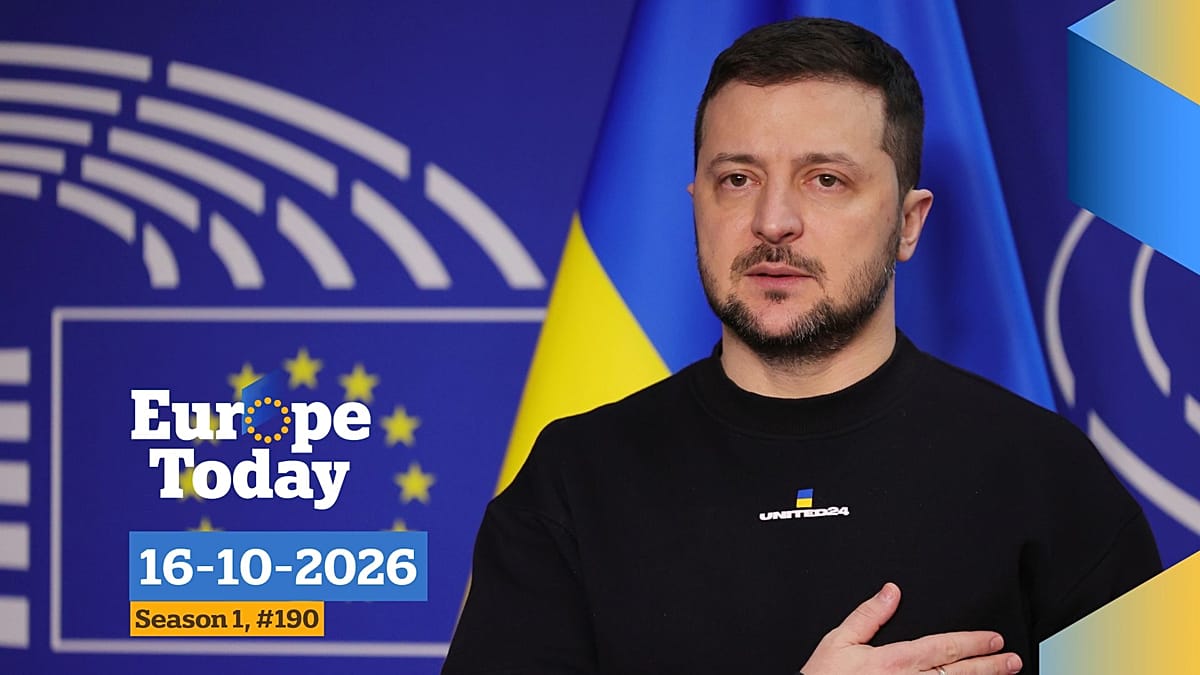
Ukrainian President Volodymyr Zelenskyy arrived in Brussels on Thursday for a European Council summit overshadowed by uncertainty over Washington's commitment to Kyiv's defence. With the United States signalling a possible recalibration of its support, Zelenskyy used the gathering to press European leaders for concrete security guarantees that could stand independently of American backing.
Speaking to reporters on the margins of the summit, Zelenskyy's deputy chief of staff said Kyiv was seriously examining ways to reduce its reliance on US military technology, including air defence systems and satellite communications. The shift reflects a broader European debate about strategic autonomy, one that has gained urgency as transatlantic relations have grown more strained.
The summit also marked a notable diplomatic moment: Zelenskyy's first formal bilateral meeting with Hungary's new prime minister, Péter Magyar. The encounter, seen as a potential reset in Kyiv–Budapest relations after the departure of Viktor Orbán, was closely watched. Magyar, who took office earlier this year, has signalled a more conciliatory approach towards Ukraine, and the two leaders discussed bilateral ties and regional security.
EU budget deadlock and a long evening session
Beyond Ukraine, EU leaders struggled to find common ground on the bloc's multi-annual budget. The session ran much longer than expected, with disagreements over spending priorities and the size of the next financial framework. Irish EU affairs minister Thomas Byrne acknowledged the difficulties, telling reporters that "unity is easier to invoke than to achieve" when it comes to money.
The budget impasse is a familiar challenge for the EU, but it carries added weight at a time when the bloc is trying to fund defence initiatives, support Ukraine, and manage the green transition. Several leaders pushed for a more ambitious budget, while others, notably the net contributors, urged restraint.
The longer-than-planned evening session also exposed broader tensions among member states. While leaders closed ranks behind Zelenskyy in their public statements, behind closed doors the discussions were more fraught. The much-invoked "unity" of the EU was tested by differing views on how far to go in confronting the United States over issues such as the International Criminal Court.
Confronting Washington and frozen Russian assets
Dutch MEP Dirk Gotink (EPP) argued that Europe should not shy away from challenging the US over its attacks on the International Criminal Court. "If we believe in the rule of law, we cannot remain silent when the ICC is undermined," he said. Gotink also noted that using frozen Russian assets to help Ukraine remains legally and politically complicated, despite growing calls to do so.
The question of Russian assets is a live one. The EU has frozen billions of euros in Russian central bank reserves, but unlocking them for Ukraine's reconstruction requires careful legal groundwork. Several member states remain cautious, fearing repercussions for the euro's status and for international financial stability.
Zelenskyy's visit comes as Kyiv increasingly looks to Europe as its primary partner. The search for European alternatives in air defence and satellite technology is a direct response to the wavering US commitment. European leaders, for their part, have sought to project resolve, with EU leaders closing ranks behind Zelenskyy even as the feud with former President Donald Trump deepens.
The summit also touched on energy prices and trade with China, issues that have divided member states. While some pushed for a tougher stance on Beijing, others warned against a full decoupling. The budget deadlock and energy price concerns dominated the agenda, leaving little room for the kind of bold commitments that Kyiv had hoped for.
As the summit drew to a close, Zelenskyy's message was clear: Europe must be prepared to act alone if necessary. Whether the EU can translate that rhetoric into concrete security guarantees remains an open question. For now, the bloc's leaders have offered words of support, but the hard work of building a credible European defence pillar is only just beginning.