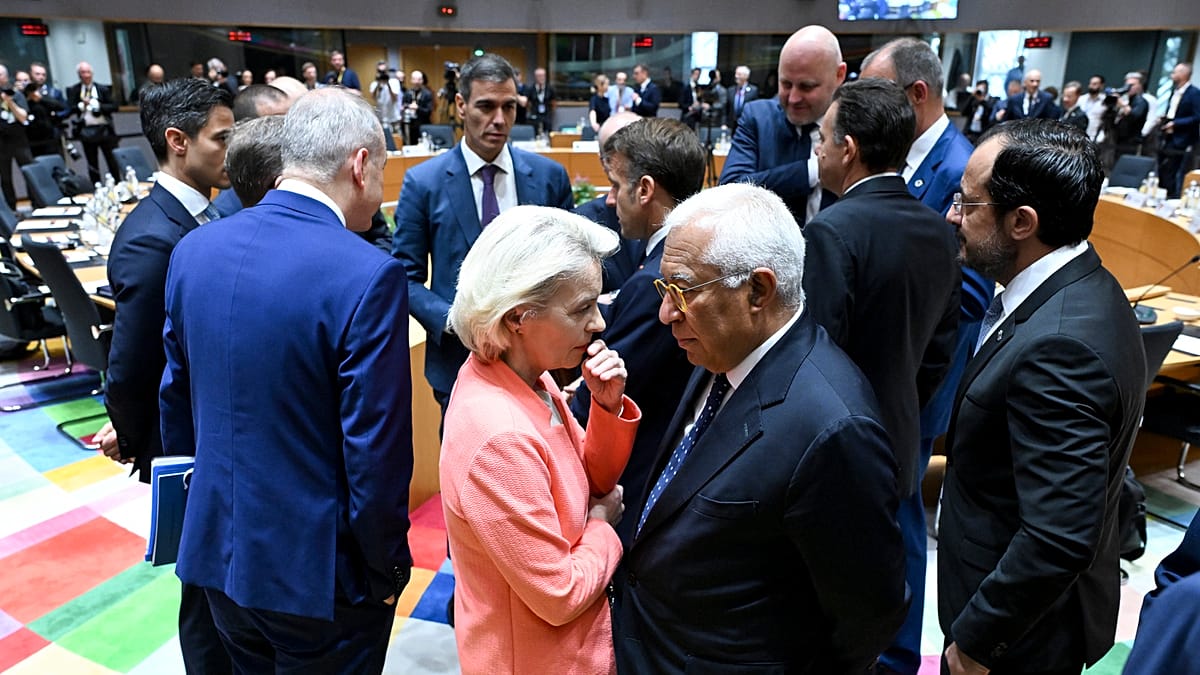
European Union heads of state and government convene in Brussels today for a two-day summit that will test their ability to hold a common line on three of the bloc's most intractable dossiers: energy costs, trade with China and the next seven-year budget.
The gathering opens against a backdrop of renewed volatility in global oil markets. Crude remains above $100 a barrel despite a coordinated release from G7 reserves, and the International Energy Agency warned this week that European diesel prices could climb further in the coming weeks. The strain is already visible in wholesale markets, where diesel premiums have widened sharply since hostilities escalated in the Middle East.
Energy: relief versus fiscal discipline
Rome and Athens have pressed Brussels to loosen EU fiscal rules so that national governments can deploy what they describe as "temporary and targeted measures" to shield households and industry from rising bills. Their argument is that the price shock is exogenous and demands a coordinated fiscal response rather than rigid adherence to deficit ceilings.
Fiscally conservative member states — the so-called frugal camp, led by the Netherlands, Austria and several Nordic countries — counter that relaxing the rules would deepen already elevated deficits and risk unsettling bond markets. They point to the eurozone's fragile recovery and warn that any perceived softening of fiscal discipline could push borrowing costs higher for the bloc's most indebted members.
The debate is not merely technical. It exposes a deeper divide over whether the EU should treat the energy crisis as a shared emergency or as a national problem to be managed within existing budgetary frameworks. Leaders are under pressure to deliver quick fixes, but the room for manoeuvre is narrow.
China: a rare Franco-German alignment
On trade, leaders will assess the ballooning deficit with China, just a week after EU trade commissioner Maroš Šefčovič secured a preliminary agreement to curb imports of Chinese hybrid vehicles and improve access to rare earths. The deal was welcomed in Brussels but is widely seen as insufficient.
France and Germany, often at odds on economic policy, have found common ground on a more assertive approach. Paris and Berlin are jointly floating a "kill switch" mechanism that would cut off China's access to the EU market if the trade imbalance remains unsustainable. The proposal is designed to give the Commission a credible deterrent without triggering an immediate rupture.
The challenge for leaders is to signal resolve without undermining the fragile progress made in recent days. Any further measures must be calibrated carefully to avoid provoking retaliation in sectors where European exporters remain vulnerable.
Budget: the hardest conversation
The summit's most contentious session comes this afternoon, when the EU's next seven-year budget — the Multiannual Financial Framework — is put on the table. European Council President António Costa wants a deal by the end of the year so that the complex legislative work can be completed before January 2028.
But the two camps remain far apart. The frugals demand a leaner budget focused on existing priorities, while supporters of a larger envelope argue that new challenges — defence, competitiveness, migration and climate adaptation — require fresh resources. A compromise proposal brokered by Ireland has drawn criticism from both sides, leaving Costa's December deadline in doubt.
Spanish Prime Minister Pedro Sánchez's surprise decision to call snap elections adds another layer of uncertainty, as Madrid's negotiating position may shift with the political calendar. One senior diplomat summed up the mood: "I don't think there will be blood on the walls, but it's important in these sorts of negotiations that leaders feel where the contradictions are. We are not in a hurry. We need a good deal."
Ukraine: Zelenskyy's difficult week
Ukrainian President Volodymyr Zelenskyy will join the summit tomorrow, arriving at a moment of acute strain in Kyiv's relations with Washington. In an interview with British broadcaster Piers Morgan, Zelenskyy acknowledged that Ukraine is losing a key ally and admitted feeling "betrayed" by Donald Trump. "It's painful when President Trump chooses one side, not our side," he said, while stressing that the situation was more complicated than his personal feelings.
Separately, the Financial Times reported that US negotiators proposed unfreezing some of Russia's immobilised state assets and transferring them to a financial vehicle controlled by Washington, as a means of unblocking stalled peace talks. The idea, floated during talks in Miami last week, was rejected outright by European delegates. Oversight of the frozen assets gives Europe crucial leverage, and the prospect of channelling them directly as a loan to Ukraine will be raised during tomorrow's discussions in Brussels.
Zelenskyy also described disruptions to Ukraine's Starlink connectivity as a "big mistake", warning that "people will die" unless the service is restored. Ukrainian military units reported unstable connections and speed restrictions on Wednesday, affecting drone operations including interceptors used against Russian aerial attacks. Service reportedly stabilised by the end of the day, though the speed limit remained. Questions persist over who imposed the restrictions and who authorised the subsequent improvement.
As leaders gather, the summit will test whether the EU can translate shared anxiety into collective action — on energy, on trade, on money and on Ukraine. The answers will shape not only the bloc's immediate response to multiple crises but also its credibility as a geopolitical actor.