Brussels is hosting a pivotal European Council meeting this week, with heads of state and government from the 27 member states arriving to confront a familiar trio of crises: soaring energy prices, a deadlocked seven-year budget, and the mounting pressure from Washington on Ukraine. The summit comes at a moment when transatlantic relations are visibly fraying, and the bloc's ability to act cohesively is being tested.
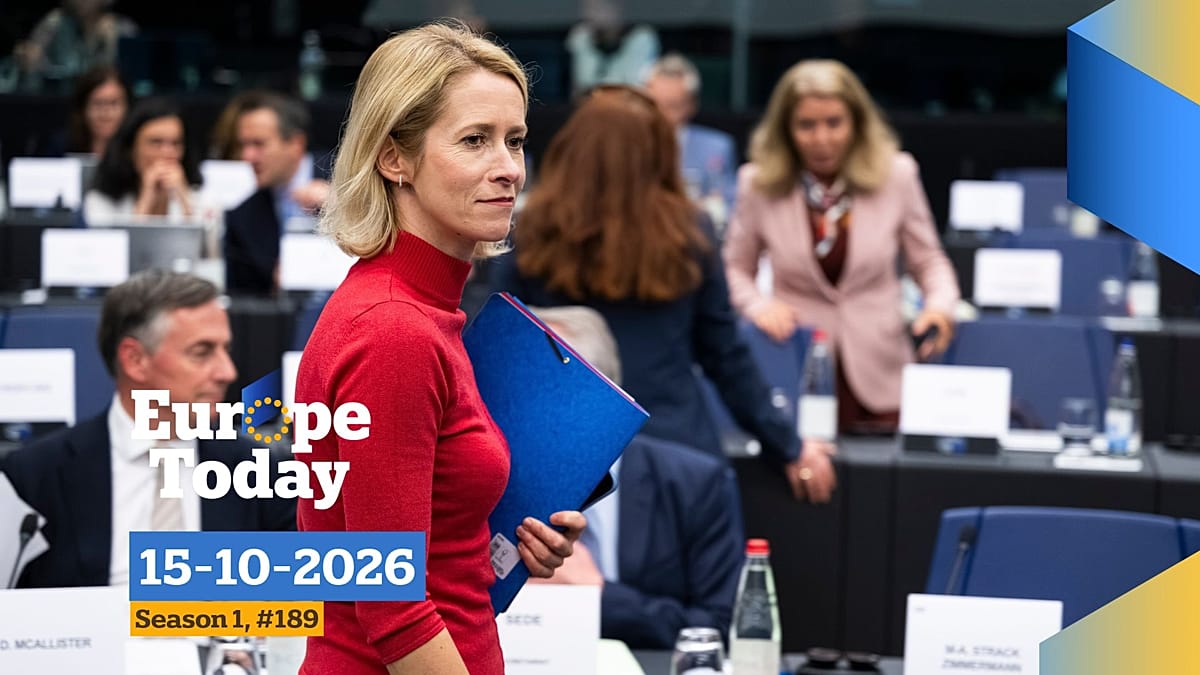
Kaja Kallas, the EU's High Representative for Foreign Affairs and Security Policy, spoke exclusively to our Europe editor Maria Tadeo on the eve of the talks. She stressed that the union's credibility depends on delivering concrete results, not just declarations. "We have to show that Europe can protect its citizens and its interests," she said, adding that the energy crisis is a direct challenge to the single market's resilience.
Energy prices and the budget impasse
Energy costs have become a political flashpoint across the continent, from Madrid to Warsaw, as households and businesses struggle with bills that remain far above pre-crisis levels. Leaders are expected to discuss options ranging from joint gas purchasing to more ambitious price caps, though divisions persist between those who favour deeper market intervention and those who prefer a more cautious approach. The summit's agenda also includes the unfinished negotiations on the EU's next multiannual financial framework, a seven-year budget that has been stalled by disagreements over funding for defence, migration, and innovation.
Shona Murray, reporting from the European Council, noted that the atmosphere in Brussels is tense. "There is a sense that this summit cannot afford to fail," she said. "The public is watching, and so are markets." The budget deadlock is particularly worrying for countries like Italy and Spain, which are pushing for more flexibility in spending rules to support green and digital transitions.
Kallas on Ukraine and transatlantic ties
In her interview, Kallas addressed the deteriorating relationship between the EU and the United States, particularly over Ukraine. With Donald Trump's administration pressuring Kyiv to accept a deal that many European officials see as unfavourable, the EU is trying to maintain a unified front. "We cannot let others decide our security for us," Kallas said, referring to the need for Europe to take greater responsibility for its own defence. She also reiterated the bloc's commitment to Ukraine's territorial integrity, but acknowledged that the path to peace is complex.
The summit comes as Trump pressures Kyiv and EU budget talks remain unresolved, adding urgency to the discussions. Kallas's remarks reflect a broader shift in European thinking: the era of relying on Washington's security umbrella is fading, and the EU must invest in its own capabilities.
Enlargement and the single market
Beyond the immediate crises, the summit is also expected to touch on enlargement, though progress remains slow. Beate Meinl-Reisinger, Austria's Foreign Minister, told Euronews that the current approach is too cautious. She proposed a bold idea: give candidate countries like Ukraine, Moldova, and the Western Balkan states access to the EU's single market in stages, as they complete reforms. "This would create a tangible incentive for reform and bring our neighbours closer to Europe," she said. "Waiting for full membership before any integration is a recipe for stagnation."
Her proposal has gained traction among some member states, but others fear it could dilute the union's cohesion. The debate is likely to continue beyond this summit, but the fact that it is on the agenda signals a growing recognition that the EU must offer a credible path to those who aspire to join.
Jordan's investment hopes
Outside the European Union, the summit also drew interest from partners in the Middle East. Tareq Abu Ghazaleh, Jordan's Investment Minister, was in Brussels to discuss the EU's roughly €3 billion commitment to the kingdom through 2027. He expressed hope that the relationship would go beyond financial aid, focusing on trade and investment. "We want to be a regional hub for technology and logistics," he said, "but that requires stability, and stability requires a resolution to the conflicts around us."
Jordan's role as a stabilising force in a volatile region is crucial, and the EU's engagement is seen as a test of its broader foreign policy ambitions. As the summit unfolds, the bloc's ability to balance internal pressures with external commitments will be under close scrutiny.
The two-day meeting is expected to produce a set of conclusions, but the real test will be in the implementation. As Kallas put it, "Europe must act as one, or it will be acted upon." With energy prices spiralling and geopolitical tensions rising, the stakes could not be higher.