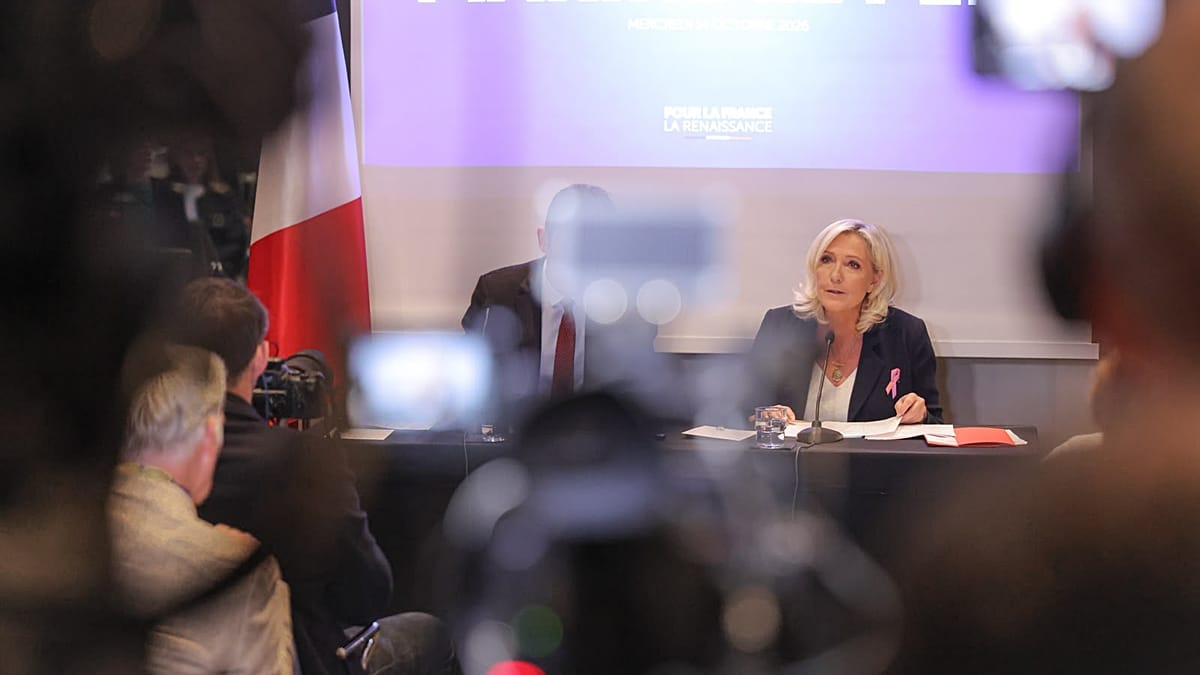
Marine Le Pen brought her presidential campaign to Brussels on Monday, using a press conference with allied far-right parties to set out a markedly more restrictive vision of France's place in the European Union. The National Rally leader, who currently leads the polls ahead of next May's election, argued that the European Commission has expanded into areas she regards as beyond its competence — health, security and international diplomacy among them.
Invoking La Fontaine, she compared the Commission to the frog that inflates itself until it bursts, a familiar image in French political rhetoric. Her remarks followed a meeting with leaders of Patriots for Europe, the far-right bloc her party sits in.
A smaller French cheque
At the centre of her programme is money. Le Pen wants France's net contribution to the EU budget capped at €5 billion a year, a substantial reduction from the roughly €8 billion recorded by the French Senate. She framed the demand as a matter of fiscal discipline rather than withdrawal, insisting that "being pro-France does not mean being anti-Europe."
She paired that with a set of proposals she said would require joint European action: a genuine carbon border levy on imports from countries with looser environmental rules, with carve-outs for goods Europe does not itself produce, such as fertilisers and coffee; harmonised taxes on tobacco and alcohol; and a single EU corporate tax rate for large firms of between 20% and 25%.
According to Le Pen, those measures would relieve pressure on French taxpayers. Last week she presented a plan to find €140 billion in savings over five years, with the aim of bringing France's public deficit under 3% of GDP by 2030 — a target that has eluded successive governments in Paris and that continues to shape the country's budget debate.
Breaking with Brussels on Ukraine and Russia
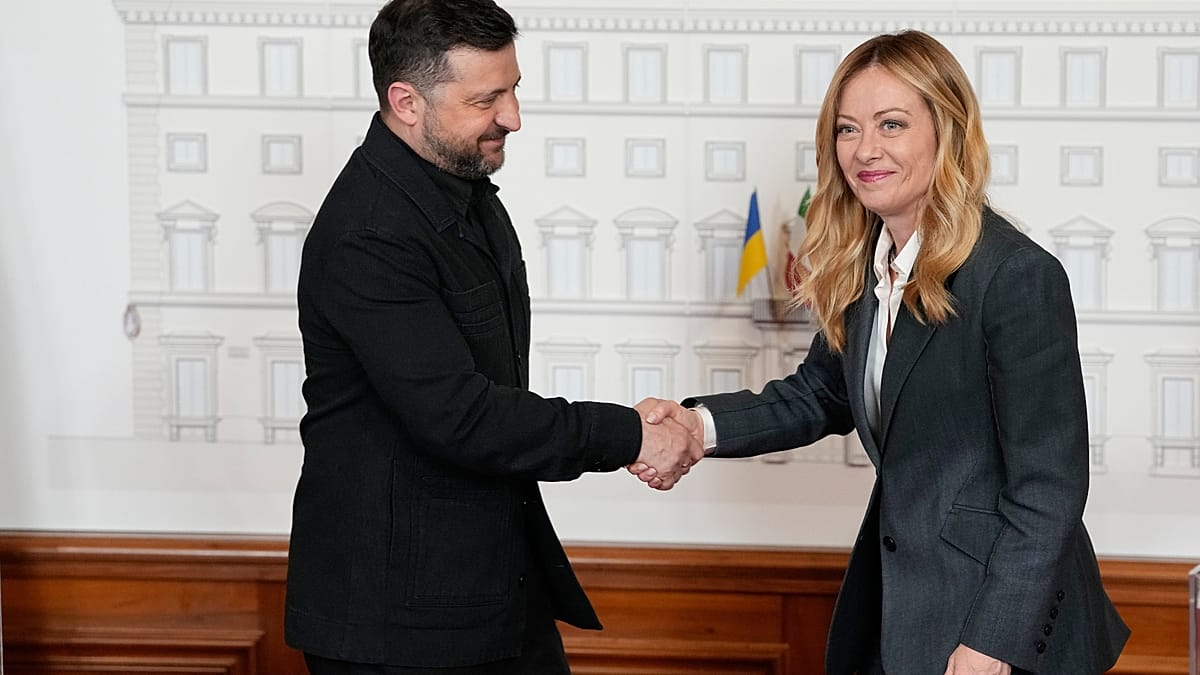
The more consequential rupture concerns the war in Ukraine. Le Pen said she would stop French financing for Kyiv, arguing that the country's public finances no longer permit it, and that honesty required telling President Volodymyr Zelenskyy so. She also wants EU sanctions on Russia lifted, contending that the restrictions have damaged European economies more than they have hurt Moscow — a claim that puts her at odds with the Commission as it prepares a 22nd sanctions package.
Her stance would isolate France from most of its partners. EU leaders gather in Brussels later this week expected to reaffirm support for Ukraine, building on February's agreement on a €90 billion loan for Kyiv's budgetary and military needs, with a first €45 billion tranche due next year. Ukraine's Finance Minister, Sergii Marchenko, has warned that the country needs around €70 billion more.
The timing is awkward for the broader European agenda, which already includes difficult discussions on energy costs, the budget and Ukraine. A French president openly campaigning against further sanctions and funding would alter the arithmetic in the European Council, even if Le Pen's proposals would still require the consent of other capitals.
Whether her domestic lead translates into the Élysée remains uncertain, and French presidential campaigns have a long history of shifting in their final months. But the Brussels appearance made one thing clear: a Le Pen presidency would not be a quiet one inside the Union. It would test how much of the EU's current consensus on Russia, on spending and on the Commission's own reach can survive a member state government determined to push back.