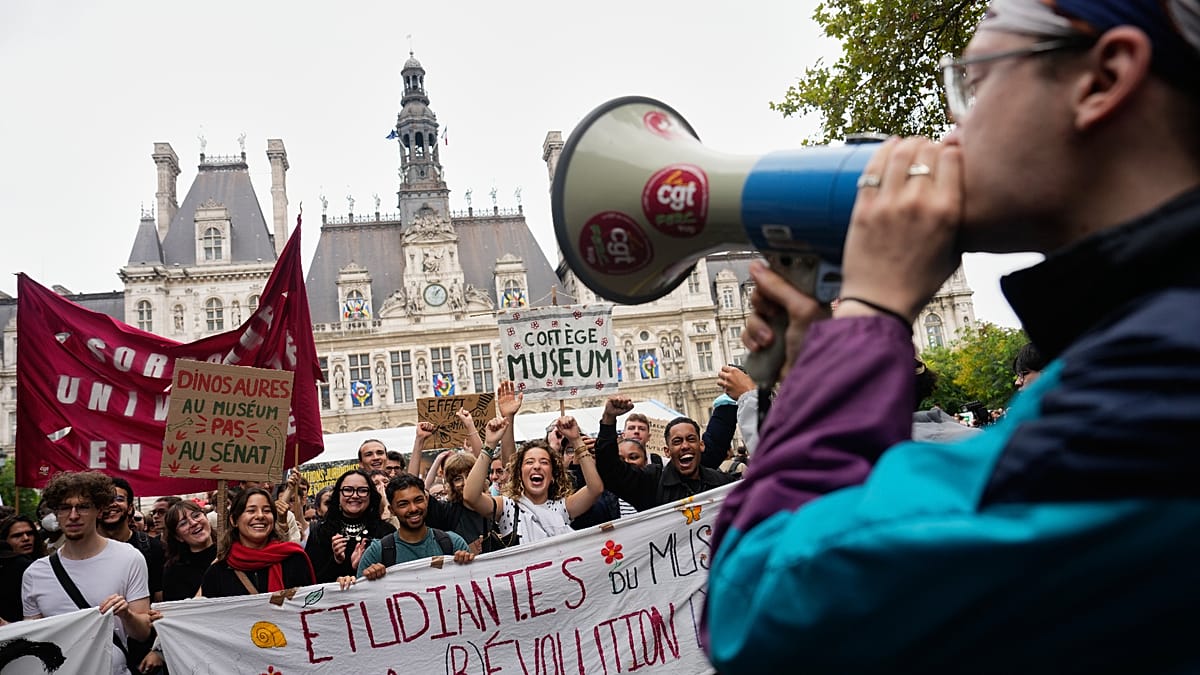
Paris — France faced another wave of nationwide demonstrations on Tuesday, as students and trade unions took to the streets to demand better education funding and conditions, just as the National Assembly began debating the government's 2027 budget proposal. The protests, dubbed "act five" by organizers, reflect a deepening standoff between the executive and a generation that says it is being ignored.
Teaching unions expressed frustration with the government's response to long-standing grievances: overcrowded classrooms, deteriorating school buildings, and chronic teacher shortages. "It is clear that the responses that have been provided are inadequate and do not meet the needs set out," said Elisabeth Allain-Moreno, secretary-general of the SE UNSA teachers' union.
Education Minister Édouard Geffray had promised on 8 October to deploy 3,000 substitute teachers to more than 500 priority schools by Tuesday. But on the day, he admitted that only 35% of that target had been met. Morgane Verviers, secretary-general of UNSA Education, told Euronews: "We have a generation that is articulating demands that we identified years ago, which we have been advocating for and were never heard."
Budget under fire
The government's budget includes a €1.2 billion increase for the National Education Ministry, a 1.6% rise that critics note falls short of the projected 1.8% inflation. France is grappling with one of the highest public deficits in the eurozone, which constrains spending, but protesters argue that priorities are misplaced.
Sabrine Kharbach, spokesperson for l'Union Étudiante, France's largest student union, accused the government of underestimating young people's economic awareness. "They believe that students and young people are not aware of the economy and don't understand what's happening. But we truly understand, when we see that there's an additional $400 billion being allocated to the military," she said, referring to France's €413.3 billion military programming law for 2024–2030. "We have to ask ourselves if they want to invest in death or in the future."
A secondary school student from the Paris suburbs echoed that sentiment, saying her generation is not taken seriously despite being "the future of France." She added: "We can't turn a blind eye to issues, especially in secondary schools in the suburbs, which really lack funding."
The protests have resonated beyond France's borders. Swedish activist Greta Thunberg joined Tuesday's march in Paris, telling AFP that "young people are not being included in the conversation" and that "our future is being robbed away from us." Her presence highlights a broader European youth movement; students in Belgium and Italy have staged their own demonstrations over the past week. Thunberg's involvement was also covered in our earlier report.
Hard-left leader Jean-Luc Mélenchon of La France Insoumise also joined the protests, declaring on X that the Bastille had been "retaken" after a mass rally on Place de la Bastille. The protests began in mid-September in Paris's suburbs and have since spread nationwide, with school blockades and marches in cities like Lyon, Marseille, and Lille.
Police violence accusations
While many demonstrations have been peaceful, some have been marred by clashes with police and sideline riots. Rights groups have accused officers of using disproportionate force, pointing to a wave of injuries among student protesters. The interior ministry has not yet commented on the allegations.
The budget debate in the National Assembly is expected to be contentious, with opposition parties likely to challenge the education spending and the government's broader fiscal strategy. The unrest adds pressure on President Emmanuel Macron's administration, which is already navigating a fragile parliamentary majority and rising discontent over the cost of living.
As the "act five" protests unfolded, the government insisted it was listening. But for many students and teachers, the gap between rhetoric and reality remains wide. "We've been saying the same things for years," said one teacher in Paris. "The question is whether they will finally hear us."
The situation in France also echoes broader European debates about public investment and social priorities. As Germany leads a revolt of net payers against the EU budget compromise, and Russia's 2027 budget prioritises defence, squeezing social spending, the French standoff highlights a continent-wide tension between security spending and social welfare.