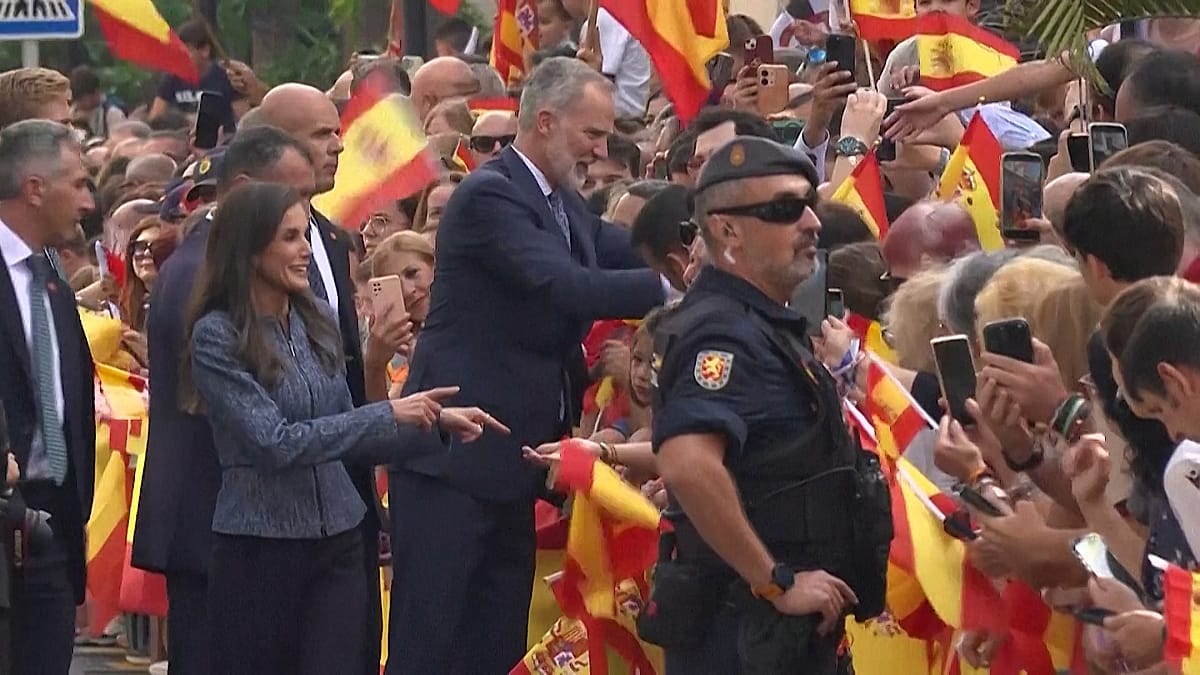
King Felipe VI and Queen Letizia stepped onto the sun-drenched streets of Ceuta on Tuesday to a reception that left little doubt about the city's loyalties. Thousands lined the avenues, waving Spanish flags and cheering as the royal couple began their first official visit to the North African enclave since 2007. The warmth of the welcome stood in stark contrast to the tensions that have simmered around the territory in recent months.
Ceuta, a Spanish autonomous city on the Moroccan coast, has long been a symbol of Spain's presence in North Africa. For many residents, the royal visit was a powerful affirmation of their Spanish identity. "We are Spanish, and we wanted the King to see that," said María López, a local shopkeeper who had decorated her storefront with a large flag. The couple's itinerary included meetings with local authorities, a visit to the city's military barracks, and a walk through the historic centre, where crowds pressed forward for a glimpse of the monarchs.
A visit charged with political meaning
The timing of the visit was anything but coincidental. It came just days after Spanish police cleared a makeshift beach camp that had been set up by migrants, a move that underscored the ongoing pressures on the enclave's borders. The royal tour also followed a period of heightened diplomatic friction between Madrid and Rabat over migration and territorial claims. For many observers, the visit was a deliberate show of Spanish sovereignty over Ceuta, a message aimed both at domestic audiences and at Morocco.
The king's presence carried particular weight given that this was his first visit to Ceuta as monarch. His father, King Juan Carlos, had visited the enclave in 2007, but Felipe VI had not returned until now. The delay had been noted in Ceuta, where some felt neglected by the crown. Tuesday's rapturous reception appeared to heal that rift, at least in part. "This is a historic day," said Juan Vivas, the city's president, in a speech welcoming the royal couple. "Your presence here is a recognition of our Spanishness."
The visit also coincided with Spain's National Day, celebrated on 12 October, when soldiers from Ceuta were notably absent from the parade in Madrid, a detail that did not go unnoticed in the enclave. The royal visit, coming so soon after, was widely interpreted as a gesture of solidarity with the city's residents.
Identity and migration at the crossroads
Ceuta and its sister enclave Melilla are the only land borders between the European Union and Africa, making them a focal point for migration debates across the continent. The royal visit brought renewed attention to the delicate balance these cities must strike between their European identity and their geographical reality. While the crowds on Tuesday were unequivocally pro-Spanish, the broader picture is more complex. The enclaves are home to significant Muslim and immigrant communities, and questions of belonging are never far from the surface.
For the Spanish government, the visit was an opportunity to project unity. Prime Minister Pedro Sánchez, who is currently gearing up for an election campaign, has faced criticism over his handling of migration and his rapprochement with Morocco. The royal visit allowed the government to frame Ceuta as an integral part of Spain, rather than a contested outpost. Yet the underlying tensions remain, as evidenced by the police operation that cleared the beach camp just days before the king's arrival.
The European dimension of Ceuta's situation is hard to ignore. As an EU external border, the enclave is a testing ground for the bloc's migration policies. The royal visit, while a domestic affair, sent a signal to Brussels and to other member states about Spain's commitment to securing its borders while maintaining its cultural and historical ties to the region. It also highlighted the broader challenges facing Europe as it grapples with migration and identity politics.
For the people of Ceuta, however, Tuesday was less about geopolitics and more about celebration. The royal couple's warmth and accessibility—Queen Letizia stopped to chat with children and accept bouquets—won over even some skeptics. "I've lived here all my life," said Antonio García, a retired fisherman. "This is Spain, and today we showed it."
As the royal couple departed, the flags remained out, and the sense of pride lingered. The visit may not resolve the deep-seated issues facing Ceuta, but it reaffirmed a bond that many residents hold dear. In a region where identities are often contested, the sight of a Spanish king walking the streets of an African city was a powerful reminder of Europe's complex and enduring presence on the continent.