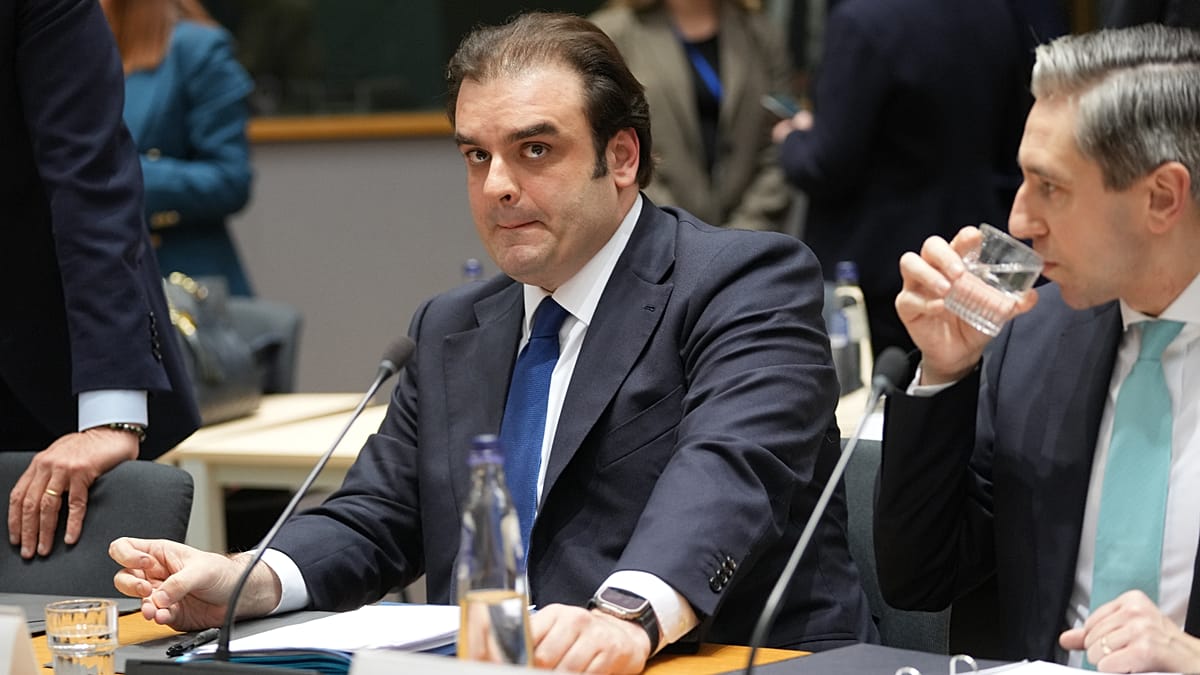
ATHENS — Greece has announced a 30% increase in its heating allowance and a new subsidy on heating oil at the pump, as the government moves to shield households from persistently high energy costs.
Finance Minister Kyriakos Pierrakakis, who also chairs the Eurogroup, unveiled the twin measures on Tuesday, framing them as a direct response to the energy crisis that continues to strain family budgets across the continent.
“In a difficult economic climate, with the energy crisis testing the resilience of households across the globe, our priority is to ease the pressure on families,” Pierrakakis said. “That is why we are proceeding with dual support for heating oil: a direct subsidy at the pump, which will immediately reduce the price, and a 30% increase in the heating allowance compared with last year, a measure that will cover hundreds of thousands of families throughout the country.”
The ministries responsible are expected to release further details on Wednesday, including eligibility criteria and the exact mechanics of the pump subsidy.
Fiscal flexibility in focus
The announcement comes as Athens steps up its call for the European Union to relax its fiscal rules, arguing that member states need more room to support households and businesses during the energy crunch. Greece has been among the most vocal advocates for greater flexibility, pointing to the uneven impact of energy price spikes across the bloc.
Other European governments are also moving to cushion the blow. Germany introduced a temporary fuel duty cut of 17 cents per litre on petrol and diesel on 1 October, while Spain has extended its existing fuel tax reductions. Both measures are set to run until the end of December.
Fuel prices have hit record highs in several countries in recent weeks, prompting a wave of tax cuts and subsidies. The Greek package is notable for its dual approach, combining an income-based allowance with a point-of-sale discount that benefits all consumers regardless of income.
The heating allowance increase is expected to reach hundreds of thousands of households, particularly in northern Greece and other colder regions where heating oil remains a primary fuel source. The government has not yet specified the total budget for the measures, but officials have indicated that the cost will be covered through the state budget and EU funds.
Greece’s move also reflects broader concerns about energy security and affordability as winter approaches. The country has been working to diversify its energy sources, including a push for renewable energy on its islands. Agios Efstratios recently became Greece's first fully renewable island, a small but symbolic step in the transition away from fossil fuels.
However, the immediate priority for many families is the cost of keeping warm. With inflation still elevated and wages under pressure, the heating allowance increase is a tangible measure that could make a real difference in household budgets.
Pierrakakis’s role as Eurogroup president adds weight to Greece’s position in EU fiscal debates. His comments on Tuesday were seen as a signal that Athens intends to push for more flexibility in the bloc’s spending rules, which are currently under review.
The Greek measures come at a time when energy prices are also being influenced by geopolitical developments. Recent oil price fluctuations have been linked to diplomatic efforts to broker a ceasefire between Russia and Ukraine, but European households have yet to feel significant relief at the pump.
For now, the Greek government is betting that a combination of direct subsidies and targeted allowances will help families weather the winter. Whether other EU countries will follow suit remains to be seen, but the pressure on governments across the continent is unlikely to ease soon.