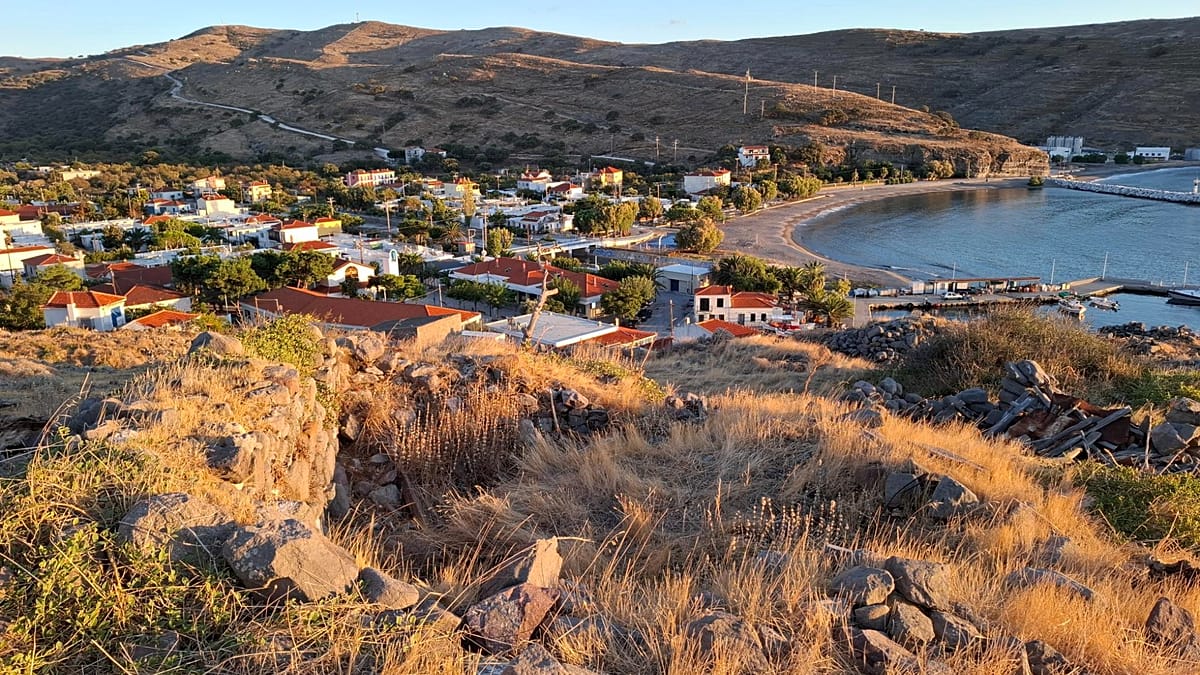
In the north-eastern Aegean Sea, the tiny volcanic island of Agios Efstratios—known locally as Ai Stratis—has become a surprising pioneer in Europe's shift to clean energy. With just 250 residents, the island has managed in under a year to slash its reliance on fossil fuels from 100% to under 10%, producing 91% of its electricity from renewable sources. The transformation, backed by the European Union, has made the island effectively self-sufficient in green power.
The project, dubbed Ai Stratis – Green Island, is a pilot initiative funded largely by the EU's Cohesion Policy. It combines a 900-kW wind turbine, a 225-kW solar farm, a battery storage system, and an automated energy management platform that balances supply and demand in real time. According to Dimitrios Kardomateas, Chairman and CEO of the Centre for Renewable Energy Sources and Savings (CRES), the island's small size made it an ideal testing ground.
“Ai Stratis is an ideal community because of its small size. We were able to carry out a pilot project of this type without a very large investment. The island is not connected to the power grid; it is isolated. The idea was to achieve ‘net zero’, which means to cover more than 90% of the energy needs of a population with renewable energy.”
The system works by storing surplus energy in batteries during periods of high generation and releasing it when production dips. In winter, excess renewable energy is converted into thermal energy, stored in four large hot water tanks with a combined volume of 500 cubic metres. This heat is then distributed to homes through the existing electrical grid, replacing the need for oil boilers.
For residents like Charalambos Makris, who manages two guesthouses, the change has been tangible. “There is no need to operate a boiler inside the house, there is no noise at all when the heating is running, and it is very economical,” he said. The island's deputy mayor for citizen services, Zoi Vlastou, sees the project as a blueprint for other Greek islands and the country as a whole.
Overcoming challenges to set a precedent
The project, with a total budget of €7.23 million (85% from the EU, 15% from Greek national funds), faced significant logistical hurdles. Transporting and installing a 77-metre-tall wind turbine weighing nearly 30 tonnes on the island's highest point was no small feat. But the biggest obstacle, according to Panagiotis Zorlos, Project Manager at CRES, was navigating Greece's regulatory framework.
“Because it's a pilot project, the regulatory framework was very general and not specifically concentrated to such a system which has a lot of particularities.”
Despite these challenges, the project has delivered impressive results. By generating clean electricity locally, Ai Stratis avoids the emission of roughly 1,000 tonnes of CO₂ annually. The island's success is already inspiring similar efforts elsewhere in Greece, including Tilos, Ikaria, and Astypalea, which are exploring their own renewable transitions.
Agios Efstratios's achievement is a reminder that even the most remote communities can lead the way in Europe's green energy transition. As the EU pushes for greater energy independence and climate action, this small island offers a practical example of how localised solutions can make a meaningful difference.



