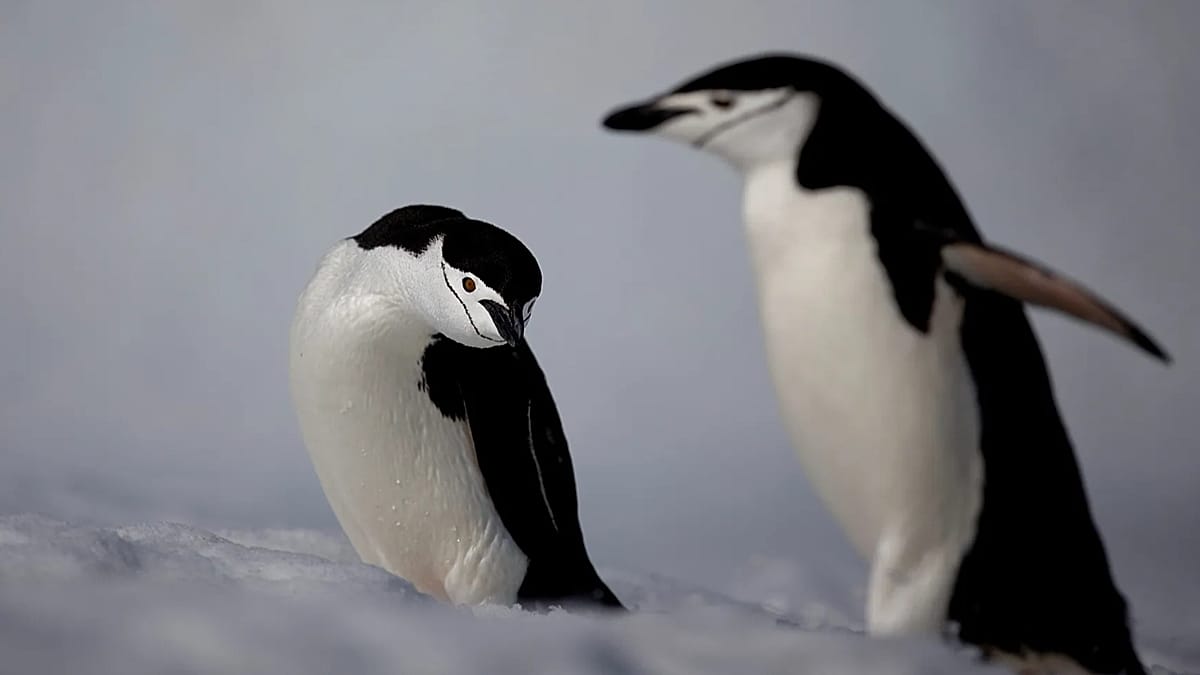
Scientists have identified a previously unmeasured natural source of methane: the guano of chinstrap penguins breeding in large colonies across Antarctica. A study led by the Institute of Marine Sciences of Andalusia (ICMAN), part of the Spanish National Research Council (CSIC), in collaboration with the University of Granada, estimates that these birds produce roughly 490,000 tonnes of methane each year through the decomposition of their droppings.
Methane is a potent greenhouse gas, trapping far more heat per molecule than carbon dioxide over short timescales. While most research has focused on human-driven sources such as fossil fuel extraction, agriculture and waste management, the new findings, published in Climate and Atmospheric Science, highlight the role that dense wildlife populations can play in the global methane budget.
Measuring emissions on Deception Island
The team conducted direct gas measurements at two large penguin colonies on Deception Island, part of the South Shetland Islands archipelago. Using drones fitted with optical sensors, they mapped guano-covered surfaces and estimated population sizes. The combination of field data and aerial imagery allowed them to calculate emission rates with unprecedented precision.
“The guano that builds up in these bird colonies, which can bring together tens of thousands of individuals, creates extraordinarily intense methane emission hotspots that until now had never been measured or quantified in situ,” said Alejandro Román, a researcher at ICMAN-CSIC and lead author of the study.
When the researchers extrapolated their measurements to all Antarctic land areas influenced by chinstrap penguins, they arrived at a far larger figure. “They could amount to around 7 million tonnes of methane per year, a figure of the same order of magnitude as global estimates for other major methane sources associated with animal activity, such as termites,” explained Emma Huertas, principal investigator of the DICHOSO project, alongside Antonio Tovar.
Implications for global inventories
The authors argue that this natural source should be incorporated into global emissions inventories, which currently overlook it. They also stress the need to understand how climate change might alter these emissions, both by affecting penguin populations and by influencing the soil microorganisms that produce methane as guano decomposes.
Chinstrap penguins are already under pressure from warming seas and shifting food supplies. Some colonies have vanished from remote volcanic islands in recent decades, a trend that could reshape future methane outputs. Meanwhile, European research continues to break new ground in polar science, from Belgian physicist's neutrino telescope to graphene sensors for stroke mapping.
The study underscores how much remains unknown about the natural processes that regulate atmospheric methane. As policymakers in Brussels and across Europe tighten rules on anthropogenic emissions, the discovery of a significant wildlife source adds a new dimension to the challenge of meeting climate targets. It also serves as a reminder that the continent's scientific institutions, from Andalusia to the Arctic, are at the forefront of documenting the planet's changing chemistry.



