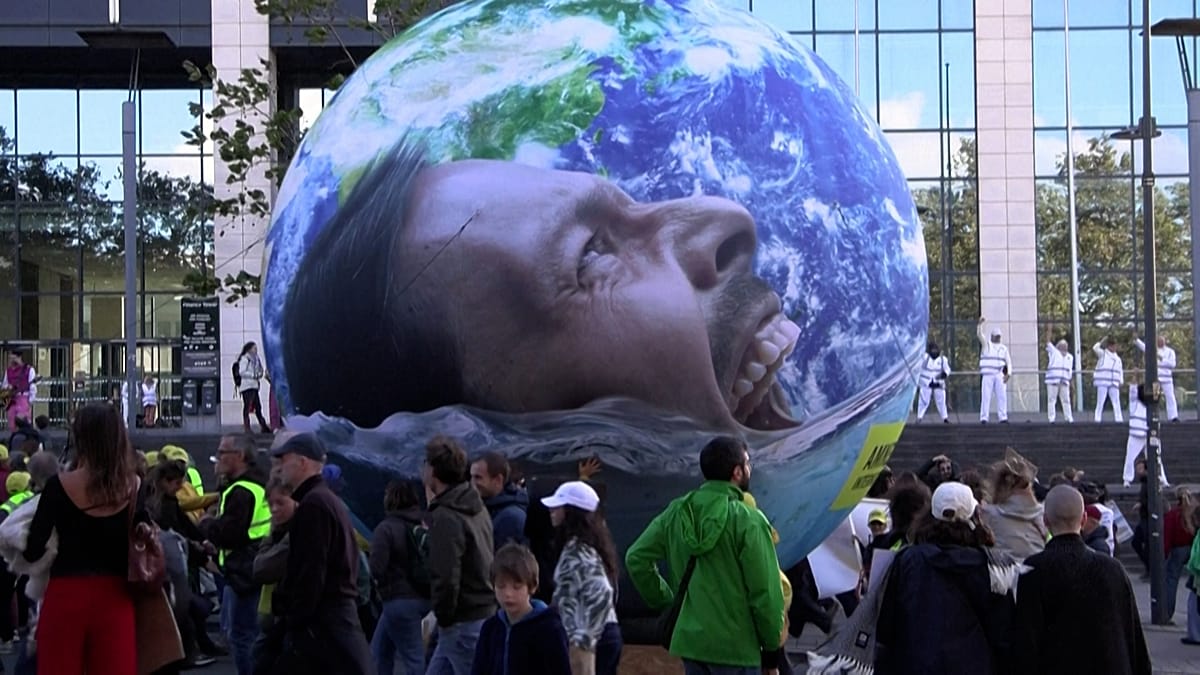
On a crisp autumn Sunday, Brussels became the stage for one of the largest climate demonstrations in recent Belgian history. Organizers estimated that over 30,000 people—though police put the figure slightly lower—flooded the capital's central boulevards, from the North Station area to the European Quarter, to demand that governments translate promises into concrete policy.
The march, held on 11 October, was deliberately timed to pressure leaders ahead of the COP31 climate summit, which opens in Antalya, Turkey, in November. Protesters carried banners reading “No nature, no future” and “Act now, not later,” while families, students, and retirees walked side by side under a grey sky.
A continental call for urgency
The demonstration was not just a Belgian affair. Delegations from neighbouring countries—including France, Germany, and the Netherlands—joined the crowd, reflecting a broader European anxiety about the pace of climate action. Many participants pointed to the recent summer's extreme weather, from wildfires in Greece and Spain to floods in Poland and the Czech Republic, as evidence that the crisis is no longer a distant threat.
“We are not here to ask politely; we are here to demand that our leaders stop treating climate breakdown as a side issue,” said Marie Lefèvre, a 34-year-old teacher from Lille who travelled to Brussels for the march. Her sentiment echoed through the crowd, where chants in French, Dutch, and English mixed into a single chorus.
The timing is significant. The European Union is currently negotiating its 2040 climate target, and member states are divided over how fast to phase out fossil fuels. The march organisers, a coalition of environmental NGOs and grassroots movements, want the EU to commit to a 90% emissions cut by 2040, a goal that some governments, particularly those with heavy industry, consider too ambitious.
Political pressure mounts
The Brussels protest also comes at a moment when climate policy is colliding with other urgent priorities. The EU is grappling with energy security, inflation, and the fallout from the war in Ukraine, and some politicians argue that environmental goals must be tempered by economic realities. But the marchers rejected that framing.
“There is no economy on a dead planet,” read one prominent banner, held aloft by a group of university students from Ghent. They told European Pulse that they were disappointed by the EU's recent backtracking on agricultural and industrial emissions, and they called on the European Commission to resist lobbying from fossil fuel interests.
The protest was peaceful, with no incidents reported. Brussels police estimated the crowd at around 25,000, while organisers claimed 35,000. Regardless of the exact number, the turnout was a clear signal that climate remains a mobilising issue in Europe, even as other crises compete for attention.
COP31, which will be hosted by Turkey, is seen as a crucial test of global commitment. The summit will be the first to assess progress against the Paris Agreement goals since the landmark 2015 accord, and many observers expect difficult negotiations over climate finance and loss-and-damage funding.
For the demonstrators, the message was simple: leaders must not return from Antalya with empty promises. As the march wound down in the late afternoon, organisers read a joint statement calling on the EU to declare a climate emergency and to align all policies—from trade to agriculture—with the 1.5°C target.
“We will be back, and we will be louder,” said one of the organisers, a young woman from Brussels who gave her name only as Anouk. “The planet cannot wait for the next election cycle.”
The march in Brussels is part of a wider wave of climate protests across Europe this autumn. Similar rallies are planned in Berlin, Paris, and Warsaw in the coming weeks, as civil society seeks to keep the pressure on governments ahead of the summit.
Whether that pressure will translate into concrete policy remains to be seen. But for one day, at least, the streets of Brussels were a vivid reminder that climate change is not a distant issue—it is here, and it is urgent.



