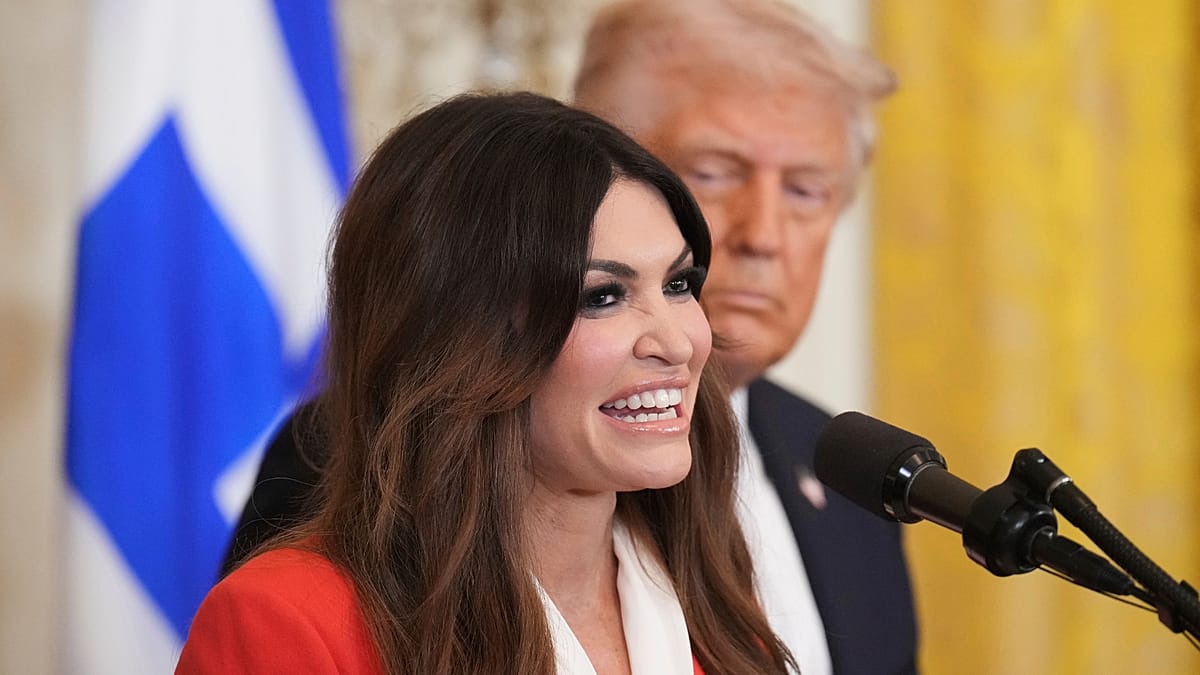
The White House has formally requested the resignation of Kimberly Guilfoyle, the United States ambassador to Greece, following a series of allegations about her conduct in the role. The request was confirmed on Tuesday by the new White House press secretary, Katie Zacharia, who told reporters: "We have asked Ambassador Guilfoyle to resign. She has been a wonderful asset to the team and we wish her well."
It remains unclear whether Guilfoyle has complied with the request. The move comes after the Wall Street Journal published a series of investigative pieces detailing questionable behaviour during her tenure in Athens. Among the allegations are a threat directed at a Greek official, the acceptance of gifts and services deemed inappropriate under diplomatic rules, and an offer to leverage her influence within the administration to settle a large credit card bill.
President Donald Trump had already signalled on Monday that his administration was "looking at" dismissing Guilfoyle, adding that officials were "not happy" with the situation. The White House's decision to seek her resignation marks a swift escalation in a story that has drawn attention on both sides of the Atlantic, particularly in Greece, where the ambassador's conduct has been a topic of diplomatic chatter.
Guilfoyle's legal response
Guilfoyle has rejected the allegations through her lawyers, who issued a statement dismissing claims made by Eric Deters, an American businessman and former political candidate. According to the legal team, Deters owed Guilfoyle approximately $150,000 for speaking engagements and consulting services. They also noted that she had previously turned down a $1 million proposal from Deters to promote a private legal case.
On the accusations of accepting gifts and travelling on private jets, her lawyers argued that Guilfoyle had sought and received guidance from the State Department and had "fully complied with ethics rules and provisions governing the acceptance of gifts." The statement did not address the alleged threat against a Greek official directly.
The controversy has inevitably cast a shadow over US-Greece relations, which have been otherwise active in recent years. Greece has been a key NATO ally in the region, and Washington has maintained a strong diplomatic presence in Athens. The timing is delicate, as the Greek government continues to navigate energy challenges and digital policy debates, including plans to restrict social media for under-15s by 2027.
Guilfoyle's appointment was seen as politically motivated, given her previous role in Trump's orbit and her high-profile relationship with Donald Trump Jr. Her tenure in Greece, however, has been marked by controversy from the start, with critics questioning her qualifications for a diplomatic post. The latest allegations have intensified scrutiny of how political allies are rewarded with ambassadorships.
The White House's decision to ask for her resignation is a rare public admission of trouble within its own diplomatic ranks. While the administration has often defended its appointees, the weight of the Wall Street Journal reporting appears to have made Guilfoyle untenable. The speed of the request—just days after the first articles appeared—suggests a desire to contain the fallout.
For Greece, the episode is an unwelcome distraction. The country has been focused on more pressing matters, such as increasing heating allowances to help households cope with energy prices and advancing its renewable energy transition, as seen on Agios Efstratios, Greece's first fully renewable island. The ambassador's conduct risks overshadowing these efforts in the international press.
Diplomatic observers in Brussels and Athens will be watching to see who replaces Guilfoyle and whether the next envoy will be chosen on merit rather than political loyalty. The episode also raises broader questions about the vetting process for US ambassadors, a topic that resonates across European capitals where American envoys are often high-profile figures.
As of now, Guilfoyle has not publicly commented on the resignation request. Her lawyers have indicated they are reviewing the situation. The White House has given no deadline, but the expectation is that she will step down imminently to avoid further embarrassment.
The story is developing, and more details may emerge about the specific incidents that led to the request. For now, the focus remains on the diplomatic vacuum in Athens and the broader implications for US-Greece ties.