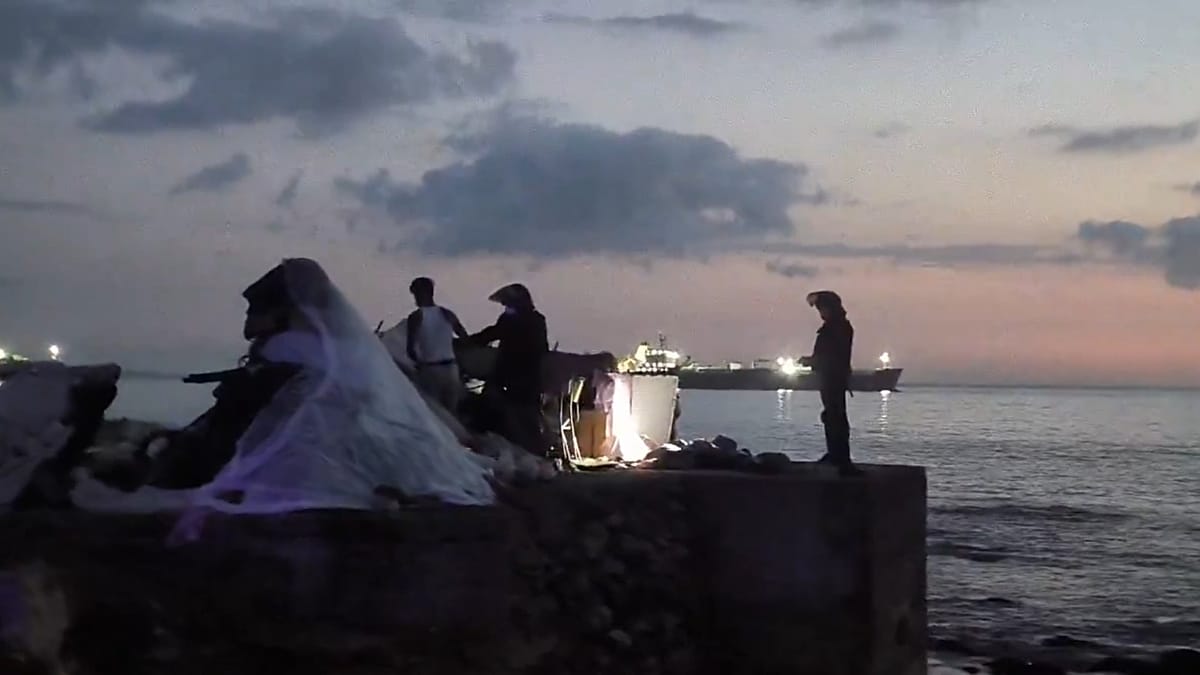
Spanish National Police on Tuesday morning dismantled the last remaining migrant encampment on Guano beach in Ceuta, a Spanish autonomous city on the North African coast. The operation, which began shortly after 8:00 am, involved around 400 migrants who had been living there since a wave of irregular border crossings from Morocco in late July brought more than 70,000 people to the city.
The clearance was carried out by a large contingent of National Police officers, Spanish riot units, immigration officials, Civil Guard members, and local police. The procedure mirrored earlier evictions at Tarajal and Trampolín beaches, with migrants being grouped together and transported by bus to the Centro de Atención Temporal de Extranjeros (CATE), where their identities will be registered. After processing, they are expected to be moved to temporary accommodation set up by the government, such as the camp at the port.
Not all migrants cooperated with the operation. As in previous clearances, many gathered their belongings and left the area before police arrived, while others fled into the nearby hills, where they have previously remained until food distribution. The authorities anticipate that some may attempt to return to the beach in the coming days, as happened after earlier transfers.
Minors separated from adults
During the eviction, officers identified numerous unaccompanied minors among the camp's residents. They were assembled separately and will be transferred apart from the adults. Several children were seen carrying signs asking to be taken to a centre for minors. According to local media, many of these minors had previously attempted to register but ran away from the process.
The operation comes just two days before King Felipe VI and Queen Letizia are scheduled to visit Ceuta on 13 October. The royal couple will preside over a tribute to those who died at sea during the mass crossing at the Tarajal border. After spending the night in the autonomous city, they will travel on to Melilla. This will be the first time a Spanish monarch has spent the night in Ceuta since the visits of Alfonso XIII in 1904 and 1927.
Once the site was emptied, cleaning crews moved in to remove tents, rubbish, and debris. The work is expected to continue throughout the day, as the camp had been in place for an extended period. Environmental experts, in coordination with the Ministry of the Environment, will assess the ecological damage left behind.
The camp had seen serious incidents, including the deaths of two people, as well as brawls, thefts, and fights. A parallel economy had also developed, with street markets and a self-sustaining way of life.
The eviction highlights the ongoing pressure on Spain's North African enclaves, which have become focal points for migration from Morocco. The Spanish government has faced criticism over its handling of the situation, with some calling for a more coordinated EU response. The Netherlands' recent push for an EU kill switch on police data sharing underscores broader concerns about border management and data protection in the bloc.
Meanwhile, the royal visit is intended to honour those who lost their lives attempting to reach Spanish shores, a reminder of the human cost of migration. The tribute at Tarajal, where dozens drowned in 2014, carries particular resonance given the recent events.
The situation in Ceuta also reflects wider challenges for Spain, which has seen its tax burden rise to over 53% of labour costs, according to a recent think tank report, adding to domestic political tensions. As the government balances migration management with economic pressures, the coming days will test its ability to maintain order while upholding humanitarian standards.



