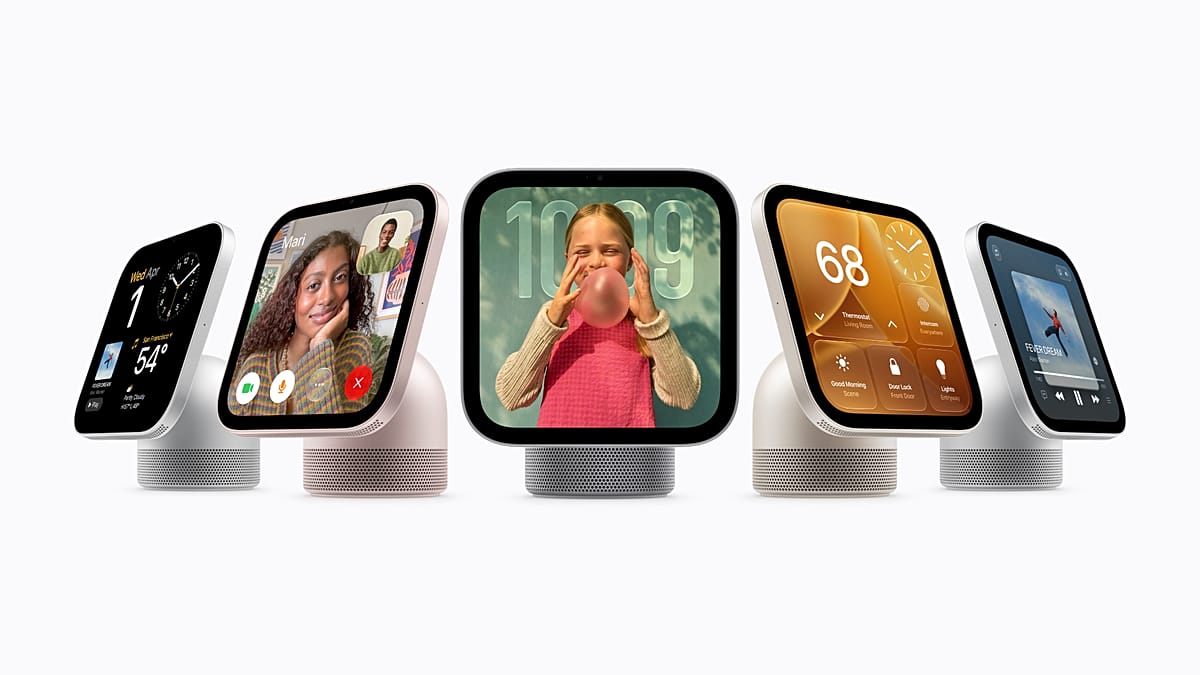
After months of speculation, Apple has finally entered the smart home display market with the launch of HomeView, a device that could reshape how Europeans manage their connected households. The hub, which resembles a compact iPad mounted on an oval speaker base, is designed to be a permanent presence in the home, always on and ready to respond.
HomeView features a 7-inch Retina display and integrates deeply with Siri, Apple's voice assistant. It can recognize up to six different household members, tailoring responses and suggestions to each individual. Users can play music, make calls, browse the web, and control compatible smart devices through the hub. Priced at $299 (€267), pre-orders begin on Tuesday, with availability expected across Europe shortly after.
“Apple HomeView is designed to be shared by everyone in the home yet feel completely personal to each user,” said Greg Joswiak, Apple's senior vice president of Worldwide Marketing, in a blog post. The device comes in four colors—silver, starlight, rose pink, and space grey—and can be purchased as a standalone countertop unit or with a wall-mount option.
The launch marks a significant step for Apple as it competes with Google's Nest Hub and Amazon's Echo Show devices, which have dominated the smart display category in Europe. Apple's pitch centers on privacy and security, a message that resonates strongly with European consumers and regulators alike, especially given the EU's stringent data protection rules.
Beyond the hub: a broader smart home ecosystem
Apple's Tuesday announcements extended well beyond HomeView. The company also upgraded its Apple TV 4K, now powered by a new A19 chip and featuring hands-free Siri AI support. A redesigned remote includes a music-playing feature to help users locate it when misplaced—a practical touch for households where remotes tend to vanish.
The HomePod mini 2, Apple's compact smart speaker, also received an update, arriving in new colors: green, blue, pink, white, and midnight. Apple claims the speaker's Siri AI is now “a profoundly more capable and conversational assistant with personal context understanding, broad world knowledge that powers tasks like richer music discovery, and the ability to tap into even more apps.”
In a notable move, Apple partnered with LG Electronics and Schneider Electric, two companies with strong European footprints, to launch the Apple Home Collection—a lineup of smart home accessories. Among these is a smart door lock that automatically unlocks when it detects an approaching iPhone or Apple Watch, and locks when the user leaves. This hands-free convenience is likely to appeal to Europeans living in apartments and houses where security is a top priority.
The smart lock is one of the most anticipated products, as it integrates seamlessly with Apple's ecosystem, eliminating the need for physical keys. For European users, who often rely on high-security locks, this could be a game-changer, though questions about battery life and compatibility with existing door hardware remain.
Apple's push into the smart home comes at a time when European households are increasingly adopting connected devices. According to recent industry data, smart home penetration in Europe is expected to grow steadily over the next few years, driven by energy efficiency concerns and the desire for convenience. Apple's entry could accelerate this trend, particularly among its loyal customer base.
However, Apple faces stiff competition from established players like Google and Amazon, which have already built extensive smart home ecosystems. Apple's strategy of emphasizing privacy and seamless integration may help it carve out a niche, but it will need to convince European consumers that its products are worth the premium price.
The launch also signals a broader shift in Apple's strategy, as the company looks to diversify beyond its core iPhone business. With the smart home market projected to be worth billions of euros, Apple is betting that HomeView and its associated accessories will become essential household items across the continent.
For now, European consumers will have to wait for the official release date, but the buzz around HomeView is already building. As Apple's smart home push signals a new era for European households, it remains to be seen whether the company can translate its tech prowess into domestic dominance.