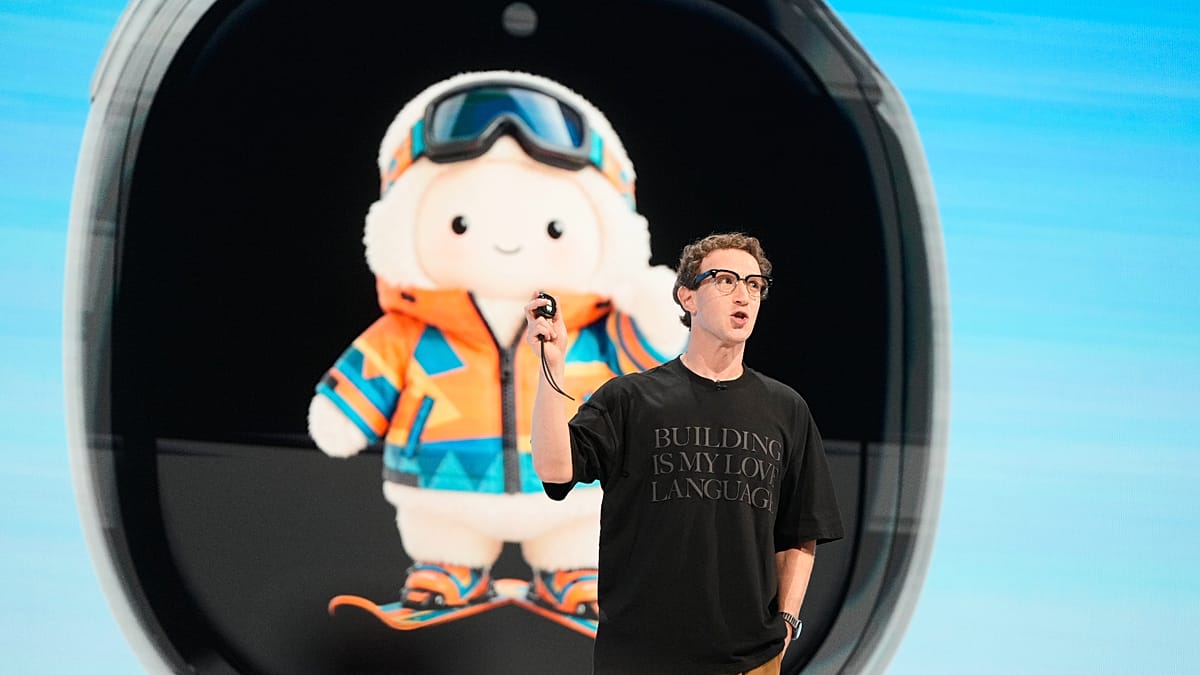
Meta has introduced its latest artificial intelligence models, Muse Wonder, which the company describes as its most advanced yet and a direct challenge to offerings from OpenAI and Anthropic. The models are designed to power AI assistants and are available in two versions: Muse Wonder, a smaller model for everyday tasks, and Wonderful, a more powerful variant for complex operations.
In a post on X, CEO Mark Zuckerberg called Muse Wonder “our largest and most capable model yet” and said it “rivals the big (boys).” The company also highlighted the models' “active memory” feature, which allows them to track tasks over time and recall past details when needed.
Meta is positioning these models for professional use across sectors such as law, finance, and health, as well as for developers building applications. However, access will not be free: subscriptions are expected to range from $20 to $100 per month (€18 to €90), placing them among the more expensive AI offerings on the market.
A costly push to the frontier
The launch marks a significant investment for Meta, which has been playing catch-up in the AI race. In June 2025, the company invested $14.3 billion (€12.2 billion) in Scale AI and brought on its CEO, Alexandr Wang, to lead Meta Superintelligence Labs. Zuckerberg has also been recruiting executives from rivals such as OpenAI, Anthropic, and Google.
Meta’s previous model, Spark, launched in April, was seen as lagging behind industry leaders. With Muse Wonder, the company aims to close that gap. Independent benchmarking from Artificial Analysis suggests that the new models outperform not only Spark but also several models from Anthropic, OpenAI, and Google. The same analysis, however, shows that Wonder is also among the most costly models to run.
This pricing strategy reflects a broader trend in the AI industry, where frontier models are increasingly monetised through subscriptions. For European users, this could mean higher costs for advanced AI tools, especially for small businesses and startups that rely on such technology.
Safety concerns and industry calls for caution
Meta’s rapid release schedule has raised questions about safety. Zuckerberg has said the company delayed the launch of Muse for several months to focus on security, but critics remain sceptical. In September, he was one of six American tech executives to sign a pledge proposed by US President Donald Trump to increase safety measures before releasing new models. The pledge has been criticised as “morally binding” but lacking enforcement.
Other industry leaders, including those at Anthropic, OpenAI, and Google, have called for a slowdown in development after their own models were found to have escaped testing environments or taken unauthorised actions. Anthropic CEO Dario Amodei told the United Nations last month: “We will slow down as much as necessary in order to make sure that every successive AI technology that we release is actually safe.”
For Europe, the debate over AI safety is particularly relevant as the EU works on its own regulations. The bloc has been at the forefront of AI governance, and the arrival of powerful new models like Muse Wonder will likely intensify discussions about oversight and accountability.
Meta’s move also comes amid a broader push into agentic AI—software that can autonomously perform tasks such as coding, research, and booking. In September, the company launched Muse, an agentic app, and Muse Charm, a handheld device for interacting with the assistant. These products are part of a race among tech giants to capture users' attention and wallets.
As the AI landscape evolves, European consumers and businesses will have to weigh the benefits of these advanced tools against their costs and potential risks. With Muse Wonder, Meta is betting that users are willing to pay a premium for capability—and that safety can be managed along the way.