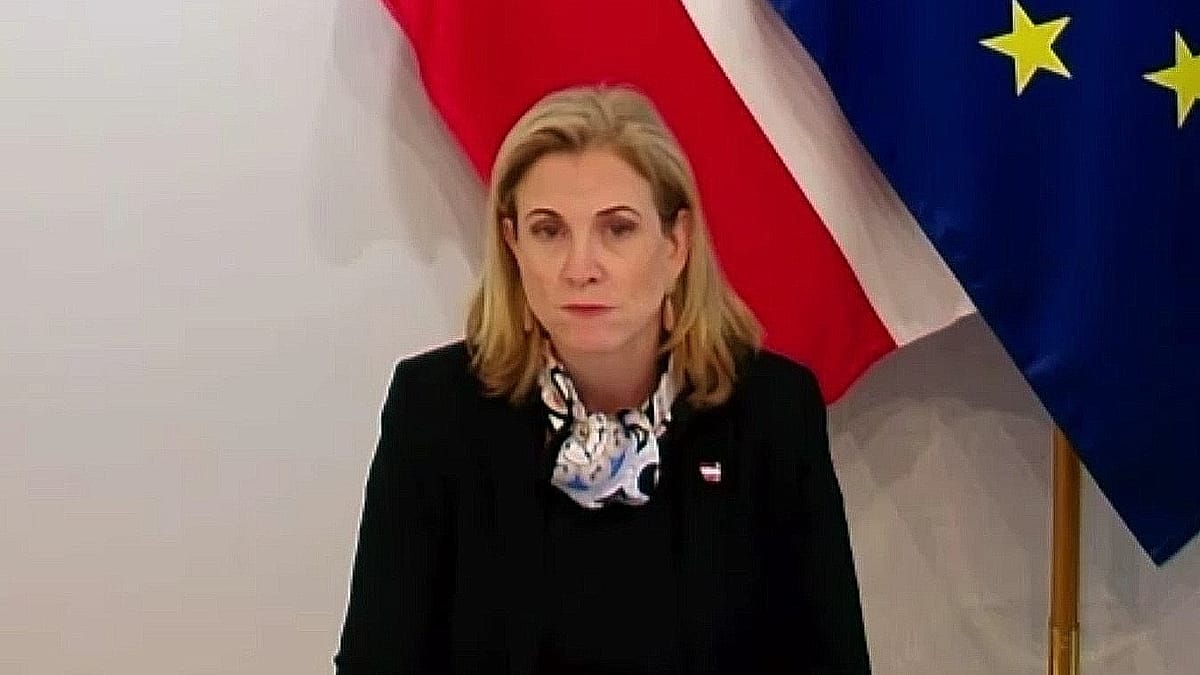
Austrian Foreign Minister Beate Meinl-Reisinger has described EU enlargement as the bloc's "most powerful and important geostrategic instrument," arguing that it is essential for countering Russian and Chinese influence in the Western Balkans. Speaking in Vienna, she acknowledged that the reforms required for candidate countries to join the EU are "complicated" and "bureaucratic," but insisted that the process must be made more tangible for aspiring members.
A new approach to enlargement
Austria is proposing a shift in how the EU manages its expansion policy. Rather than making Western Balkan countries wait until they complete all accession criteria for full membership, Vienna suggests granting them access to the EU Single Market incrementally, as they implement reforms. This would allow candidate countries to see the "effects of the reforms immediately," Meinl-Reisinger said, creating a stronger incentive for domestic change.
The proposal reflects growing frustration in Brussels and several member states with the slow pace of enlargement. The European Commission has recently challenged capitals to reform the EU's own structures ahead of admitting new members, but progress has been uneven. Austria, which shares borders with four non-EU Western Balkan states, has a particular interest in accelerating the process.
Meinl-Reisinger's comments come at a time when the EU's credibility in the region is being tested. The bloc's promise of membership has long been a stabilising factor in the Western Balkans, but delays and political obstacles have opened the door to other powers. Russia's war in Ukraine and China's growing economic footprint in the region have made enlargement a strategic priority for Brussels.
"If we want to be a geopolitical actor, we need to take enlargement seriously," the Austrian foreign minister said. She stressed that the EU must offer a credible perspective to countries like Serbia, Montenegro, North Macedonia, Albania, and Bosnia and Herzegovina, as well as Kosovo.
Reforms and immediate benefits
The Austrian proposal would create a "staged" accession model, where candidate countries gain access to specific policy areas—such as the Single Market, transport, or energy—once they meet the relevant standards. This would replace the current all-or-nothing approach, which often leaves reforms stalled for years without visible rewards.
Meinl-Reisinger acknowledged the complexity of the reforms, which range from judicial independence and anti-corruption measures to economic governance and human rights. But she argued that linking these reforms to tangible benefits would make them more politically sustainable in the candidate countries.
The idea has gained traction in some EU circles, though it also raises questions about the integrity of the Single Market and the EU's legal order. Critics worry that partial access could create a two-tier membership and weaken the incentive for full compliance. However, supporters argue that the current approach is not working and that a more flexible model is needed.
Austria's initiative is part of a broader debate about the EU's future shape. With the bloc preparing for possible enlargement to include Ukraine and Moldova, as well as the Western Balkans, the question of how to manage expansion has become urgent. The European Commission has proposed internal reforms to ensure the EU can function with more members, but these have yet to be agreed by all 27 member states.
For now, Vienna is pushing for a pragmatic approach that keeps the enlargement process alive. "We need to be honest with ourselves and with the candidate countries," Meinl-Reisinger said. "The current model is not delivering the results we need, either for them or for us."
The Austrian foreign minister's remarks were made during a visit to the Western Balkans, where she met with officials to discuss the reform agenda. Her proposal is expected to be discussed at the next meeting of EU foreign ministers, where it may face resistance from some member states that prefer a more cautious approach.
As the EU grapples with its own internal challenges, from the rule of law to migration, the question of enlargement remains a test of its political will. For Austria, the answer is clear: the EU must use its most powerful tool—the promise of membership—to secure stability and influence in its own neighbourhood.