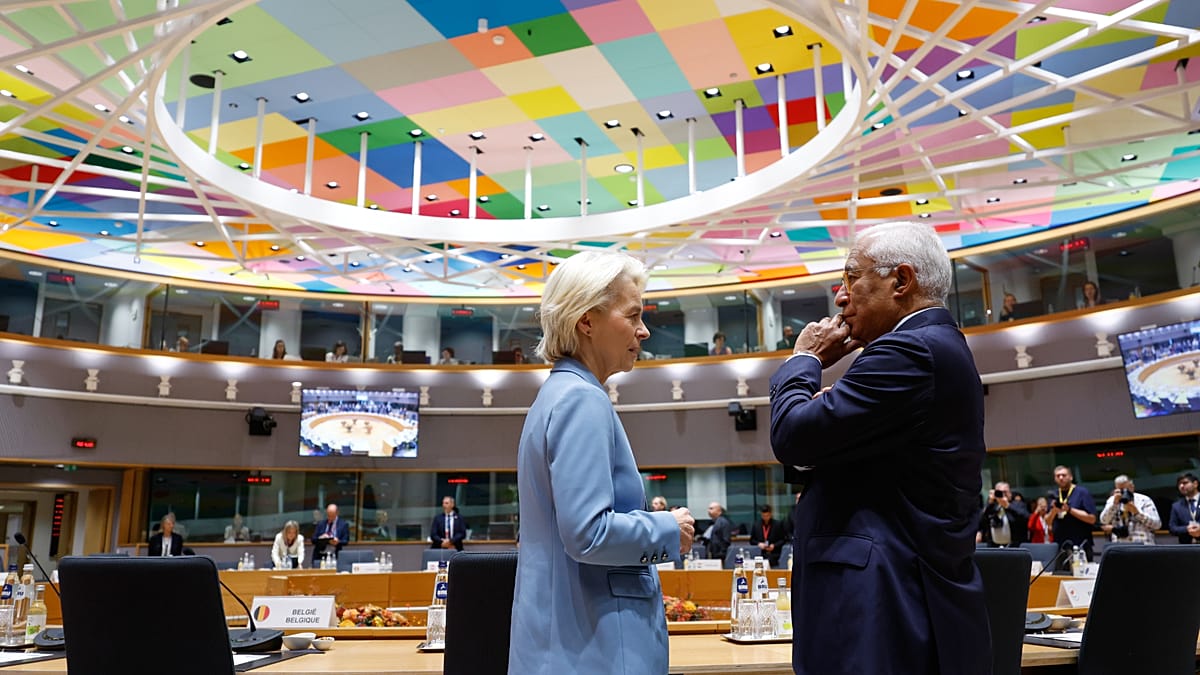
European Union leaders emerged from a late-night summit in Brussels with a clear message: the bloc needs a coordinated response to the energy crisis, not just a patchwork of national measures. They urged the European Commission to propose targeted, temporary interventions to ease the burden on households and businesses, with particular attention to energy-intensive sectors such as manufacturing, farming, and transport.
The summit conclusions, agreed after negotiations that stretched into Thursday night, also highlighted concerns about the security of fuel supplies. Leaders asked the Commission to look into boosting the capacity and efficiency of European oil refineries, which have been in steady decline since 2009. This comes as diesel markets remain tight and wholesale prices in Europe hover near record levels, according to the International Energy Agency (IEA).
In a nod to the lessons learned from the Ukraine war, the leaders expressed interest in exploring voluntary joint purchasing of energy supplies, similar to the platform the Commission set up to replace Russian gas after Moscow's invasion. Such a mechanism could give the EU more leverage in global markets and reduce vulnerability to price spikes.
Pressure mounts on national budgets
The crisis is already forcing governments to dig deep into their coffers. Italy and Greece have formally asked Brussels for flexibility to spend beyond normal deficit limits, citing the extraordinary circumstances of the energy shock. Greece's Prime Minister Kyriakos Mitsotakis called for a coordinated EU approach rather than relying solely on national measures. "Energy costs have fueled a new surge in European inflation," he said on Thursday, arguing that Brussels must consider "additional measures and further flexibility" to protect the most vulnerable households and businesses. He cautioned that negotiations would take time, saying he did not expect a deal "today or tomorrow."
Finnish Prime Minister Petteri Orpo echoed that urgency. "We need short-term measures because we have to guarantee cheap prices for people and companies," he said.
The Commission had already given member states the green light in May to offer direct financial support to the hardest-hit sectors, including farmers, heavy industry, and hauliers. But as the crisis drags on, public funds are shrinking, and the limits of what national budgets can absorb are becoming evident.
Desmond Lawrence, senior investment strategist at State Street Investment Management, warned on 14 October that France and Belgium are slowly heading towards an unsustainable debt burden. The strain is not just fiscal; it is also political, as governments face competing demands from industry, consumers, and climate advocates.
Geopolitical shocks and long-term goals
The escalation in the Middle East has added another layer of uncertainty. EU leaders warned that disruptions to strategic shipping routes, particularly the Strait of Hormuz, could have lasting effects on global supply chains for energy, fertilisers, and food. Ukraine's military strikes on Russian refineries are also aggravating the fuel crisis, keeping markets on edge.
Such a scenario could stretch the Commission's "targeted and temporary" measures indefinitely, complicating the already fraught negotiations over the EU's next multi-annual budget. Net contributors like Germany, the Netherlands, and Sweden have pushed back against what they see as an overly ambitious spending plan, and the energy crisis is likely to harden their positions. The outcome of those talks will shape the bloc's ability to fund its energy transition, which the Commission insists is the most effective way to strengthen strategic autonomy and lower prices in the long run.
In a move that drew criticism from environmentalists, EU leaders welcomed the Commission's proposal to delay by one year the monitoring and reporting rules for methane emissions from oil and gas importers. Activists argue that the revenues from such measures could range from €5.3 billion to €13.6 billion under standard market pricing, and spike even higher during supply crises. The delay, they say, undermines the bloc's climate credibility at a time when it is asking citizens to make sacrifices.
The energy crisis is testing the EU's ability to act as one. While the summit produced a consensus on the need for coordination, the details remain contentious. As Mitsotakis noted, a deal is not imminent. But the pressure is mounting, and the choices made in the coming weeks will determine whether Europe can weather the storm without sacrificing its long-term goals.